
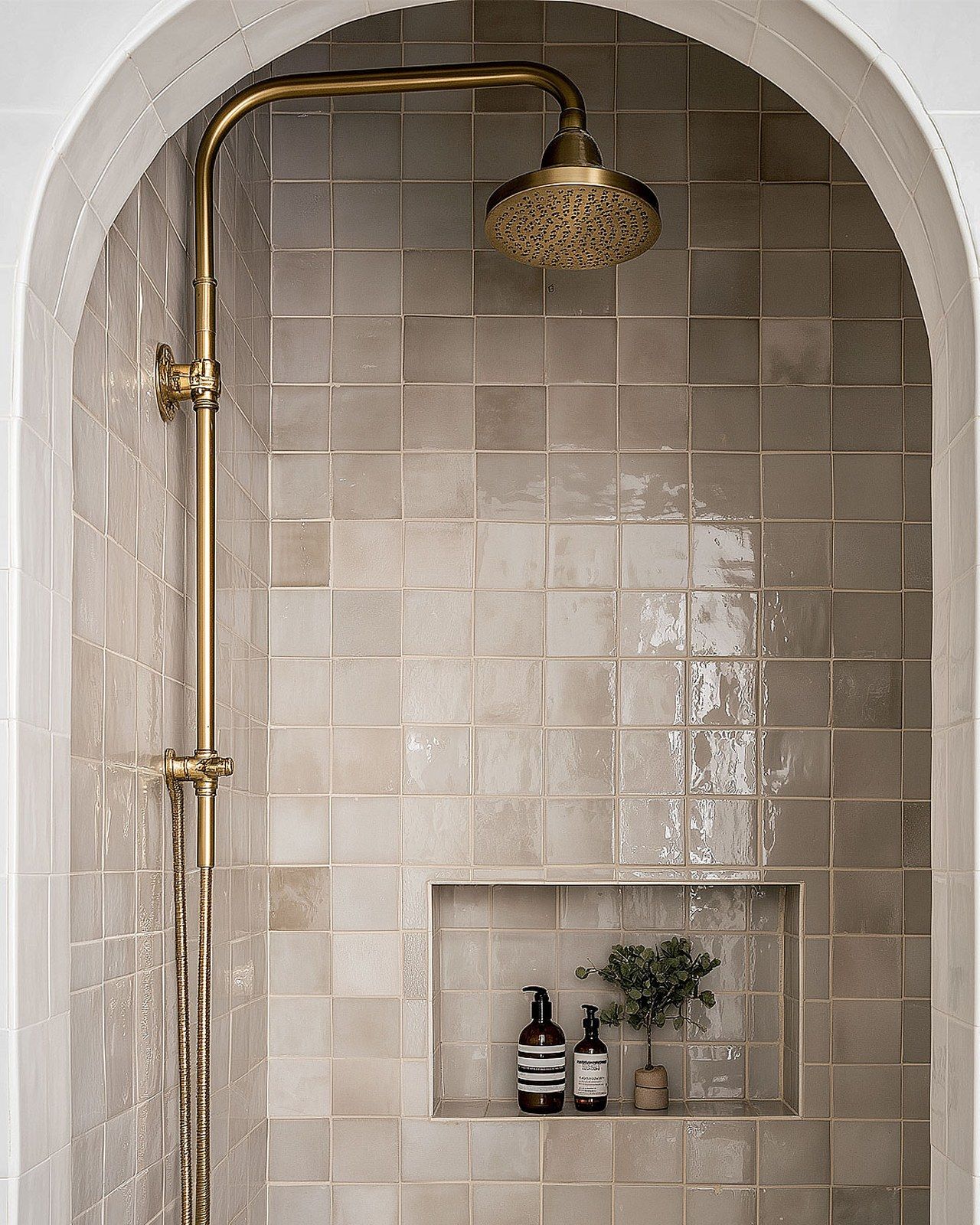
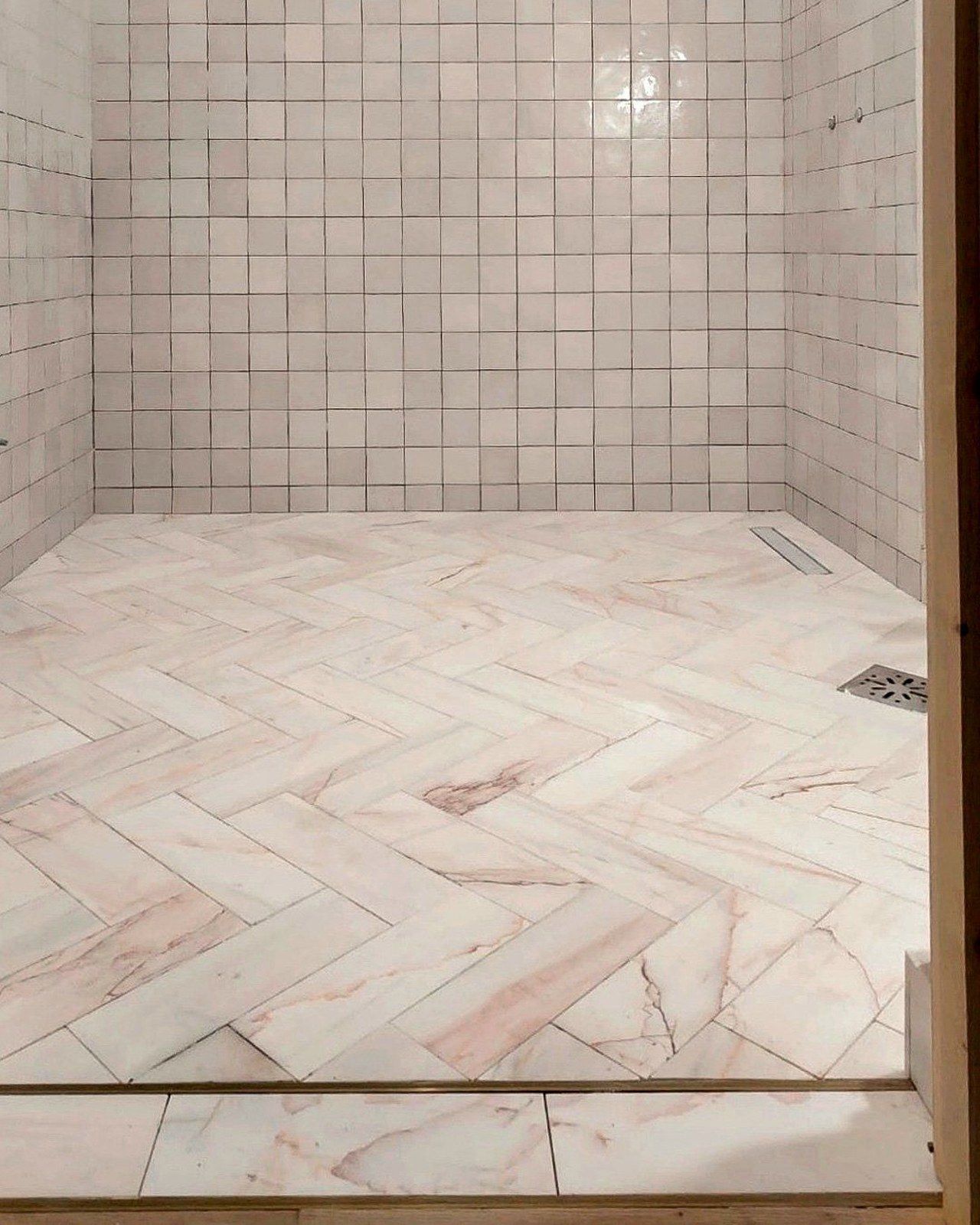
Traditional zellige is Moroccan, hand-cut glazed terracotta, and its surfaces undulate, its edges wander, its glaze pools thick and thin. That character is why everyone wants it and why wet areas complicate it. A porcelain interpretation like the Gesso keeps the visual character, the uneven face, the shifting glaze, the soft off-white that reads as material rather than paint, on a dense, stable, low-absorption body that belongs in a shower. In a Dubai bathroom, where the default is large-format polished stone floor to ceiling, a wall of small irregular squares is the opposite gesture: intimate, textured, and quietly imperfect in a city of gloss. We used a calmer, more regular tile in a bathroom transformation in three honest stages, from the same renovation, and the contrast in what each installation demands is instructive.
The rough-in, long before the tile
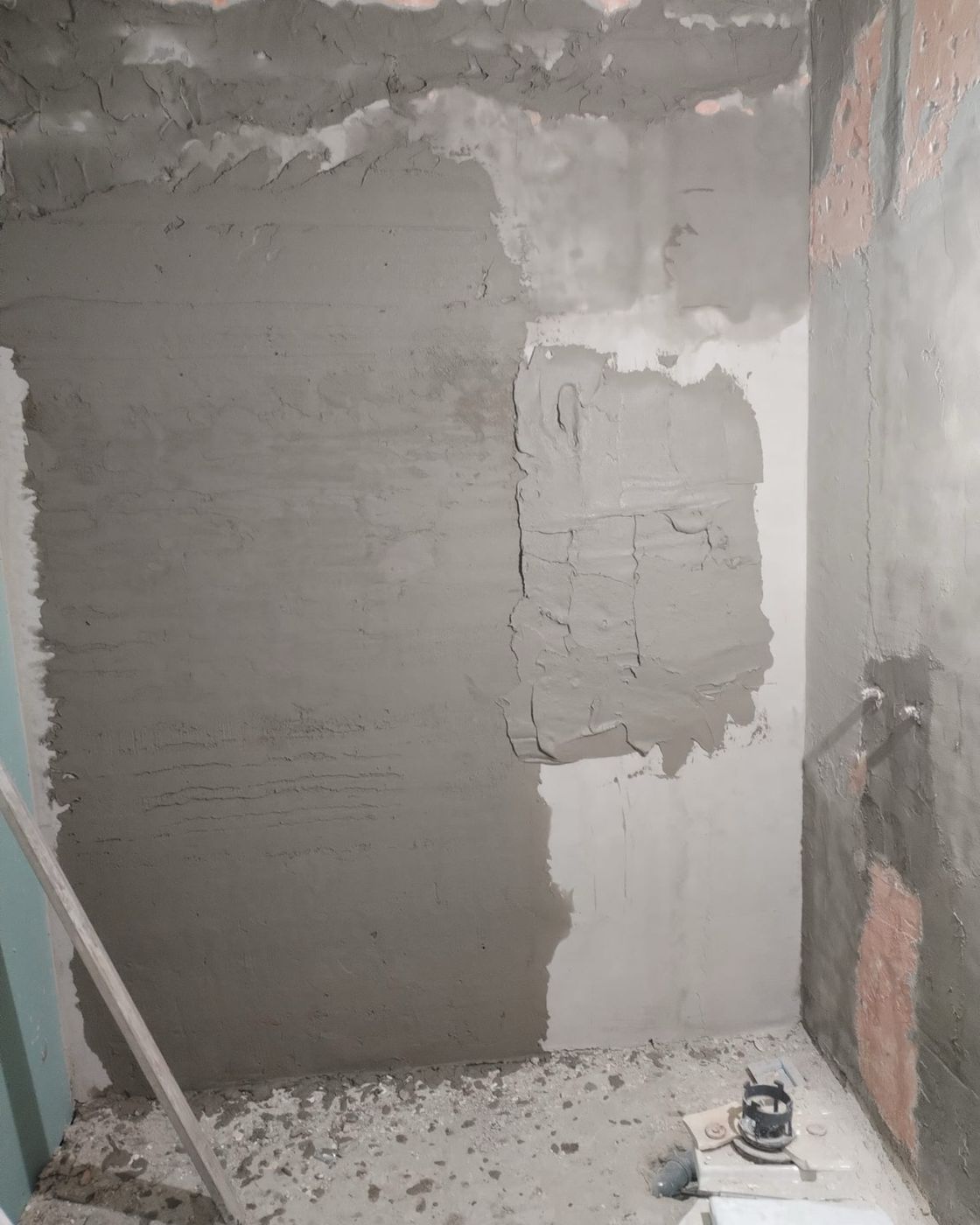
The first photograph is just a drain in a screeded floor, and it is the most important image in the sequence. A shower is built from the drain upward: the falls in the floor are formed toward it, the waterproofing wraps it, and every course of tile above is level because the wet works below were done properly. This stage happened months before a single tile went on the wall, and that gap is correct. Waterproofing needs to be complete, tested, and signed off before tiling closes it in forever, because it is the one layer of a bathroom that cannot be inspected later. In our fifteen-step process the waterproofing sign-off is a hard gate; no tile is ordered onto the walls until the membrane has passed, since the most expensive zellige wall in the world is worthless over a membrane that leaks.
Setting out a tile that will not behave
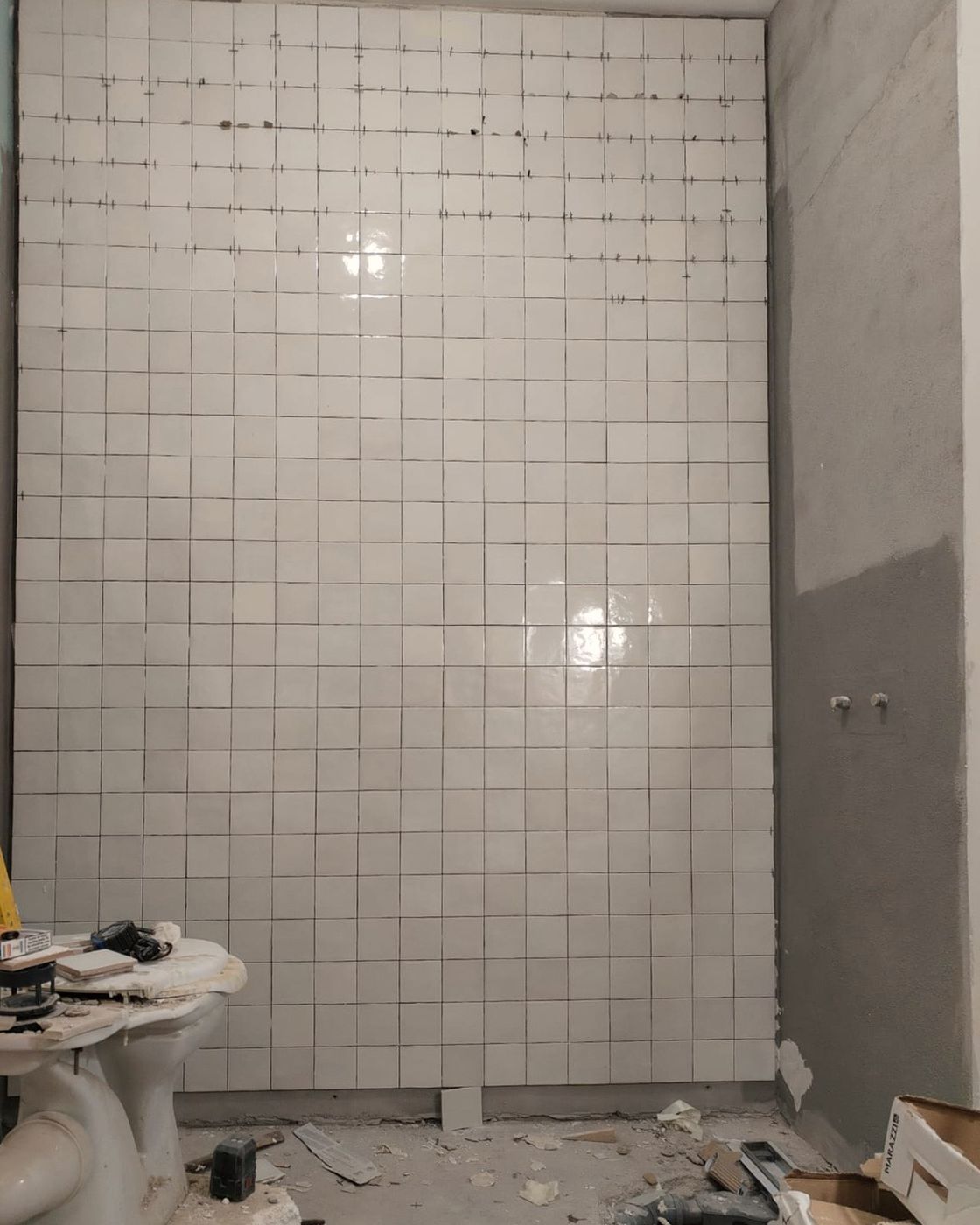
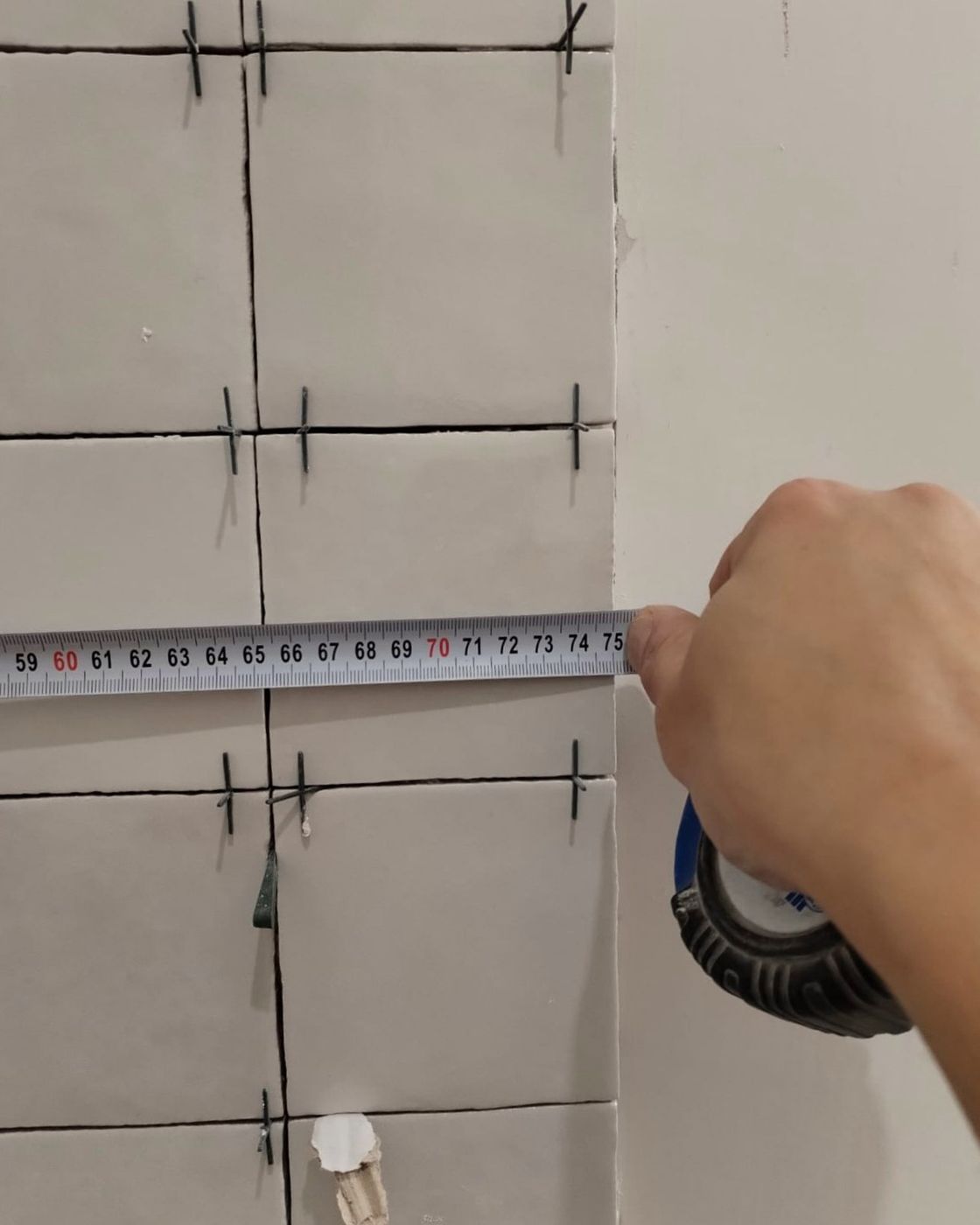
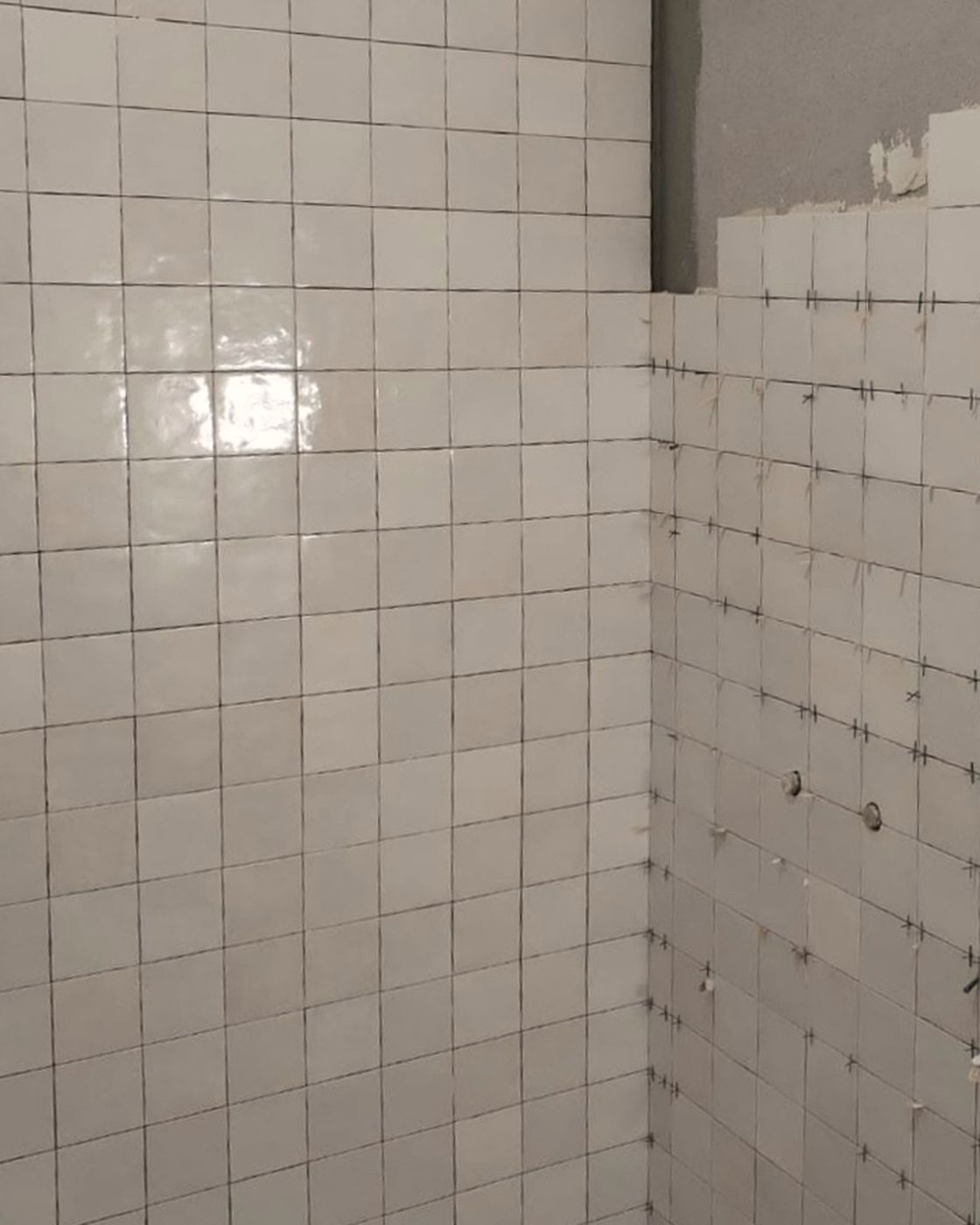
The November photographs show the walls going up, the Marazzi boxes stacked in frame, and the real craft of the room underway. An irregular tile changes the installer's job. With rectified porcelain the goal is mechanical perfection: identical joints, flat plane, laser lines. With zellige the goal is controlled looseness, joints tight and slightly variable, faces allowed their undulation, the overall wall reading level and true while every individual tile does its own small thing. It is harder than perfection, because the installer has to hold the big geometry firm while letting the small geometry wander.
Two decisions carry a zellige wall. The first is the setting out: where the courses start, where the cuts land, how the tile meets the niche, the corners, and the ceiling. On a shimmer wall, cuts hide better than on a gridded one, but a bad start line still telegraphs through every course above it. The second is the grout, close in tone to the tile, so the wall reads as a continuous glazed surface with texture rather than a grid of squares. Zellige gridded out with contrasting grout loses exactly the softness it was chosen for.
Sampling in the room it will live in
One practice from this room transfers to every material decision in a renovation: the tile was sampled on site, in the actual light of the actual bathroom, before the order was placed. Glazed irregular tile changes more with light than any other finish; a face that reads warm white under showroom spotlights can go grey in a north-facing bathroom or golden next to a west window. In Dubai the light is strong but bathrooms are often internal or glazed with tinted glass, so the only honest test is the tile on the wall it will live on, viewed at morning and evening. Ten minutes with a sample board in the real room prevents the most expensive kind of disappointment, the one that arrives after the wall is finished.
The finished room, and the brass line
The last photograph is the floor complete, the brass strip inlaid at the transition, the room finally reading as designed: soft irregular walls, calm floor, warm metal drawing the one precise line in a room built from imperfect squares. That contrast is the composition, the hand-made shimmer of the tile against the machined certainty of the brass, and neither would read as well without the other. The niche built into this same wall gets its own piece: the shower niche, planned like joinery.