
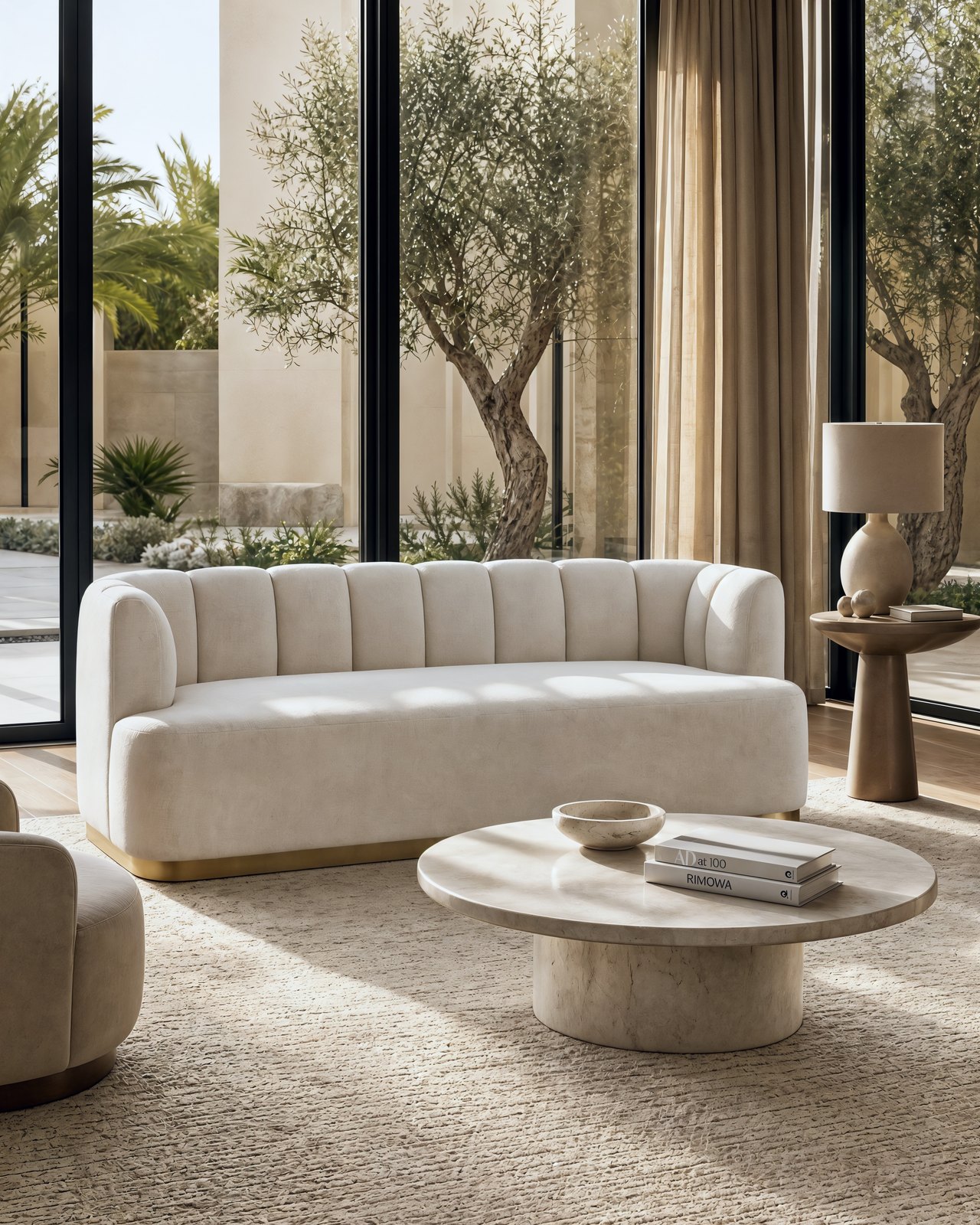
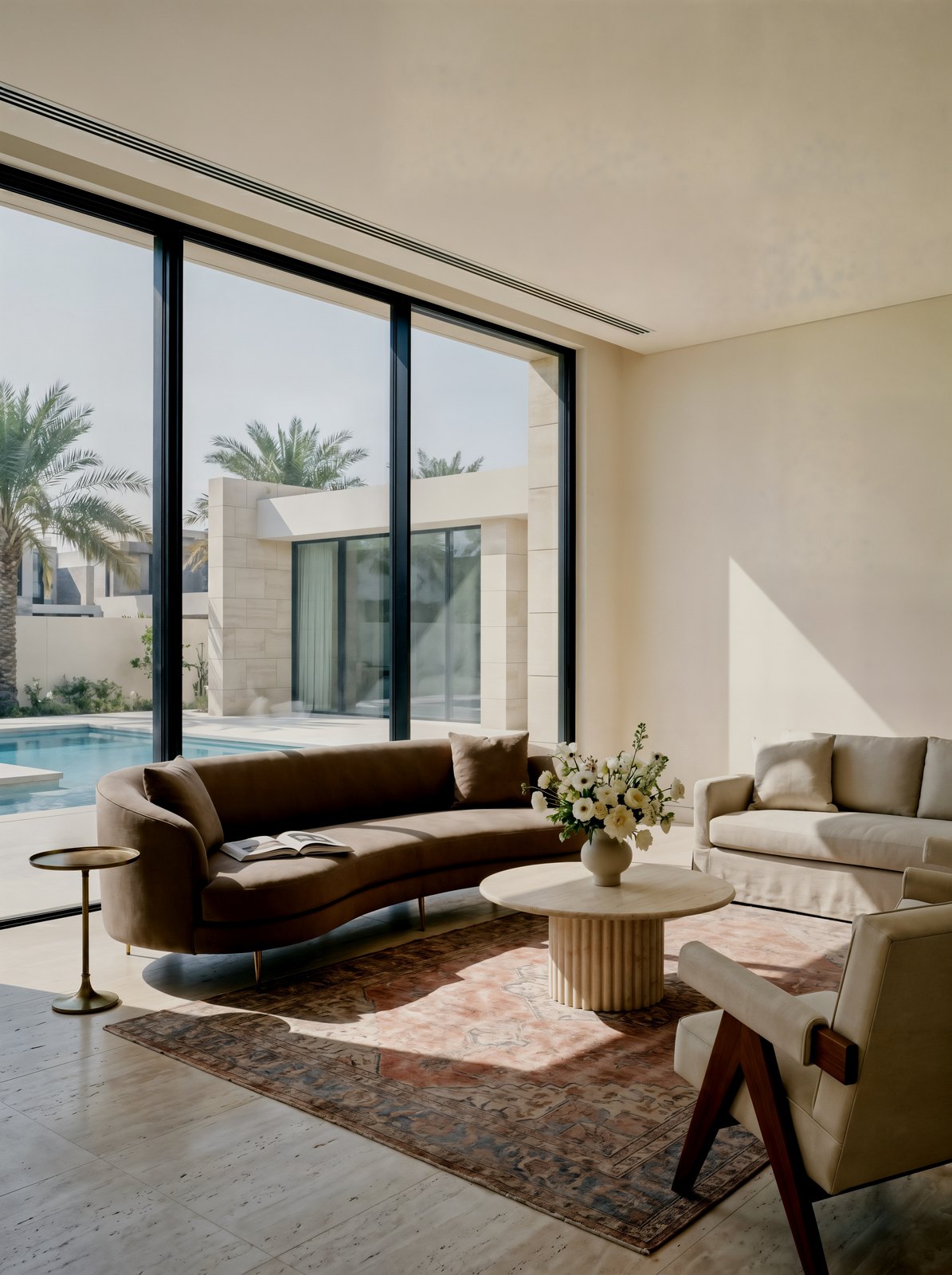
Walk into a well-made hotel room and something settles. The bag goes down, the shoulders drop, and for a moment there is nothing to manage. That feeling is what people mean when they say they want the hotel at home, and in Dubai, where the city now leads the world in branded residences, it has become one of the clearest briefs we hear. The instinct is right. What is worth saying is that the feeling has very little to do with grandeur, and almost everything to do with how a room is built and what it asks of you.
What a good hotel actually does
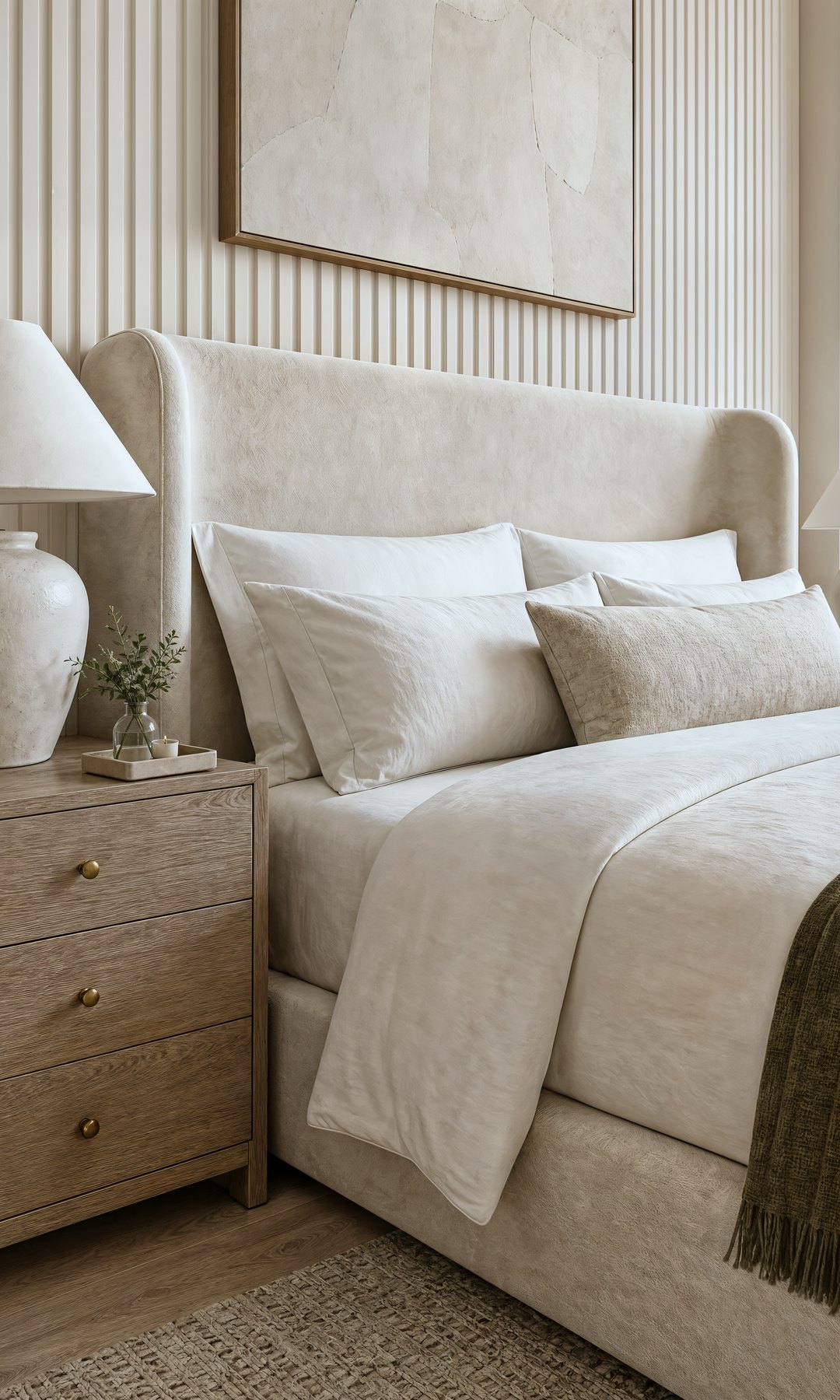
A good hotel room is a piece of applied psychology. The light is warm and layered, never a single hard source from above; there is a lamp for the evening, a reading light by the bed, a low glow that comes on at night so you are never feeling for a switch in the dark. The surfaces you touch are soft and considered, the bed most of all. The room is quiet, the air is cool, and almost nothing is out of place. People who study hospitality design have a phrase for the result: reduced cognitive load. The room makes fewer demands on you, so you rest. None of that is about expense. It is care, applied to the things you feel rather than the things you photograph.
Bringing it home, without the lobby
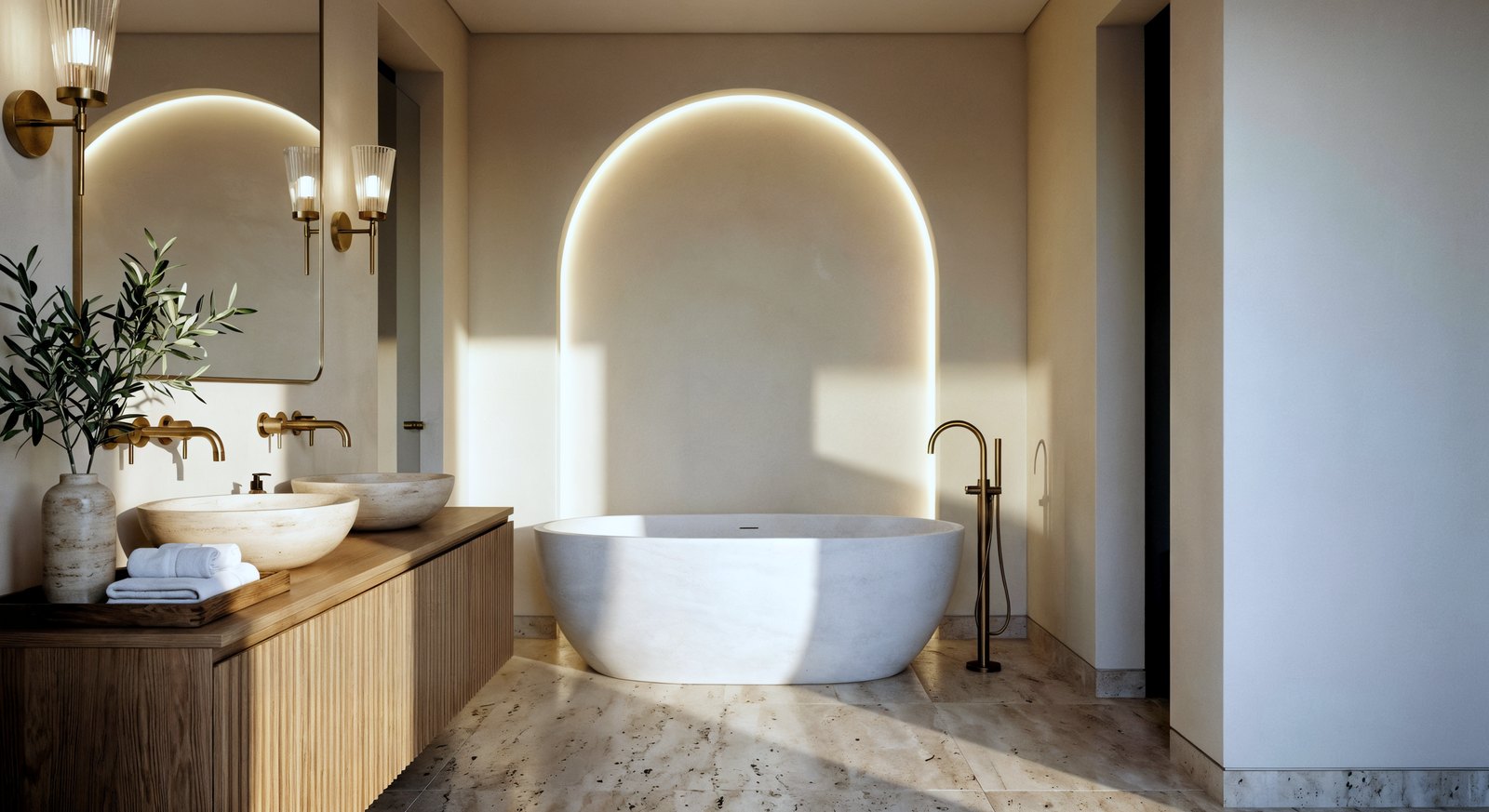
The risk, when people try to import the hotel feeling, is that the home starts to read like a lobby; polished, symmetrical, a little impersonal. The fix is to keep the principles and lose the gloss. We work from warm materials that age well, travertine, oak, lime plaster, linen and wool, so a room feels grounded rather than staged. We layer the light and put it on dimmers, so one space can be bright for the morning and low for the evening. We hide the technology, the cables and the switches and the speakers, because the calm of a hotel comes partly from everything you cannot see. And we leave room. A good suite is never crowded; the few strong pieces are given space to be felt. A home can do the same, and it is warmer for it.
The cosiness is in the layering
Cosiness is the part people find hardest to engineer, and the most important. It does not come from adding more. It comes from texture and from light. A wool rug with real weight underfoot, linen that creases honestly, a throw left over the arm of a chair, a lamp low enough to make a pool of warm light you want to sit inside. These are small, human things, and together they are what separate a room that is merely calm from one that holds you. In a Dubai home, where so much of the architecture is hard, bright and new, that layering is what makes the difference between a space that impresses and one you never want to leave.
The hotel feeling, then, is not a style to be bought. It is a set of decisions about warmth, light, quiet and restraint, made early and held to. Done well, you stop noticing the design at all. You come home, and the day lets go of you at the door.
Common questions
What does 'hotel at home' mean in interior design?
It is the idea of building the calm, restful feeling of a good hotel room into a private home: warm layered lighting, soft tactile materials, quiet, and a sense of order, so the space soothes rather than asks for attention. In Dubai it has become a mainstream brief, in step with the city's lead in branded residences.
How do you make a home feel like a hotel without it feeling impersonal?
Keep the principles and lose the gloss. Use warm materials that age well rather than hard polished finishes, layer the lighting on dimmers, conceal the technology, and leave space around a few good pieces. The warmth comes from texture and restraint, which is what keeps a home from reading like a lobby.
Where does the cosy feeling actually come from?
From texture and light, more than from objects. A heavy wool rug, honest linen, a folded throw, and a low warm lamp do more for cosiness than any amount of decoration.
If you are planning a home in Dubai and want this feeling built in from the start, the consultation is where we begin. You can also read how we work a villa from the material out in Designing a Villa Interior in Dubai.