
Most villa interiors in Dubai are decided long before anyone chooses a sofa. They are decided in the materials. A room reads as warm or cold, calm or busy, settled or temporary almost entirely on the strength of the surfaces it is built from and how those surfaces behave in the light. When the studio takes on a villa interior, this is where we start; not with a furniture plan, but with stone, timber and plaster, and what each one will do over years of living.
This piece is a short account of how we approach a villa interior design project in Dubai, and why a warm minimalist interior is harder to get right than it looks. The restraint is the work.
Begin with the material
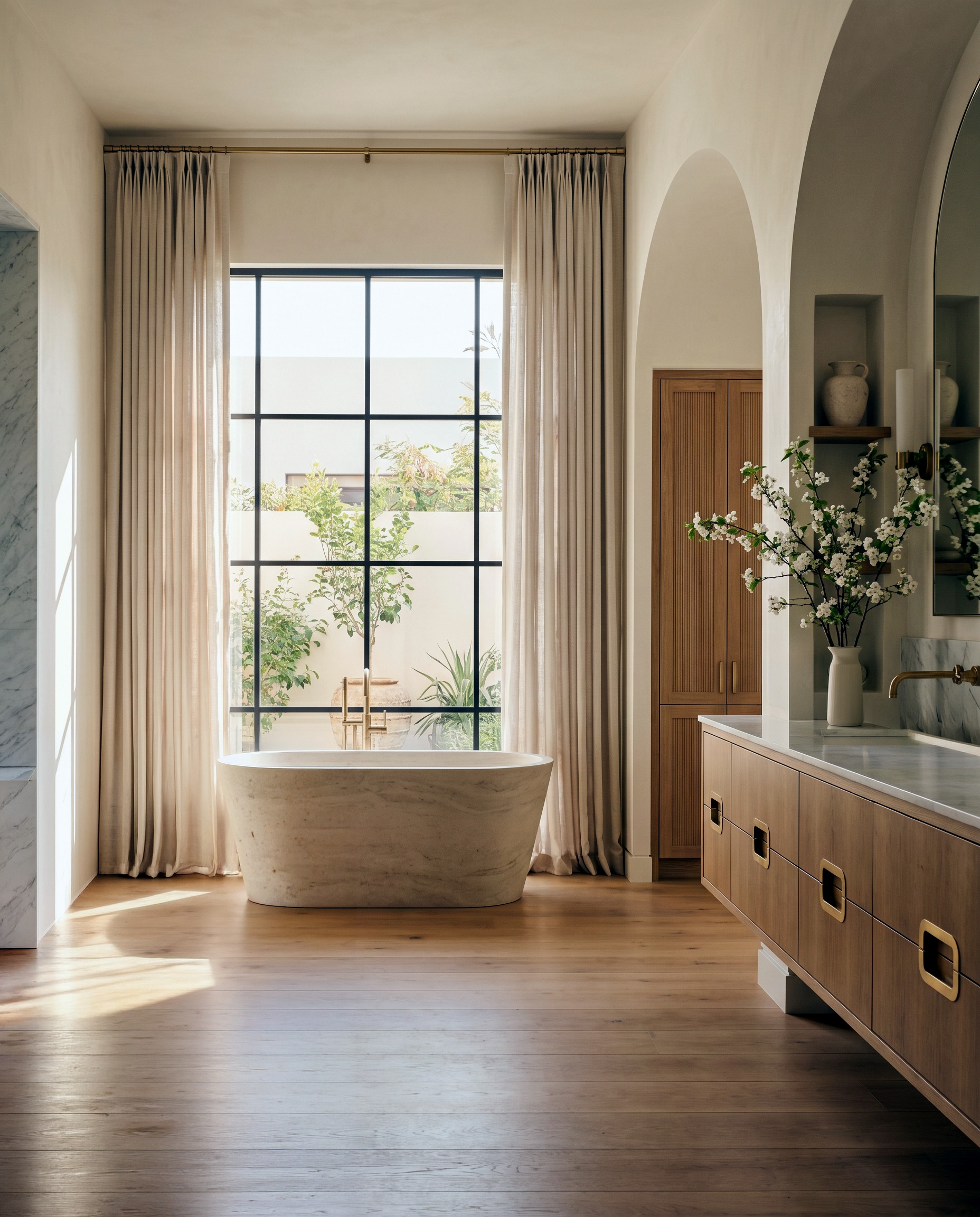
Travertine is a good place to begin because it sets the temperature of a room. We tend to use it unfilled or lightly filled, honed rather than polished, so the surface holds light instead of bouncing it. It carries voids and fossil lines that catch a low sun; over time it takes on the marks of the people who live with it, and looks better for them. A villa floored or clad in travertine starts warm before a single piece of furniture arrives.
Warm oak does similar work vertically. We specify it for joinery, doors and the long runs of storage a villa needs, in a finish that keeps the grain legible and a little open to the touch. Against the stone, the oak gives the eye somewhere softer to land. The two materials are doing the heavy lifting; everything after them is adjustment.
Lime plaster is the third. A hand-applied lime or Venetian plaster wall has a depth that paint cannot reach; it shifts through the day, holds shadow in its slight movement, and quiets a room without darkening it. In a Dubai villa, where walls are large and rooms are bright, that quality of surface matters more than colour. We would rather spend on the wall itself than on what hangs on it.
Design around a few defining pieces
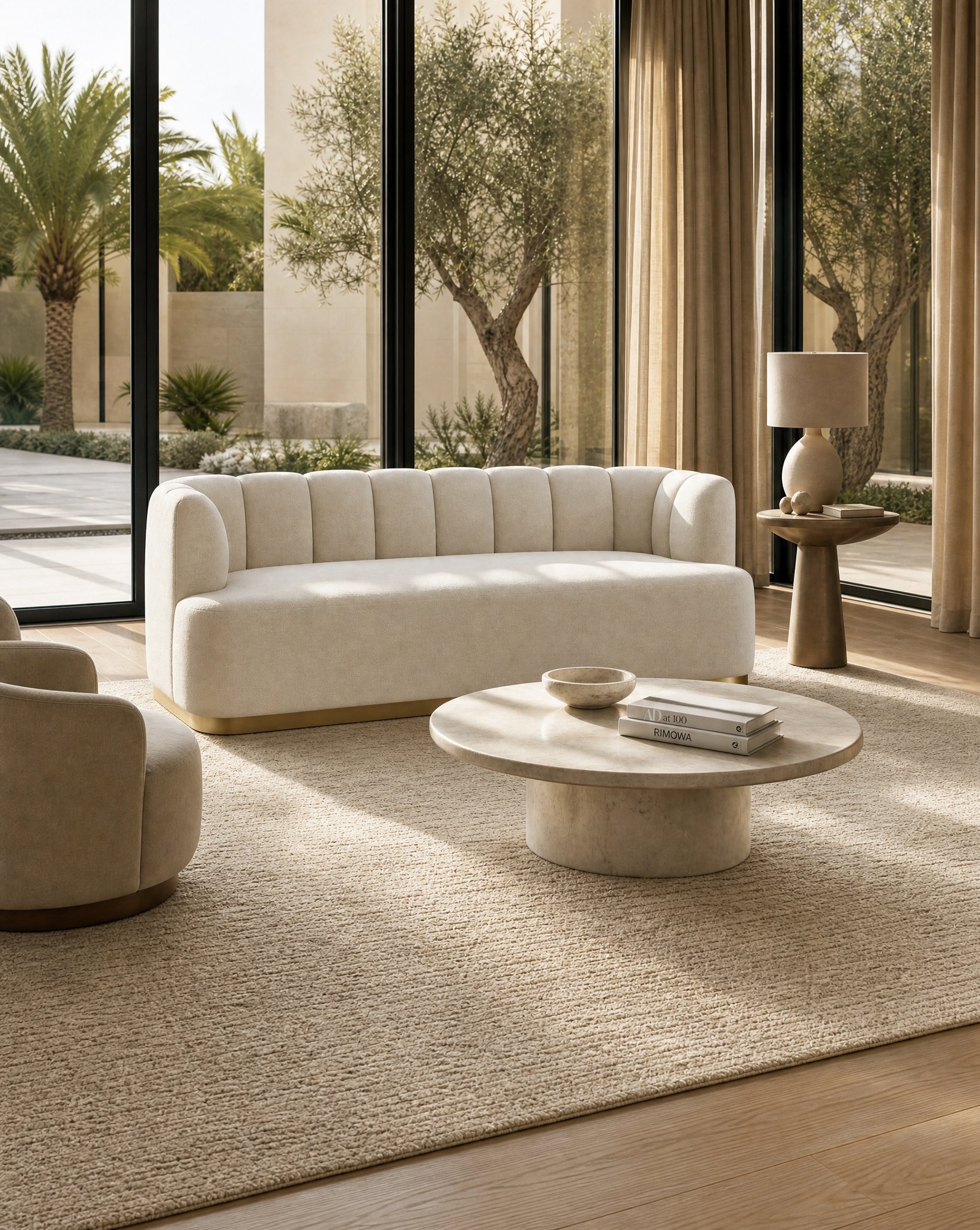
A warm minimalist interior is not an empty one. It is a room with a clear hierarchy, where a small number of pieces are allowed to matter and the rest stay quiet in support. In most living rooms we design, one seat sets the whole space; a deep, well-made sofa or a single anchoring chair that the eye accepts as the centre of gravity. Everything else is sized and placed in relation to it.
Choosing that piece well is worth more than adding three more. A generous curved sofa in a warm boucle or velvet will carry a room that would feel thin if the same budget were spread across many smaller objects. The discipline is in stopping; in leaving the floor visible, the walls largely bare, and trusting the materials to hold the space. Restraint reads as confidence, and confidence is what a considered room communicates.
We apply the same logic to the dining table, the bed, the bath. Find the one element the room is built around, give it the quality and the space it deserves, and let the rest recede.
Light is the other material
Dubai gives a designer a long, low afternoon light that almost no other element can match, and it has to be planned for rather than discovered. We orient the key rooms and the principal seating to that light, and we choose surfaces that do something interesting with it. Honed stone, open-grain oak and lime plaster all read differently at four in the afternoon than at noon; that change through the day is part of what makes a room feel alive.
Glazing is treated as a material in its own right. Steel-framed openings, deep reveals and considered shading let us bring the light in without flattening the room or overheating it. Where the climate is intense, the architecture of the opening matters as much as the glass. Artificial light then plays a supporting role, warm in temperature and layered low, so the evening room stays as calm as the afternoon one.
What restraint buys you
A warm minimalist interior, done properly, buys calm and longevity. A room that is built from honest materials and held to a few strong pieces does not date the way a heavily decorated one does; it has less to go out of fashion. It also ages in the right direction, because the surfaces we favour, stone, timber, plaster, lime, improve with wear rather than degrade. The villa looks more itself in five years, not less.
For a household, the practical payoff is a home that is easy to live in. There is less visual noise, less to maintain, and a clearer sense of where things belong. That ease is the point. The studio's job is to make decisions early and well enough that the room simply works, quietly, for a long time.
Common questions
How does a villa interior project in Dubai begin?
It begins with the brief and the building, not with a moodboard. We walk the villa, study how light moves through it across the day, and talk through how the household actually lives. From there we set the material direction; the stone, timber and plaster that will define the rooms, before any furniture is chosen. Layout and specification follow the material decisions, not the other way around.
Which materials define a warm-minimal Dubai interior?
Honed travertine for floors and stonework, warm open-grain oak for joinery, and hand-applied lime or Venetian plaster for the walls. These three carry the temperature of a warm minimalist interior. We add brass in small, considered amounts, natural linen and wool for softness, and a small number of well-made seats. The restraint is deliberate; a few strong materials, used generously, read as calm.
How long does a full villa interior take?
A full villa interior typically runs nine to fifteen months from brief to handover, depending on the scale of any building works, the level of custom joinery, and lead times on stone and specialist pieces. The studio manages the project end to end across discovery, design development, procurement and installation, so there is one point of contact from the first conversation through to the final styling.
If you are planning a villa interior in Dubai and want a warm, quiet room that lasts, you can tell us about the project on the contact page; location, scope and timing are enough to start the conversation.