
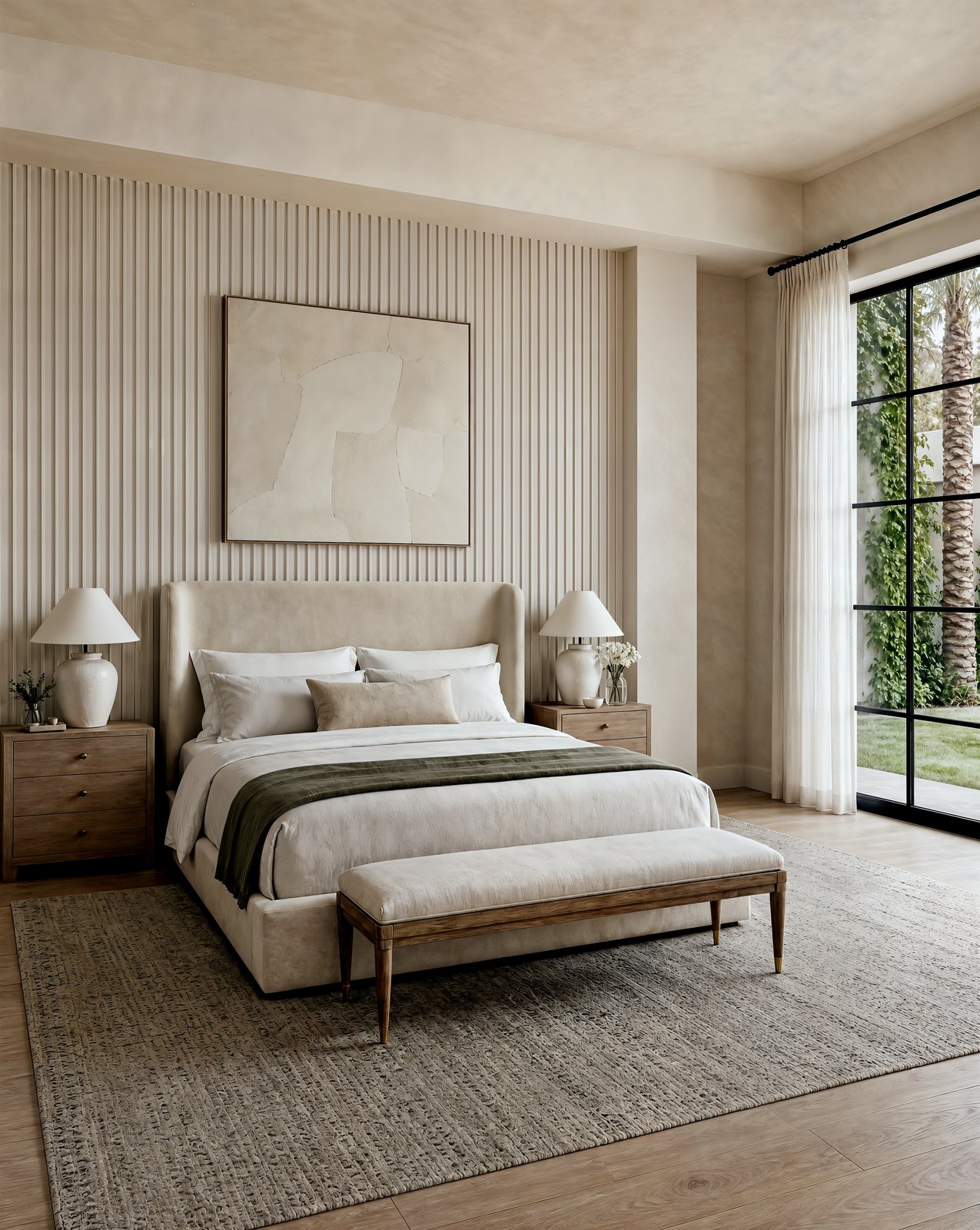
Ask someone what they love about a good hotel and they will usually describe the bedroom; the bed they sank into, the dark, the quiet, the lamp they could reach without getting up. It is the room where the hotel feeling is most physical, and the room where a home most often falls short. A bedroom that truly rests you is built around sleep, deliberately, from the materials down to the switches.
The bed is the whole argument
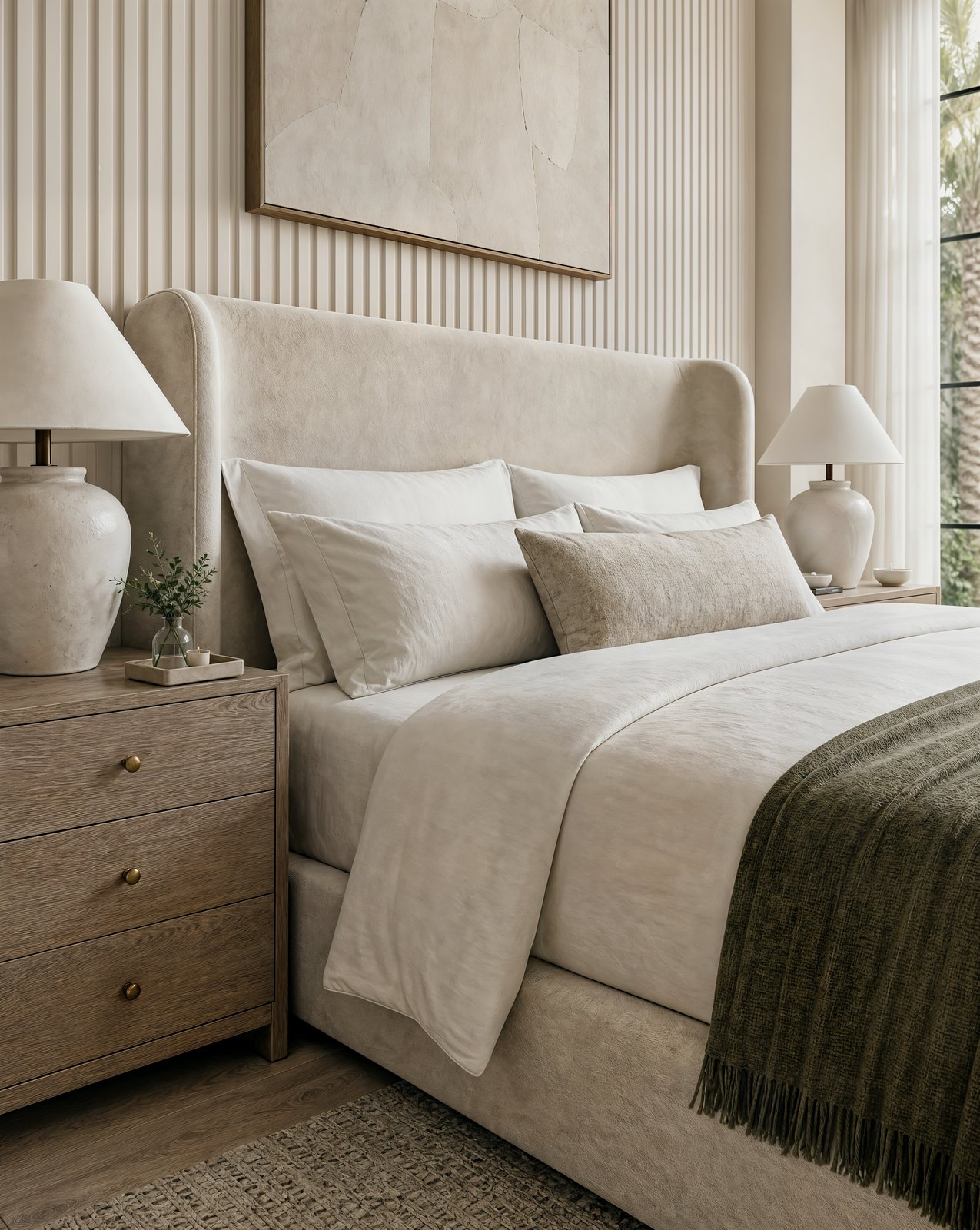
Everything starts with the bed. A hotel bed feels the way it does because of layers; a proper mattress, yes, but also a headboard substantial enough to sit back against, bedding with weight and a little texture, a throw across the foot. We choose a low platform bed with a soft, curved upholstered headboard, dress it in linen and wool rather than anything slippery and synthetic, and let it carry real weight in the room. The bed should look like the most comfortable place in the house, because it should be.
Light you can control
The single biggest difference between a restful bedroom and a tiring one is light. A good hotel never lights a bedroom from a hard fixture overhead. There is a reading light at the bedside, a low lamp for the evening, and the detail people miss, a dim warm glow near the floor that comes on at night so you can cross the room without waking fully. We put the bedroom on layers and on dimmers, give each side of the bed its own switch, and keep daytime glare out with proper blackout behind the curtains. Warm light, under your control, is what tells the body it is allowed to wind down.
Everything within reach
A hotel room is quietly arranged so that nothing makes you think. Water, a light, a place to set your phone and your book, all within reach of the pillow. This is the reduced cognitive load idea again, and it matters most at the two edges of the day. A deep bedside table, a single drawer for the things that should not be on show, a clear surface; a few decisions made once, so you do not have to make them every night.
Quiet, cool, and uncluttered
The rest is restraint. A hotel bedroom is calm because it is largely empty; a few good pieces, soft materials, and space around them. At home that means resisting the urge to fill the room, keeping the television out of sight or out of the room altogether, and letting the bed, the light and the materials do the work. Cool air, real quiet, and as little visual noise as possible. In a Dubai home, where bedrooms are often large and bright, the discipline is to hold most of that space empty and let the calm settle into it.
A bedroom designed this way does one thing well, which is let you rest. It does not announce itself, and after a week you forget it was designed at all. You sleep better, and you stop wanting to be anywhere else at the end of the day.
Common questions
How do I make my bedroom feel like a hotel room?
Build it around sleep. Start with the bed, a substantial headboard and layered linen and wool bedding; light the room in warm layers on dimmers, with a switch on each side and proper blackout; keep everything you need within reach of the pillow; and hold the rest of the room calm and uncluttered. The feeling comes from comfort and restraint; decoration has little to do with it.
What lighting is best for a restful bedroom?
Warm, layered, and controllable. Avoid a single hard ceiling light. Use a bedside reading light, a low evening lamp, and a dim floor-level glow for the night, all on dimmers, with blackout to keep daytime glare out. Warm light under your control signals the body to wind down.
If you would like a bedroom in your Dubai home designed to rest you properly, the consultation is where we start. For the thinking behind our restraint, see The edit: why the hardest decision is what to leave out.