
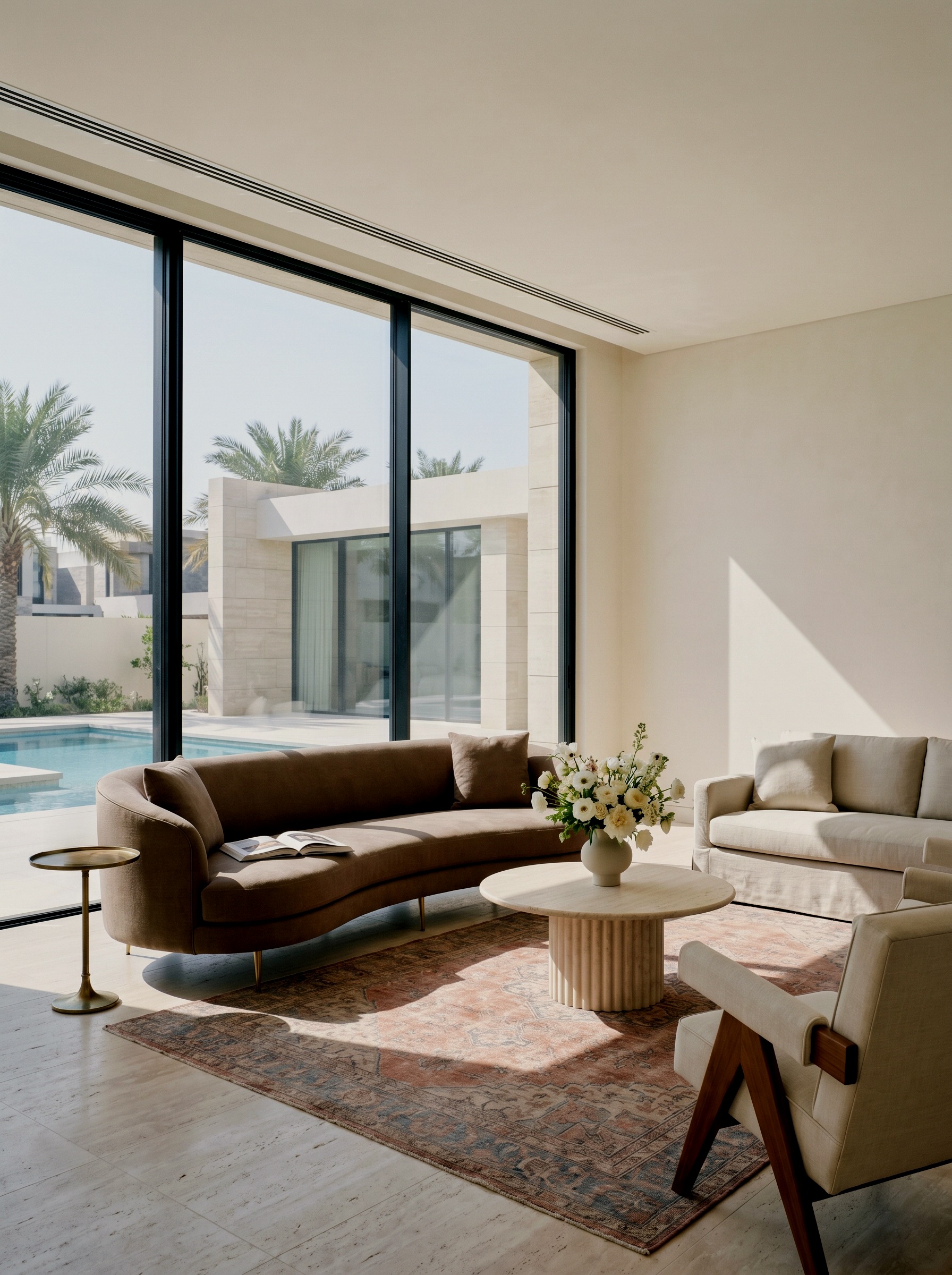
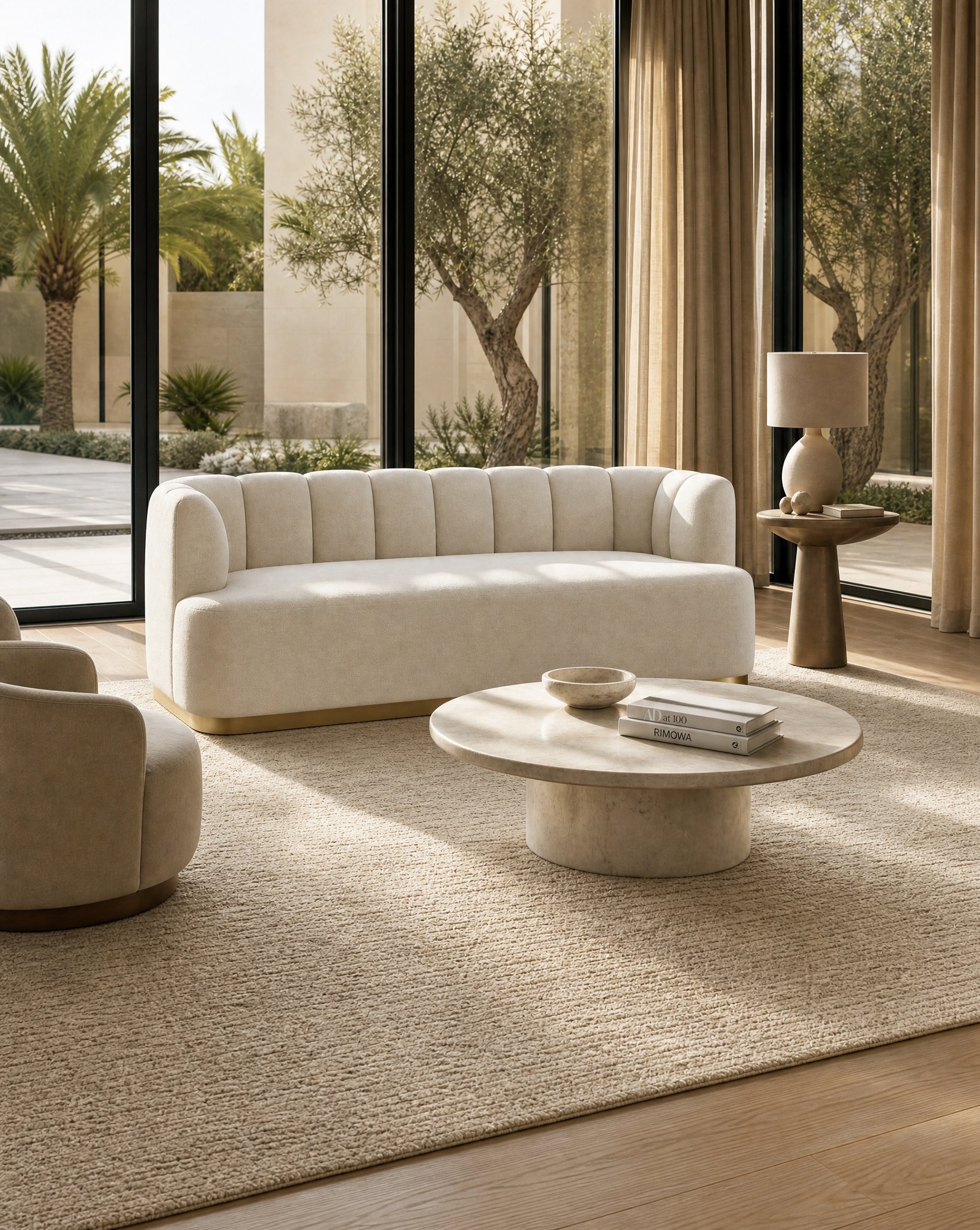
Every project reaches a point where the work stops being addition and becomes subtraction. The brief is understood, the materials are set, the pieces are chosen; and then the real design begins, which is deciding what to take out. What stays in a room defines it far less than what does not.
This is the part clients least expect. There is a quiet pressure, on any project at this level, to add; another light, another object, one more layer to prove that care was taken. We hold the line. A room earns its calm by what it is willing to leave absent. The pressure runs harder in Dubai than most places we have worked, where a great many interiors default to filling every surface in high-gloss marble and gilt; restraint here is a deliberate choice against the local grain, not the easy default.
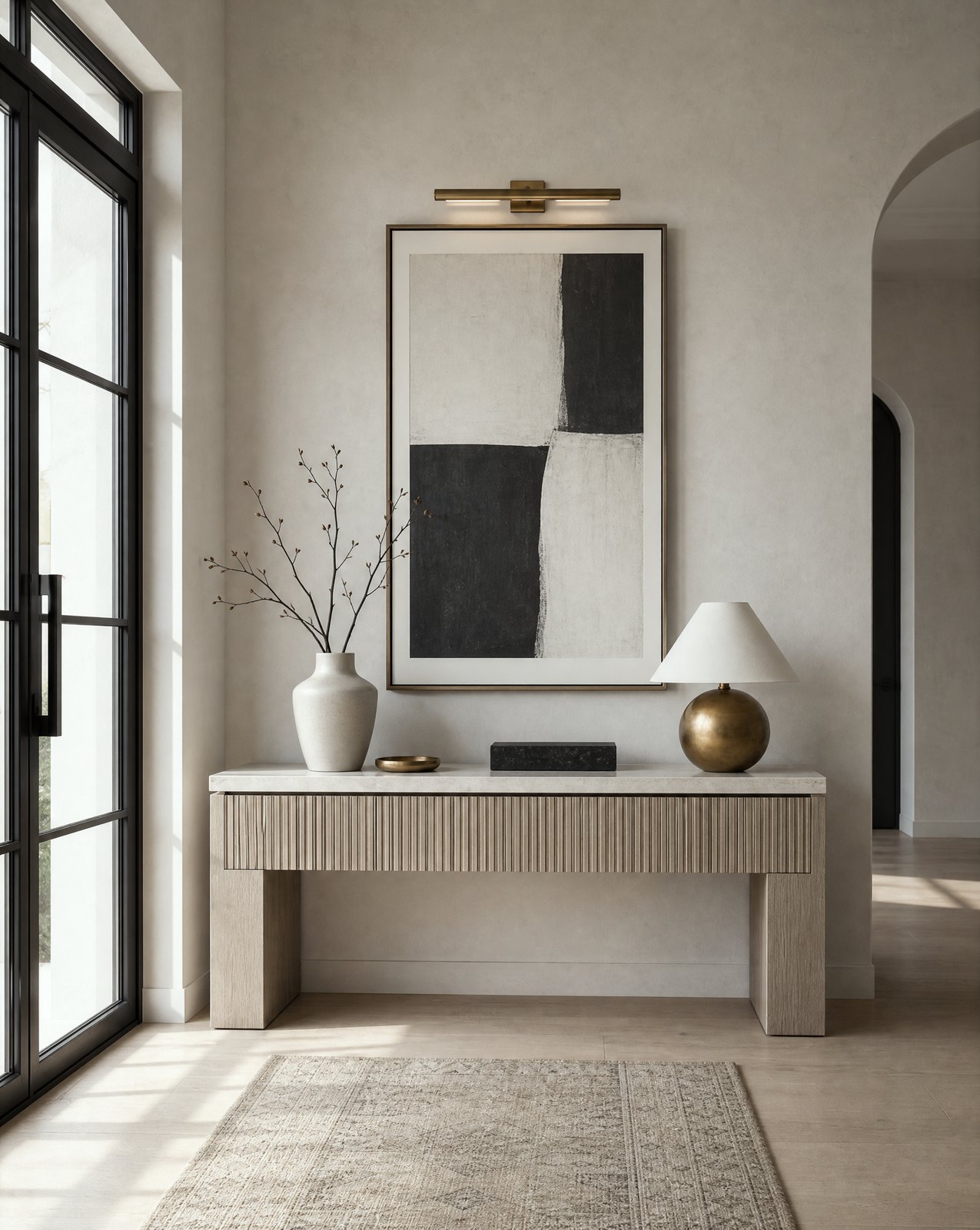
Editing as the design
In practice the edit happens late and deliberately. With the space largely resolved, we remove until taking one more thing away would break it, and then stop one step short. The aim is a room with a clear hierarchy; a few pieces allowed to matter, generous space around them, and nothing competing for attention that does not deserve it.
Restraint is not minimalism for its own sake, and it is not emptiness. A well-edited room is warm and complete; it simply carries no surplus. The difference a visitor feels is calm. They could not tell you why, only that the space is easy to be in.
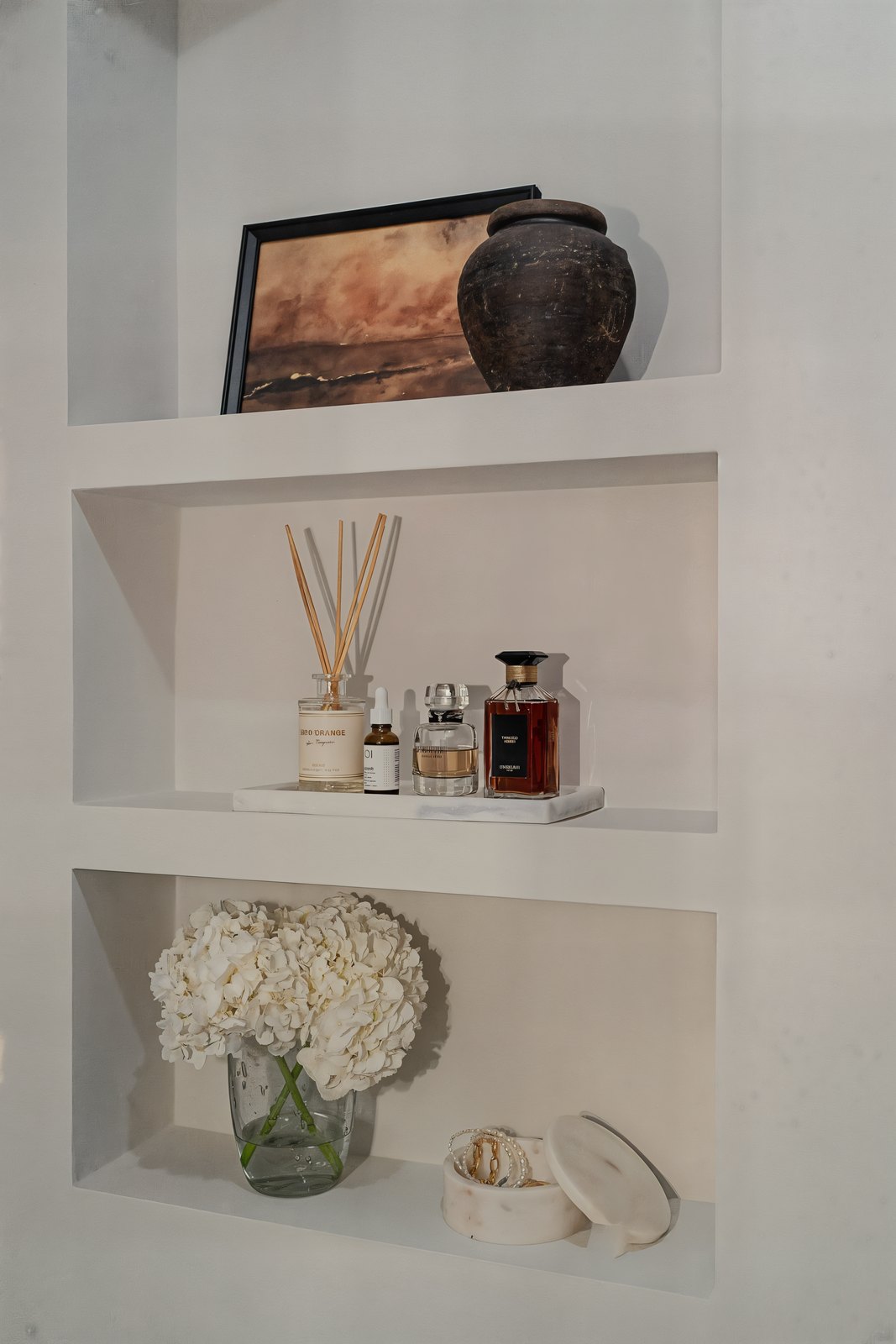
The discipline costs something. It means resisting good pieces because they are one too many, and trusting the materials to hold the room rather than dressing it. But the result lasts. A room built on a few strong decisions has less to date, less to maintain, and a confidence that a busier space never reaches. The edit is the design.