
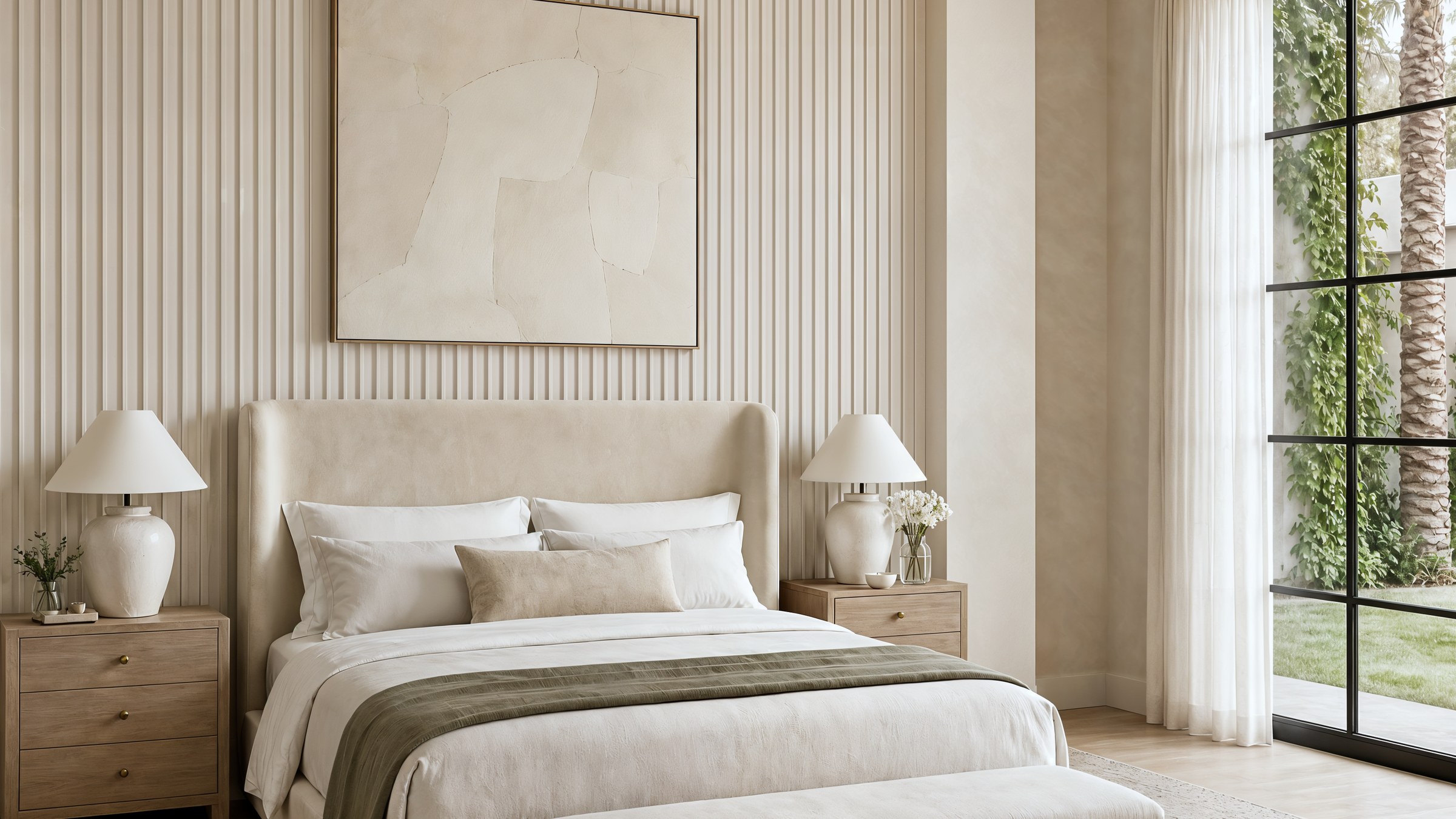
Walk into a great hotel suite at the end of a long day and something in your body lets go before you have put your bag down. That reaction is not luck and it is not thread count. It is a short list of decisions, made properly, in the right order. We apply the same list to every bedroom we design in Dubai, whether it is a Palm villa or a one bedroom going to market. Here is what actually does the work.
Start with the bed, and keep it white
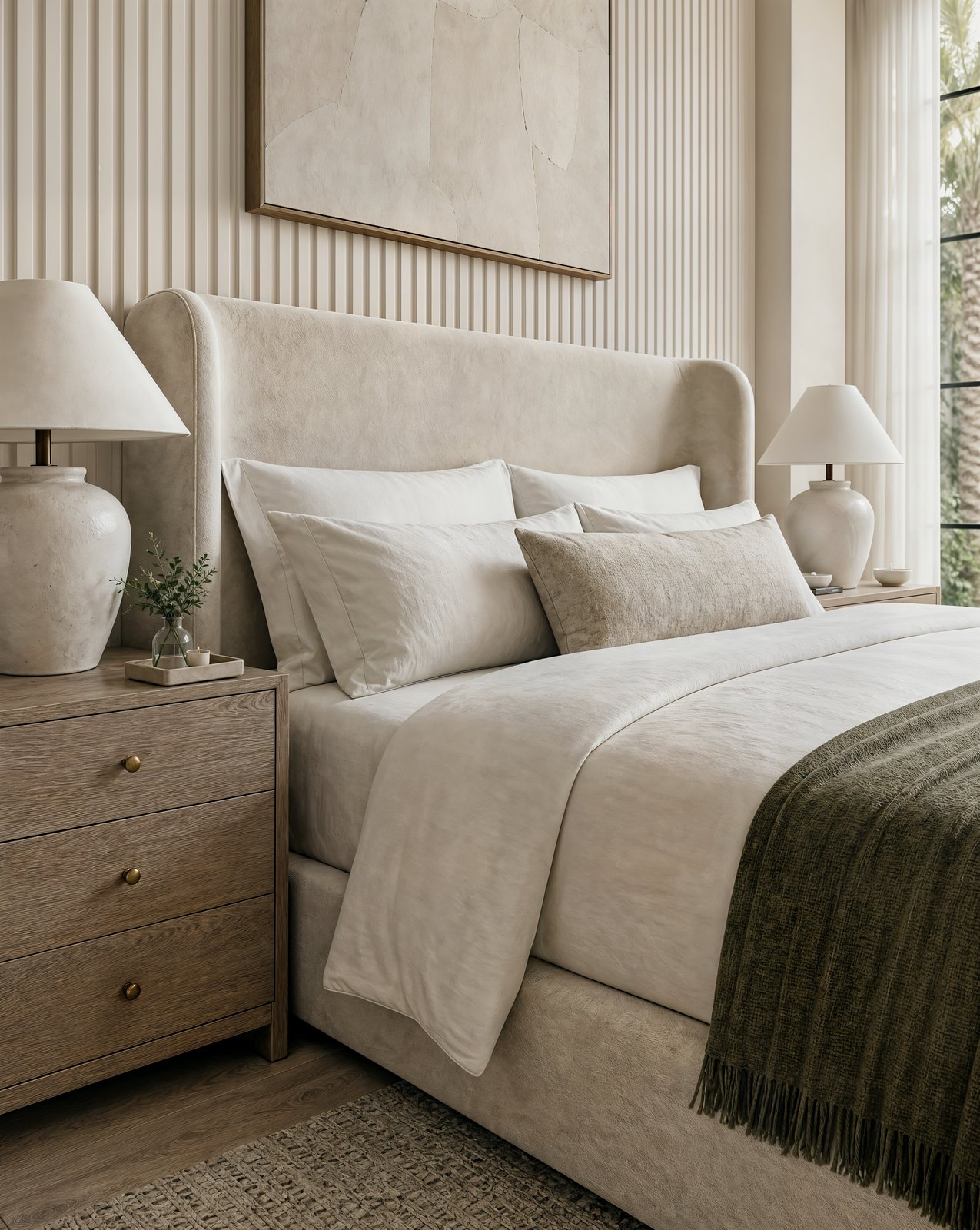
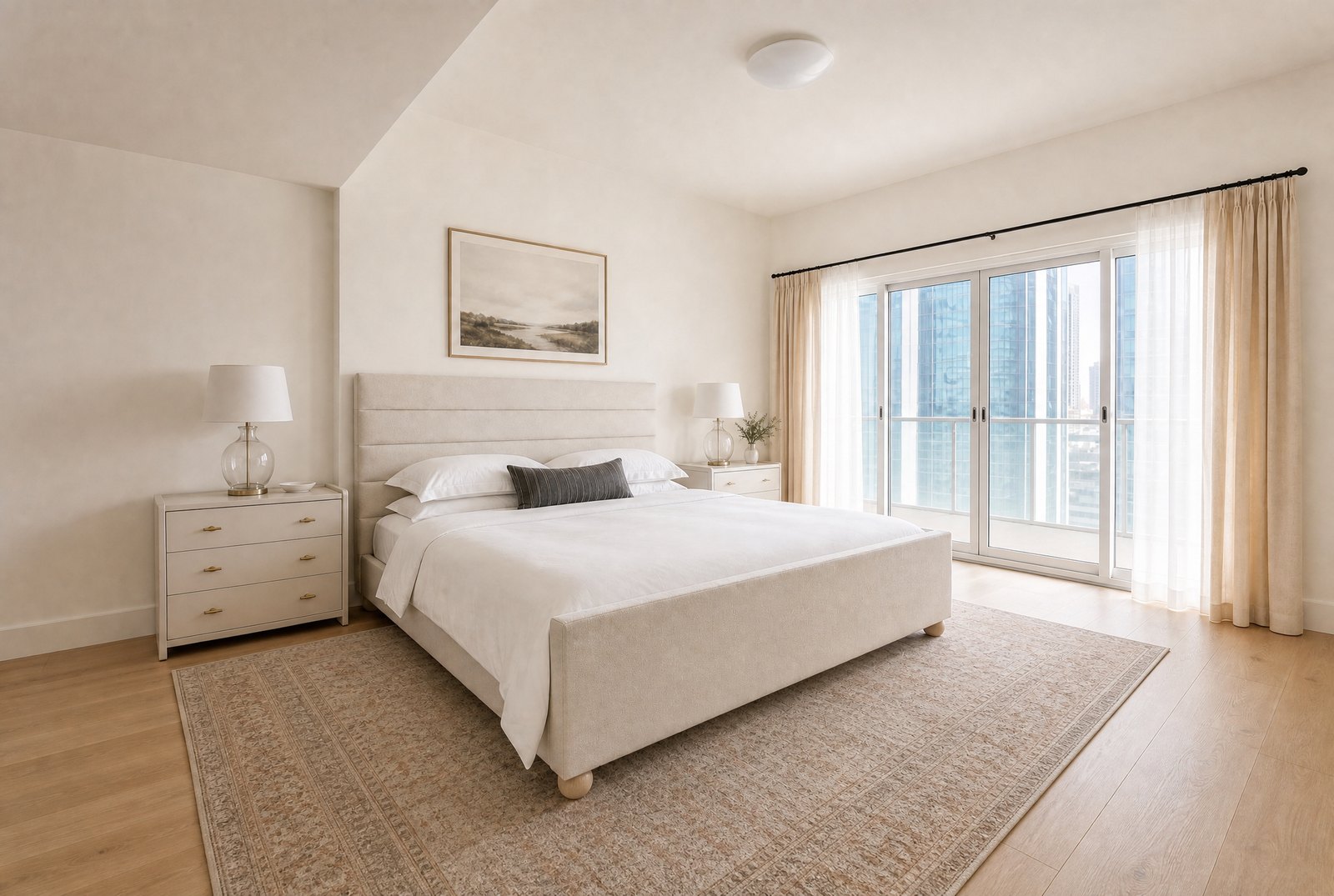
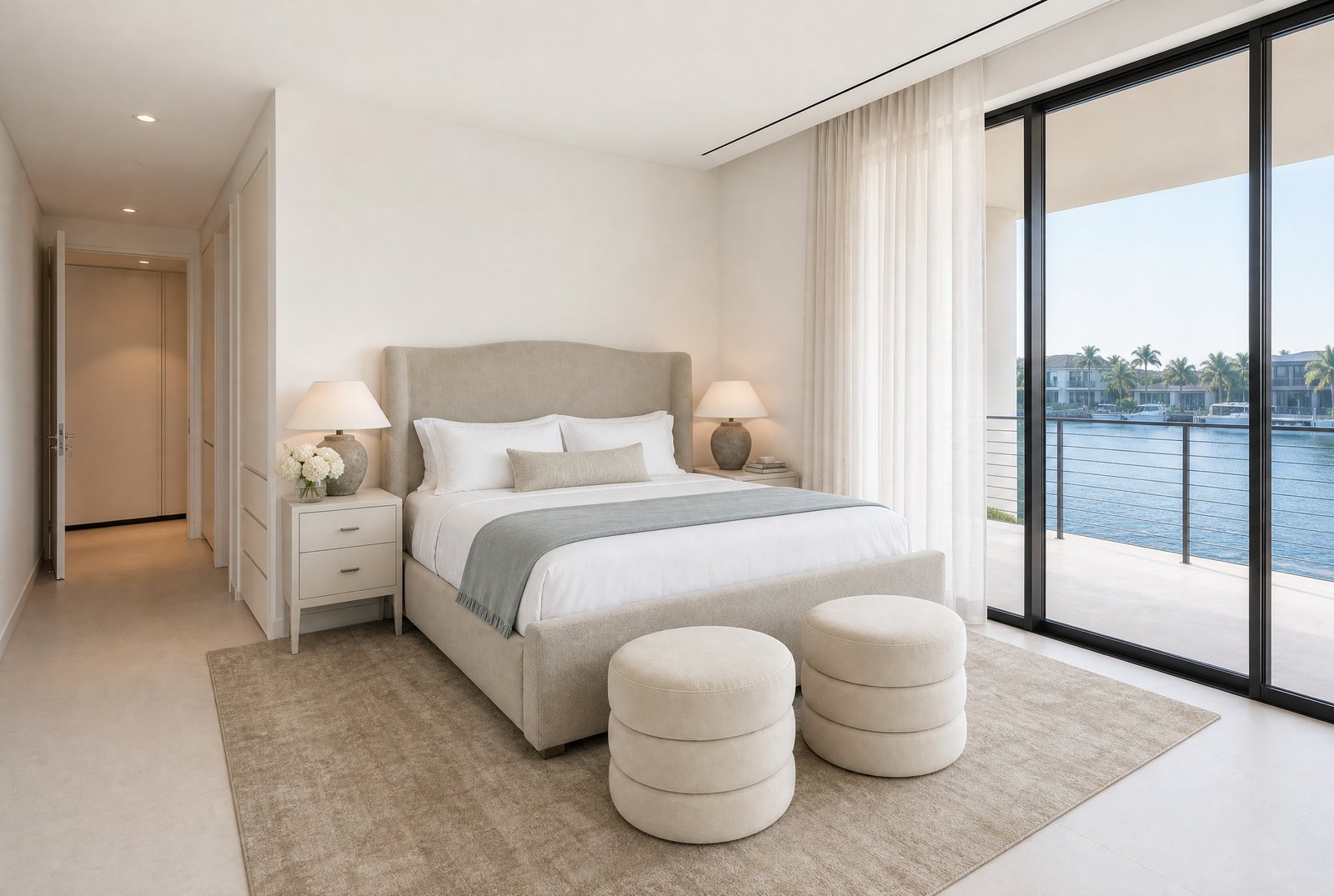
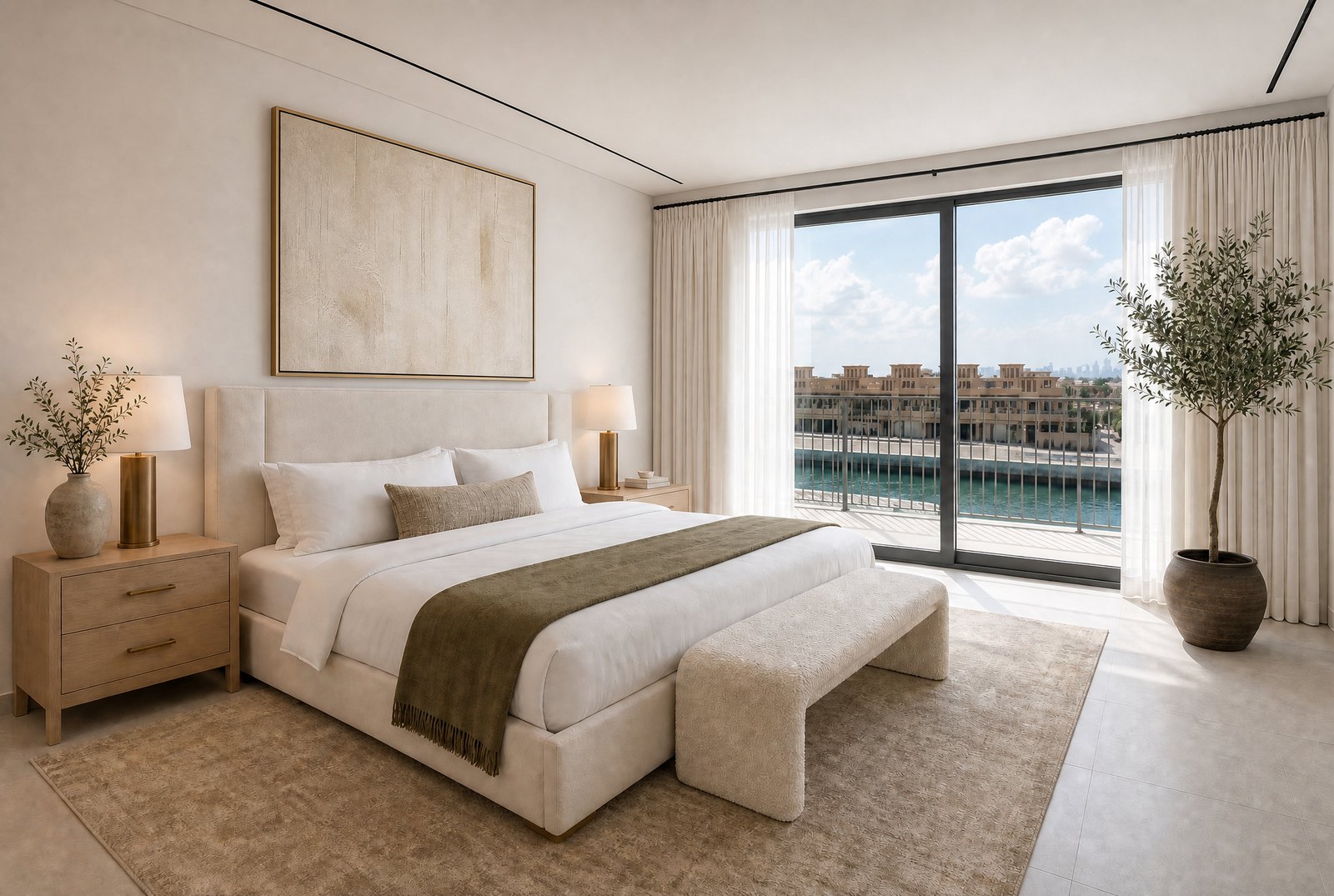
The bed is four fifths of the room's first impression, so it gets the discipline. Crisp, hotel-white bedding, always: white reads clean, calm, and freshly made in a way no pattern can. Warmth comes from one layered throw at the foot, one texture, one quiet color, and a small run of cushions that stops well before the pillow mountain. A bed you can read at a glance is a bed your mind files under rest.
A headboard tall enough to lean on
A tall, upholstered headboard anchors the whole wall and gives the room its sense of shelter. Too low and the bed floats; too hard and the room says look, not live. If the architecture allows it, we treat the wall behind the bed as part of the headboard: paneling, plaster, or joinery that frames the bed the way a suite frames its centerpiece.
Symmetry, in pairs
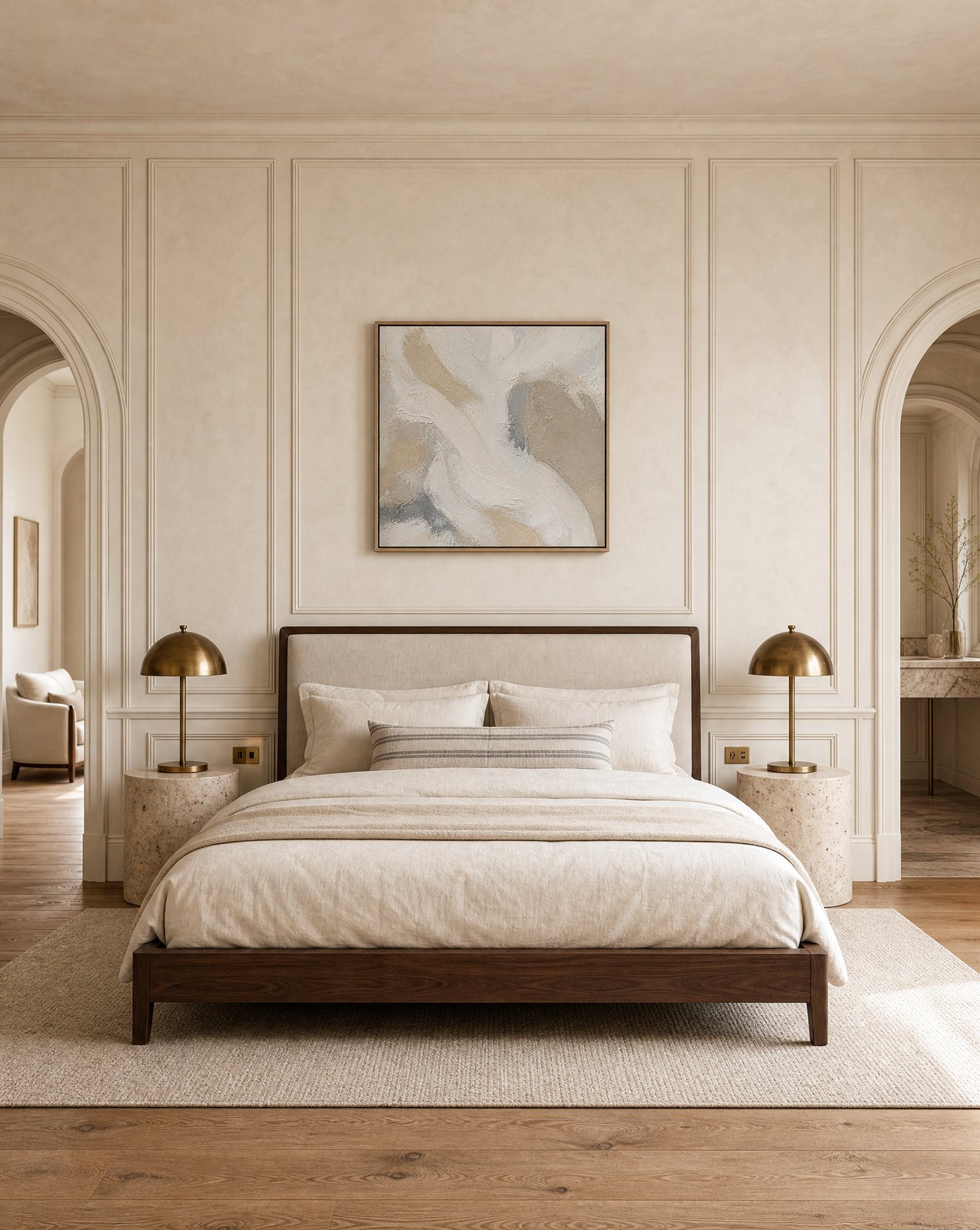
A matching pair of nightstands and a matching pair of lamps, spaced generously. This is the fastest calm-trick in the room: your eye finds the center, the composition resolves, and the room stops asking for attention. Brass lamps earn their place here, a warm point of light on each side that makes the overhead switch unnecessary after sunset.
A rug that holds the room
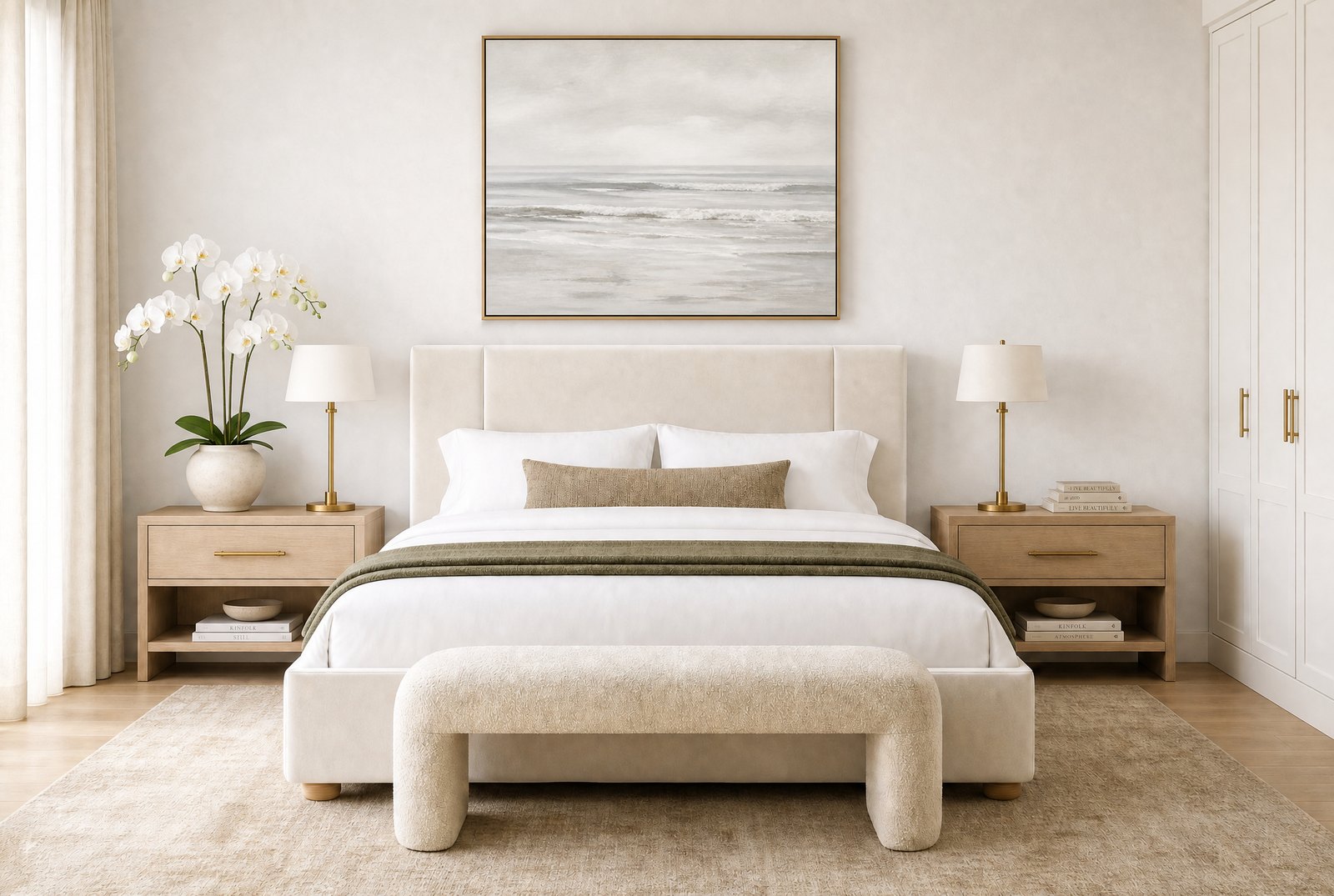
The rug is not a bath mat for the bed. It runs two to three feet past the foot and sides, so the first thing your feet touch in the morning is soft and the bed sits inside the room rather than on it. Vintage or quietly patterned, in colors the bedding already knows.
Curtains that kiss the floor
Full height, generously gathered, touching the floor without pooling. Add a sheer layer for daytime privacy that keeps the light. Nothing dates a room faster than curtains that hover above the skirting, and nothing calms one faster than fabric that falls the full height of the wall.
Light in layers, never from one point
Lamps, a soft wash from concealed lighting where the ceiling allows it, and daylight managed rather than fought. We do not hang chandeliers in bedrooms. The room's job after dark is to get dimmer in stages, the way the day does.
What you leave out
Every element above works because of what is absent: no television cabinet dominating the wall it can avoid, no furniture bought as a set, no decor that needs explaining. A restful bedroom is edited more than it is furnished.
This is the standard we design and stage to, because it is measurable in how a home feels on the first night and in what a property asks for on the market. If your bedroom, or your listing, is not doing this yet, the first step is a consultation.