
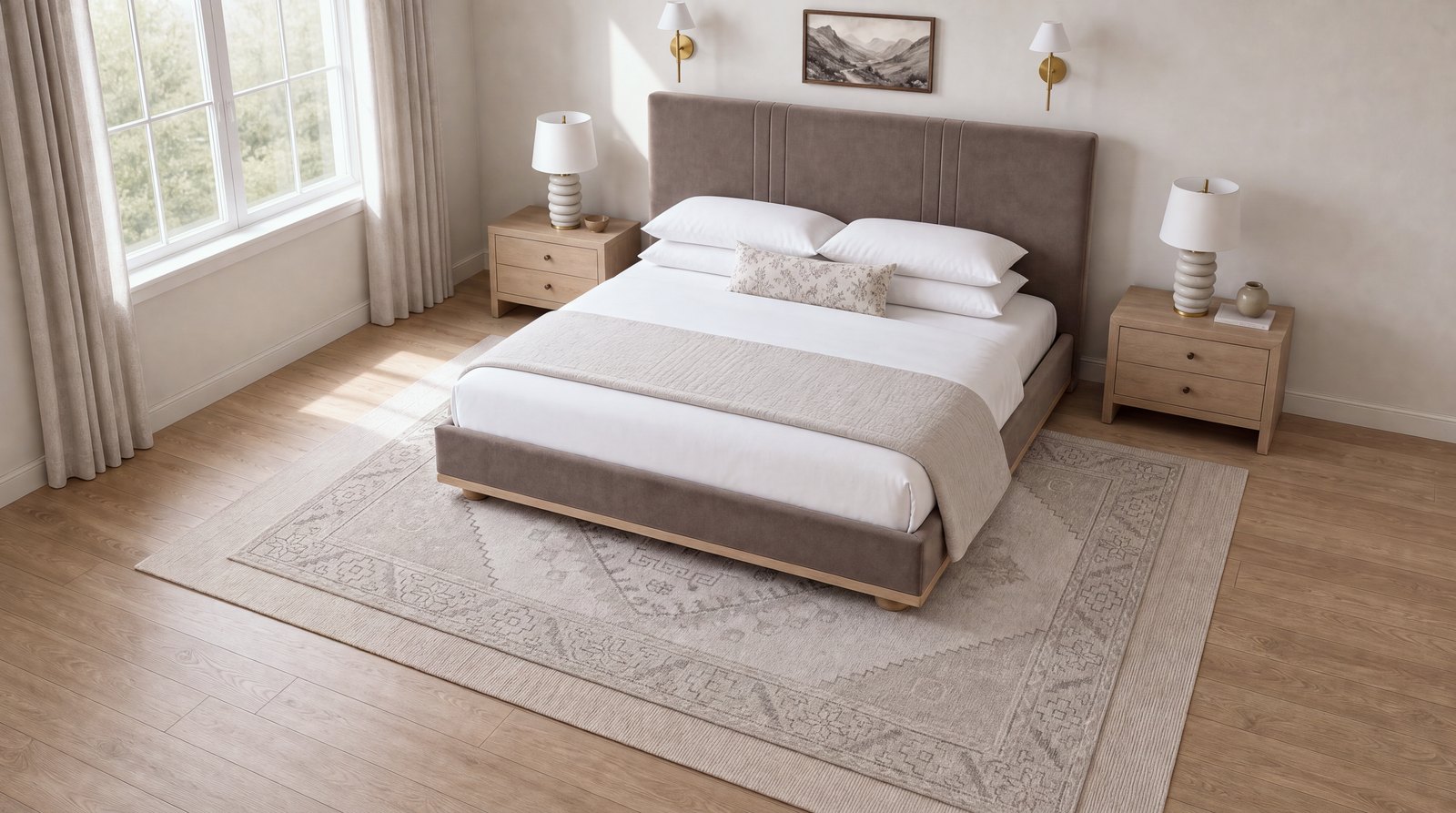
The rug is the foundation of the room. It is the one element that gathers the bed, the nightstands and the bench into a single composition, and when it is undersized, nothing placed on top of it can repair the impression.
How far should it reach? As a recommendation rather than a law: past each side of the bed by 60 to 90 centimetres, and at the foot we like it to run a metre or more. The generosity is the point. The further the rug extends, the larger the room reads, because the eye measures the room by the rug's edge rather than by the bed. A rug that stops just past the frame looks like it is hiding under the bed, and the room shrinks with it.
We usually stop the rug short of the nightstands and leave a small gap of bare floor. That gap is a preference, not a rule, and it keeps the nightstands sitting solidly on the floor rather than tipping on a rug edge.
One test matters more than any measurement. In the morning, when you step out of bed, your feet should land on something soft. A bedroom that passes that test was sized from how it is lived in, which is how we size everything.
And the rescue. If you own a rug you love and it is simply too small for the room, layer it: a large, flat woven base in jute or sisal underneath, sized generously to the room, with your rug centered on top. The base does the architectural work and your rug keeps the starring role. Done deliberately, the layering reads as intent; the size problem disappears.
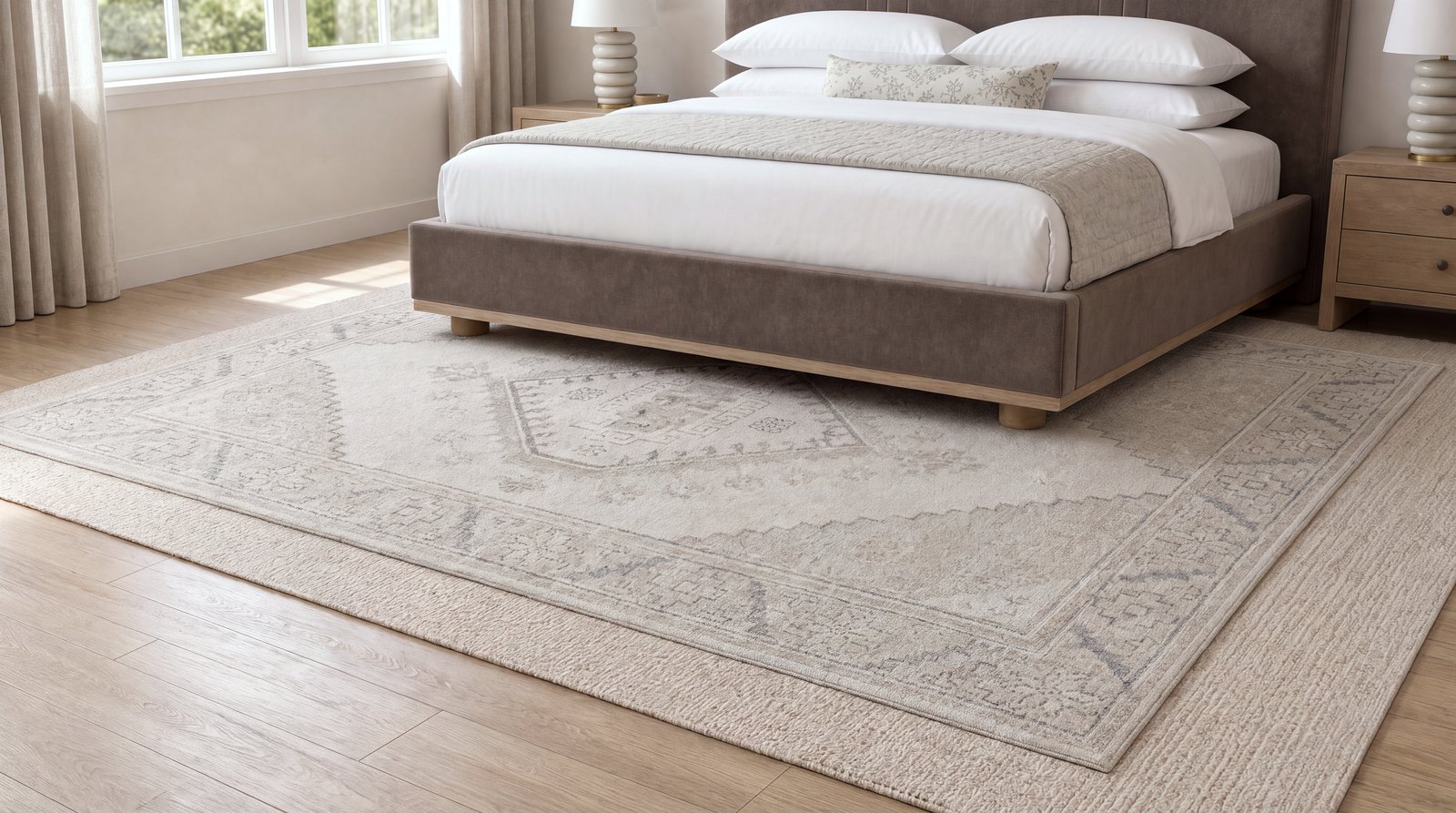
A properly proportioned rug finishes a room, in the bedroom and everywhere else. If you are choosing between two sizes, take the larger one.
The rooms shown are Sakaia visualisations: our design concepts, rendered to teach, not photographs of a completed project.