
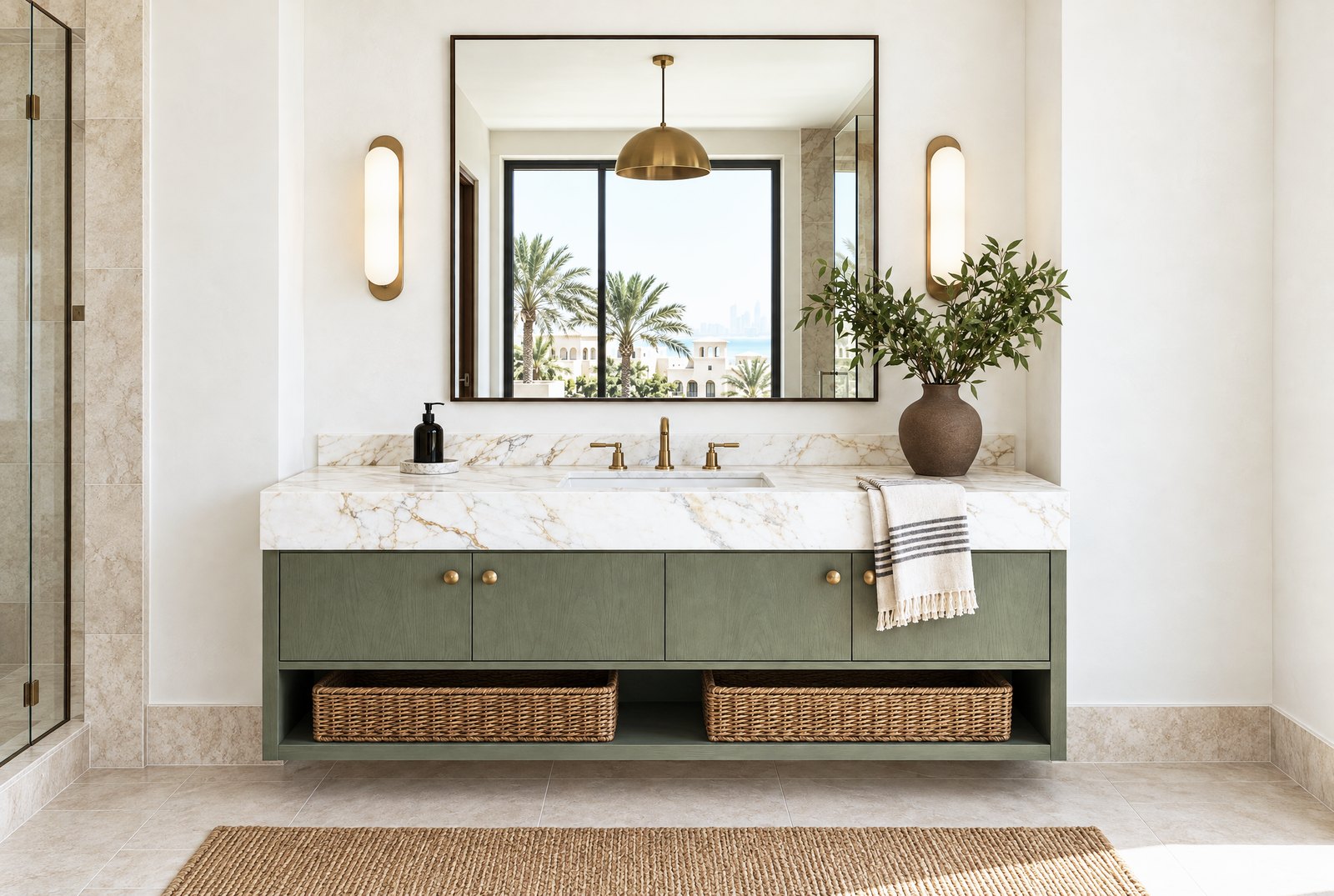
Marble and soapstone are both natural stones, yet they behave very differently once toothpaste, perfume and hot water start to meet them. In the images here the five vanities move from a relaxed, organic bathroom to a room where the vanity is carved entirely from one stone, and each of them shows a different way of living with marble or soapstone.
Marble, and the veins that make each slab
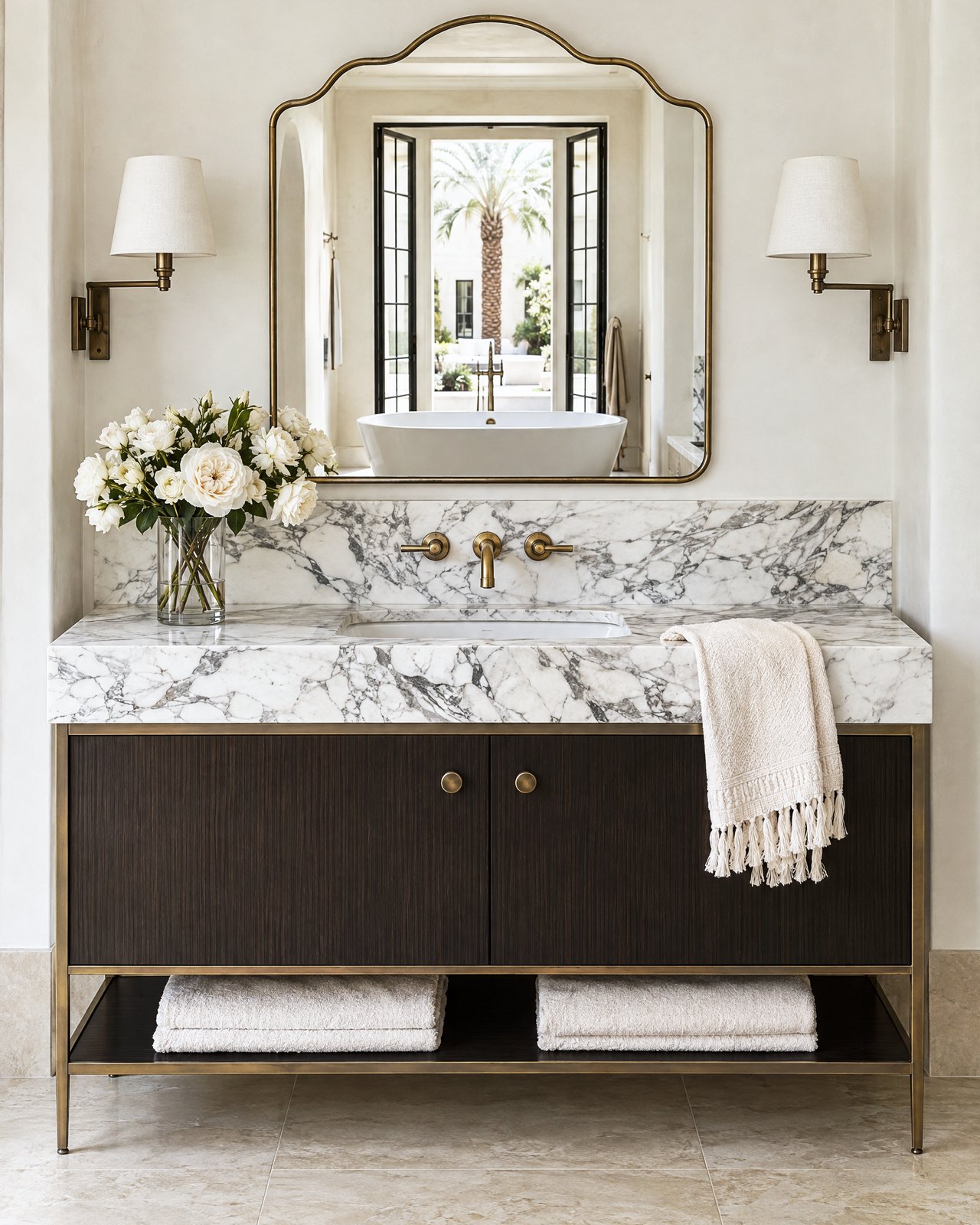
Calacatta and Arabescato are both quarried in the Apuan Alps above Carrara, in Tuscany. Calacatta has a bright white ground with bold grey veins, and Calacatta Oro adds soft gold and warm grey to that veining, which is why it sits so well next to brass and oak. Arabescato has the most movement of the three, with grey veins that curl across the slab in arabesques, so I give it a simple vanity and let the stone carry the room. Because every slab is different, I always choose the actual slab in person and decide with the stone mason where each cut will fall.
Polished or honed
Marble is made of calcite, and any acid reacts with it. In a bathroom the acids come from places most people never think about: toothpaste, mouthwash, some hand soaps, perfume and hairspray. On contact they change the surface itself and leave a dull mark, which stone specialists call an etch. A stain is something different, a liquid that has soaked into the stone.
On a polished top an etch shows as a matte patch on a mirror finish, so polished marble suits a guest bathroom or a powder room, where it stays beautiful with little effort. A honed top is matte from the start, so etching blends into the surface and is far harder to see, which makes it my usual choice for a family bathroom. Honed marble is slightly more open, so it shows oily fingerprints sooner and benefits from a good sealer.
Soapstone, the forgiving stone
Soapstone is rich in talc, which gives it a soft, almost velvety feel under the hand and a colour that ranges from charcoal to a grey green. It is essentially non porous, so it does not stain the way marble can and needs no sealer, and acids do not etch it. Its softness means it scratches more easily, but a light scratch can be sanded away by hand, which is why a soapstone vanity looks better with the years. Many people oil it with mineral oil, which deepens the colour and evens it out, and this is a choice of look, entirely optional.
Five vanities, five ways to use stone
In the Modern Organic bathroom honed Calacatta Oro sits on sage green oak, with woven baskets below and brushed brass lights, and the matte stone keeps the whole room soft. The Warm Traditional double vanity pairs polished Calacatta Oro with honey oak panelled doors and unlacquered brass, a classic that feels lived in. The Modern Parisian vanity is treated as a piece of furniture, espresso oak in a slim brass frame under a thick slab of polished Arabescato.
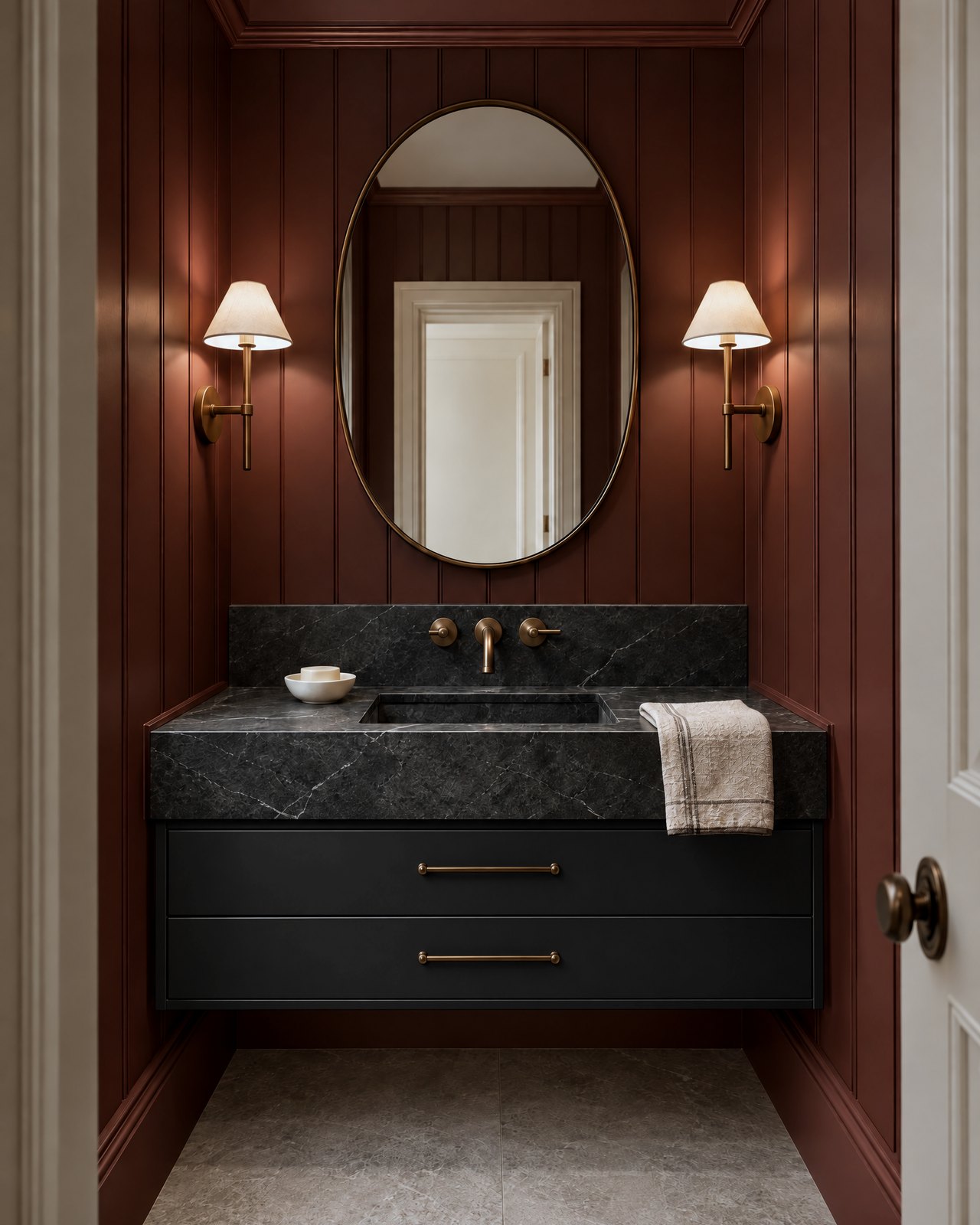
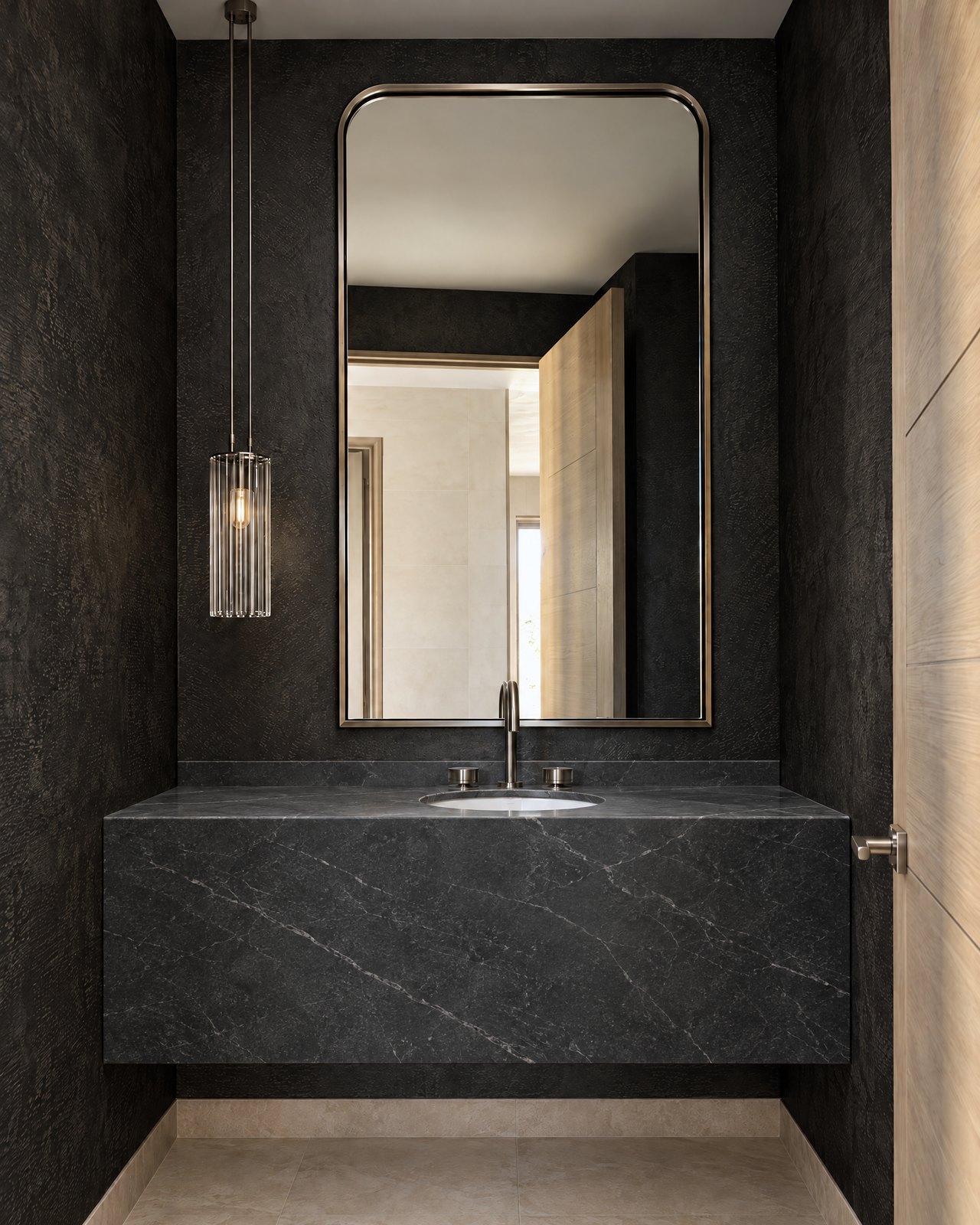
Soapstone changes the mood completely. In the Heritage Powder Room a honed soapstone top and backsplash sit on a black vanity against oxblood panelling, with antique bronze taps and linen shades. In the Monolithic Minimal powder room the vanity is a single block of soapstone, and the stone is the whole piece.
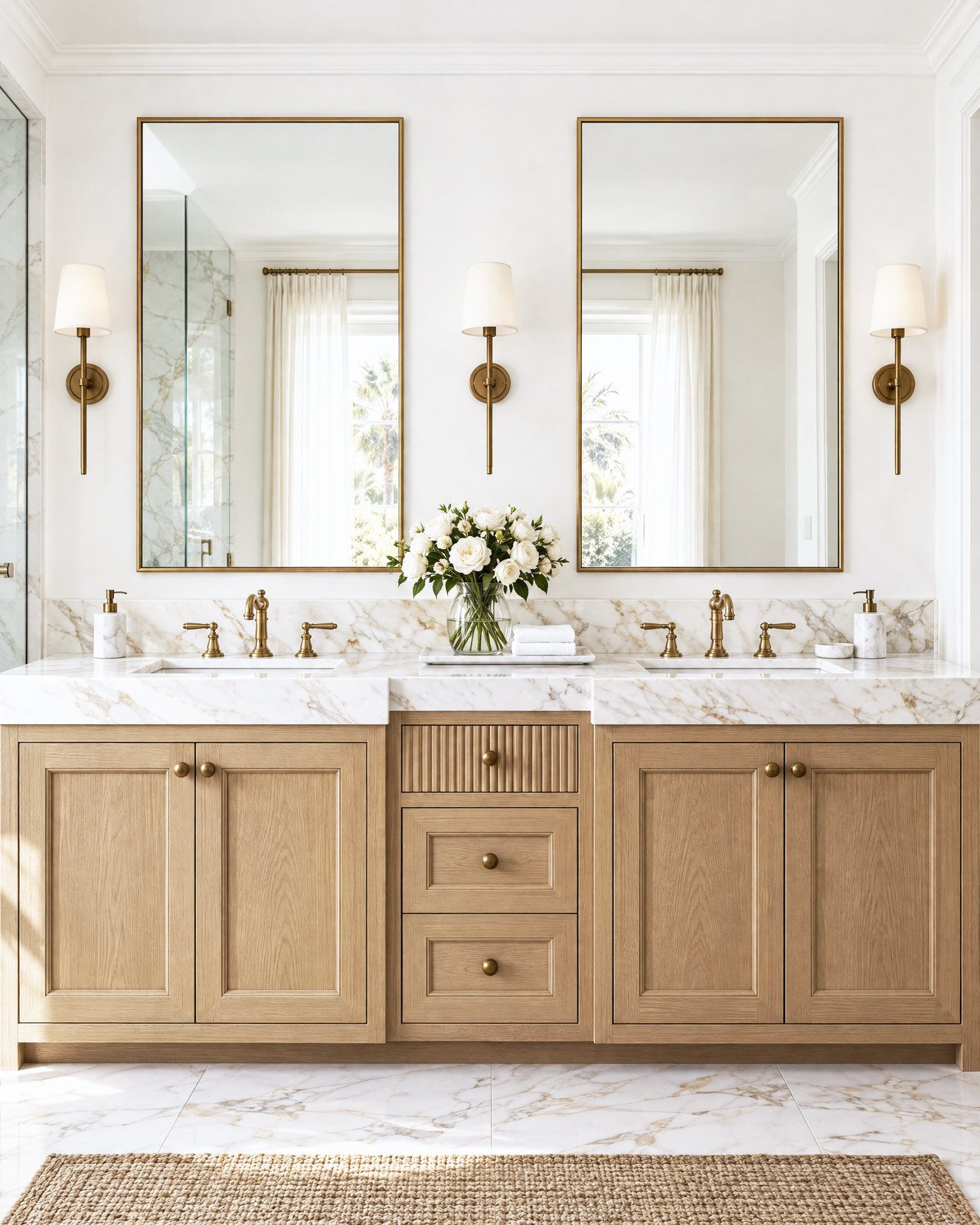
How I care for marble in a bathroom
I have every marble top sealed before it is used, and resealed every six to twelve months depending on how much the bathroom is used. A simple test tells you when it is time: drip a little water on the surface, and if it still beads, the sealer is working. For daily cleaning, warm water with a few drops of pH neutral soap and a soft cloth is all marble needs, and drying the surface afterwards keeps water marks away. I keep vinegar, citrus cleaners, bleach and abrasive powders far from it, and I check that any disinfectant is labelled safe for natural stone. A small tray for perfume, toothpaste and mouthwash protects the stone from the drips that cause most etching, and if a mark does appear, a stone specialist can usually polish it out.
How I care for soapstone
Soapstone asks for very little. Warm water with a little dish soap and a soft cloth keeps it clean, and I avoid abrasive scrubbers so the surface stays even. If a light scratch appears, a gentle rub with fine 220 grit sandpaper removes it, followed by a little mineral oil if that spot looks lighter than the rest. For a new top, oiling every few weeks for the first months speeds up the natural darkening, and after that you can oil as often as you like, or stop altogether.
How I decide
I start with the way the bathroom will be used. For a busy family bathroom I reach for honed marble or soapstone, which forgive daily life, and I keep polished marble for the rooms where its reflection can be enjoyed without worry. Then I let the slab lead: once the stone is chosen, the wood, the metal and the light of the room follow from its colour and its veins.
The images in this article are design visualisations by Studio Sakaia.