
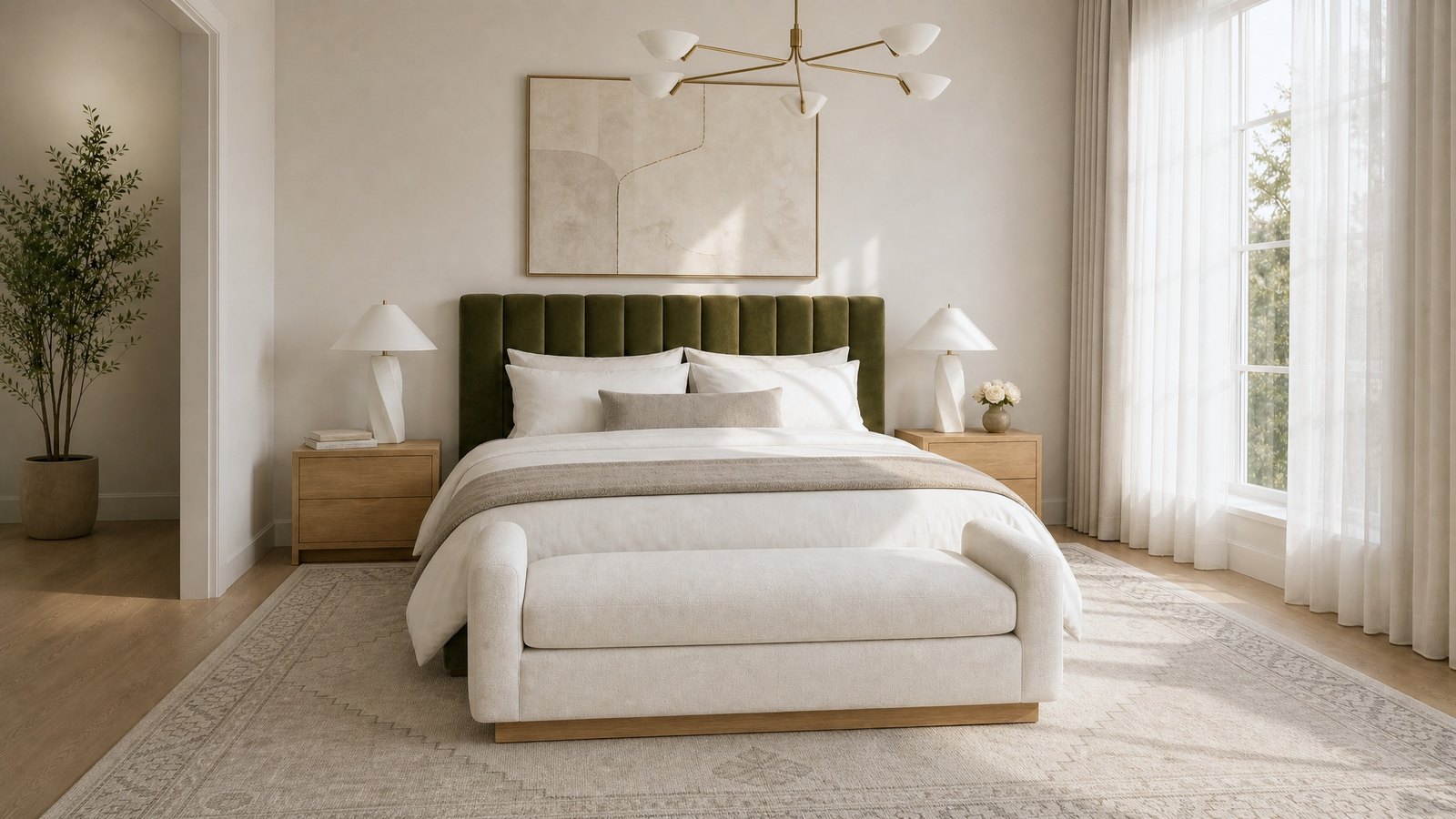
Start with the base, because it never changes. Crisp white sheets, a white duvet, and sleeping pillows that match the bed size: king pillows on a king bed, always. White is not a compromise here. A freshly made white bed is the closest thing a bedroom has to a clean sheet of paper, and everything else in the room reads against it.
The first look is the hotel look, with one personal touch. Keep the whole bed white and add exactly two things: a lumbar pillow in a natural texture, and a muted throw folded across the foot. That is the entire recipe. The restraint is what makes it work, because the two additions read as a decision rather than an accumulation. This is the look we photograph most, and the look we recommend when someone wants their bedroom to feel calm this week rather than after a renovation.
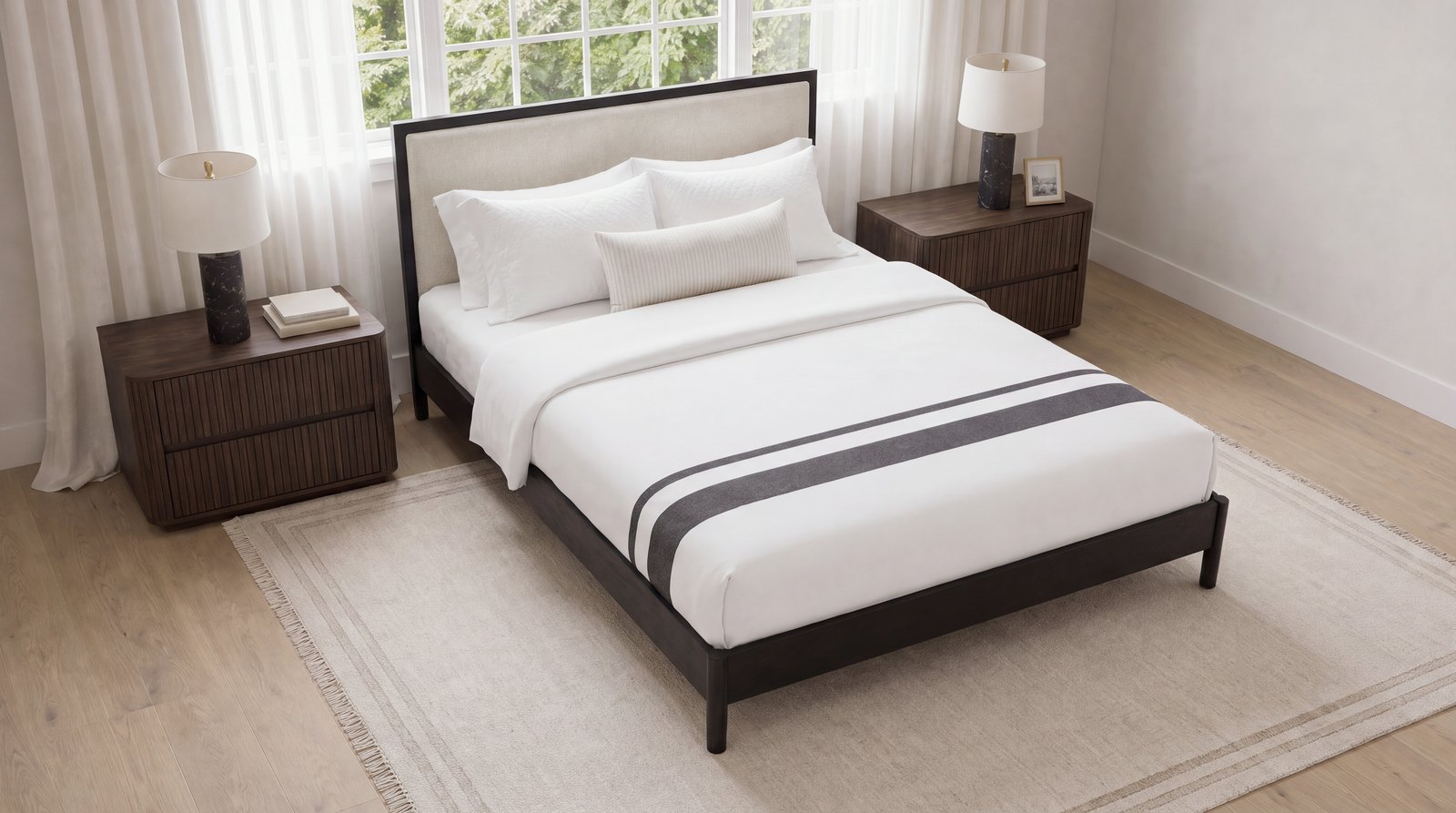
The second look is one graphic move. Keep the duvet pure white and give it a single stripe band: one thick stripe in a deep grey with one slim stripe running beside it, and nothing else on the entire surface. The boldness comes from contrast, never from covering the bed in pattern. A striped duvet in the pajama sense fights the room; one deliberate band organizes it.
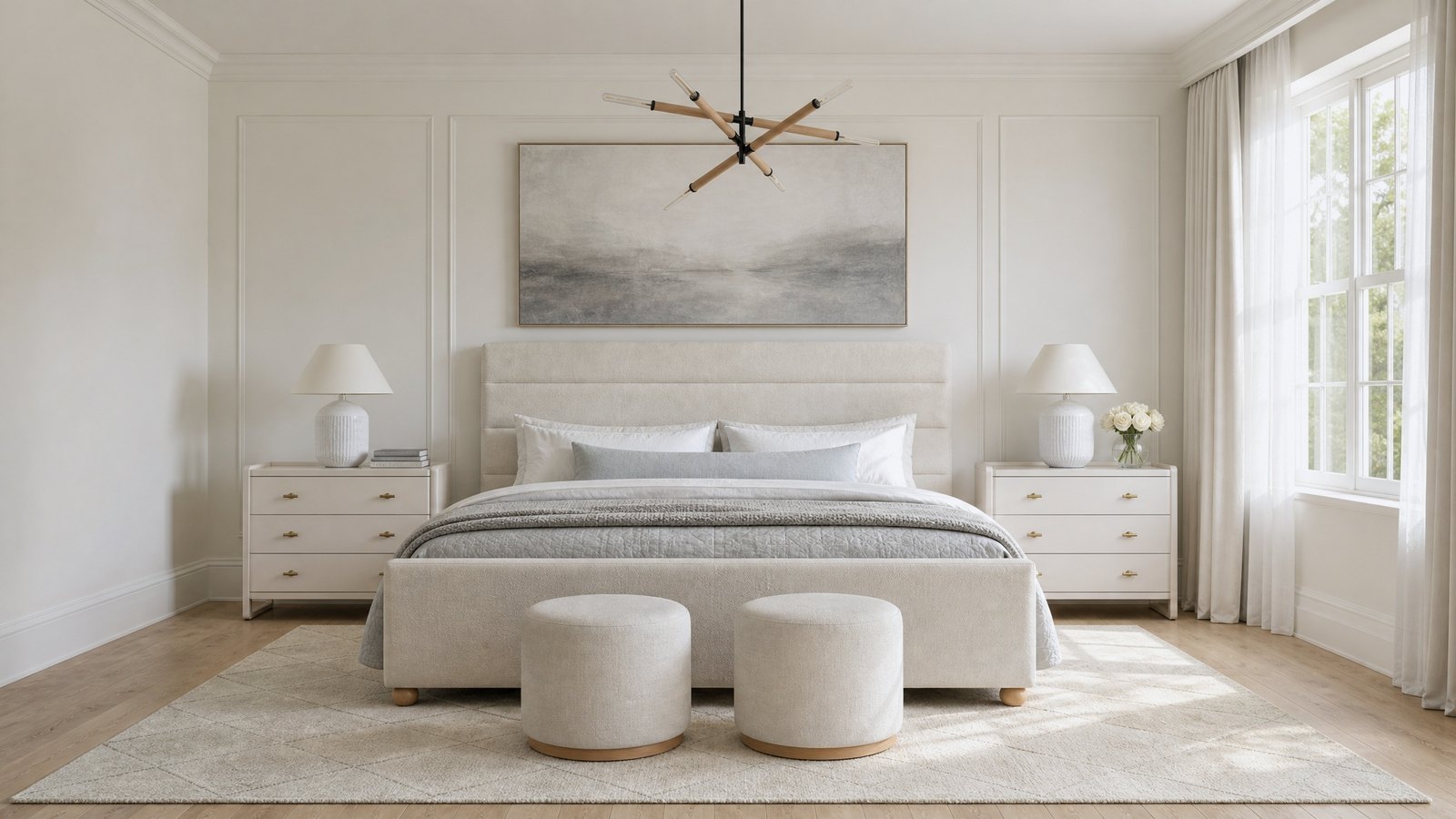
The third look is tone on tone. Choose one light, dusty family of colour and stay inside it, then build all the depth from texture: a quilted coverlet, linen folds, pleated shams, a knitted throw. In a monochrome scheme the fabrics do the talking, and the room reads quiet and finished at the same time.
On sizes, a recommendation rather than a rule. On a king bed we choose decorative pillows of 60 or 65 centimetres; on a queen, try not to go below 55, because the proportion starts to look off. Stack some flat, lean some upright, or combine both. Then stop before the bed turns into a pillow shop.
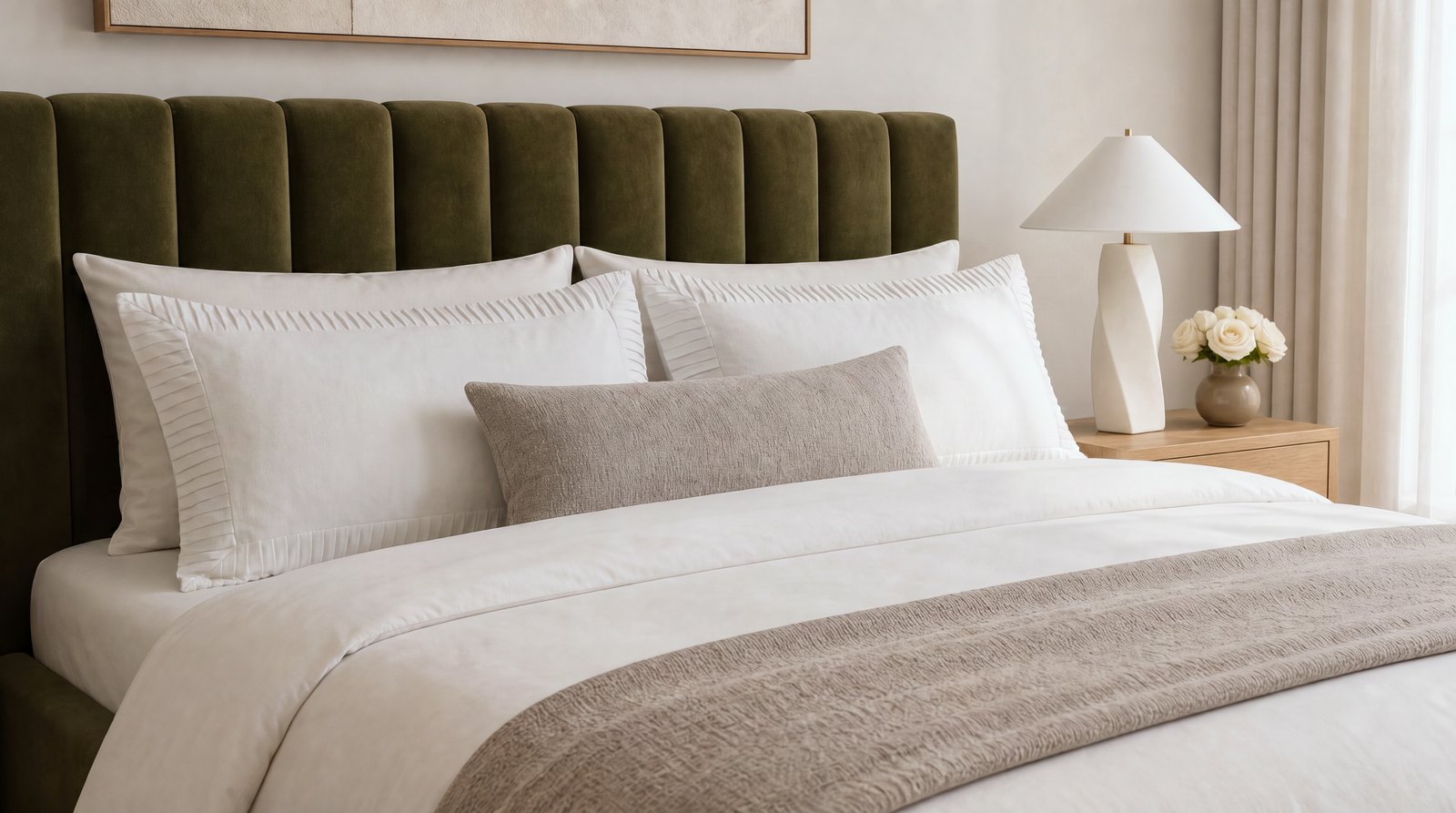
Layers, texture, and the quality of the materials carry all three looks.
The rooms shown are Sakaia visualisations: our design concepts, rendered to teach, not photographs of a completed project.