
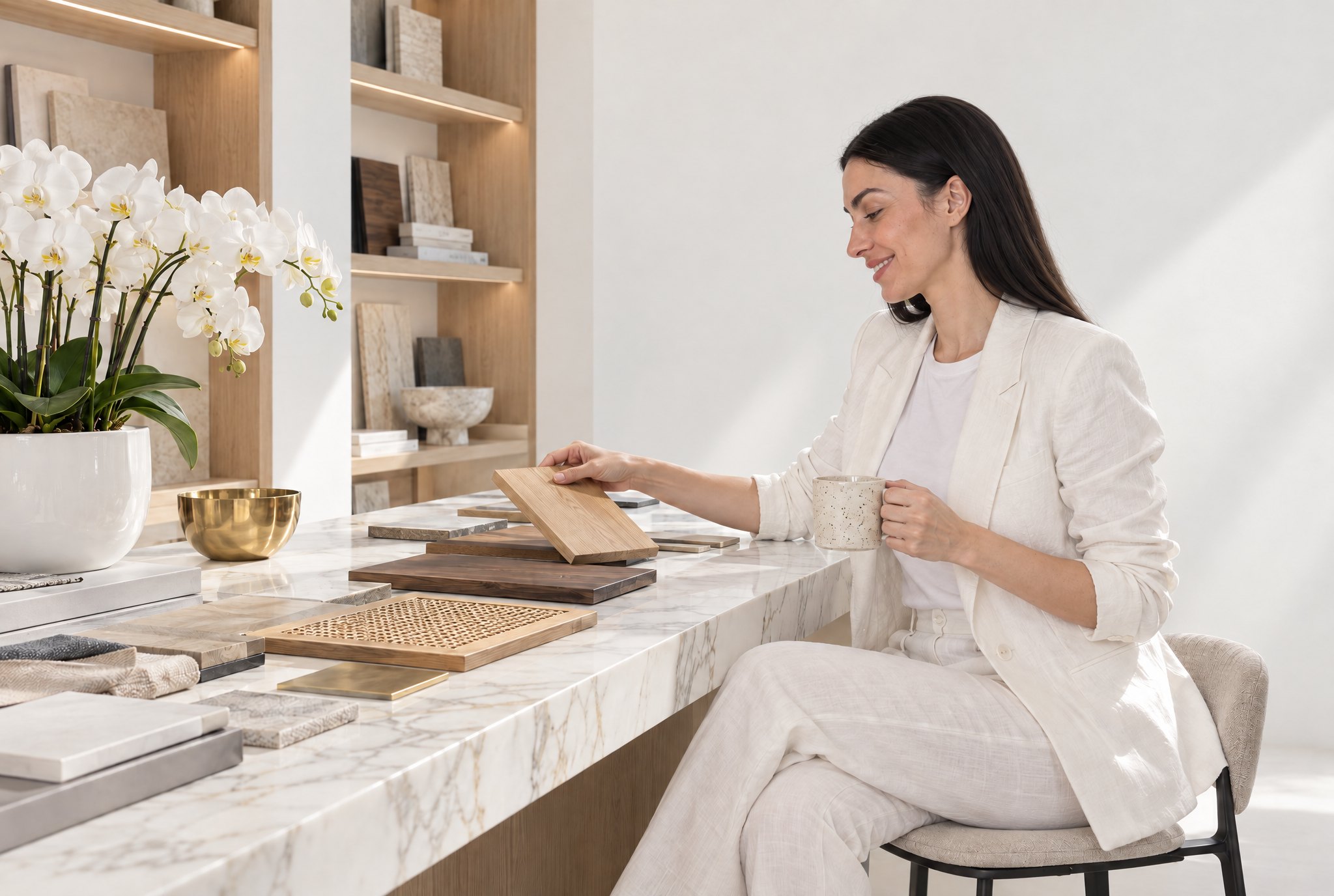
Almost every home I walk into in Dubai has a few woods in it already. There's the floor that came with the apartment, the kitchen the developer chose, and very often a table or sideboard that has travelled with the family from one home to the next. The question I hear most is whether all of that can live together. It can, and a room with a few woods in it usually feels warmer and more lived in than one where everything matches.
Start with the wood you can't change
Before I choose anything new, I look at what is staying. In most homes that's the floor or the joinery, because they cover the largest surface and they're the hardest to replace. That wood leads, and every other choice in the room takes its cue from it. If there's no wooden floor or cabinetry, the largest wooden piece of furniture plays the same role.
Read the undertone
Every wood leans a little warm or a little cool. Natural oak, walnut, cherry and the honey tones lean warm, with a hint of yellow or red in the grain. Grey washes, smoked finishes and some stained woods lean cool. Woods from the same family sit together easily even when one is much lighter than the other, which is why a pale oak floor and a walnut sideboard look so comfortable side by side. When two woods from different families meet, the room tends to feel slightly off, even if it's hard to say why.
When you contrast, commit
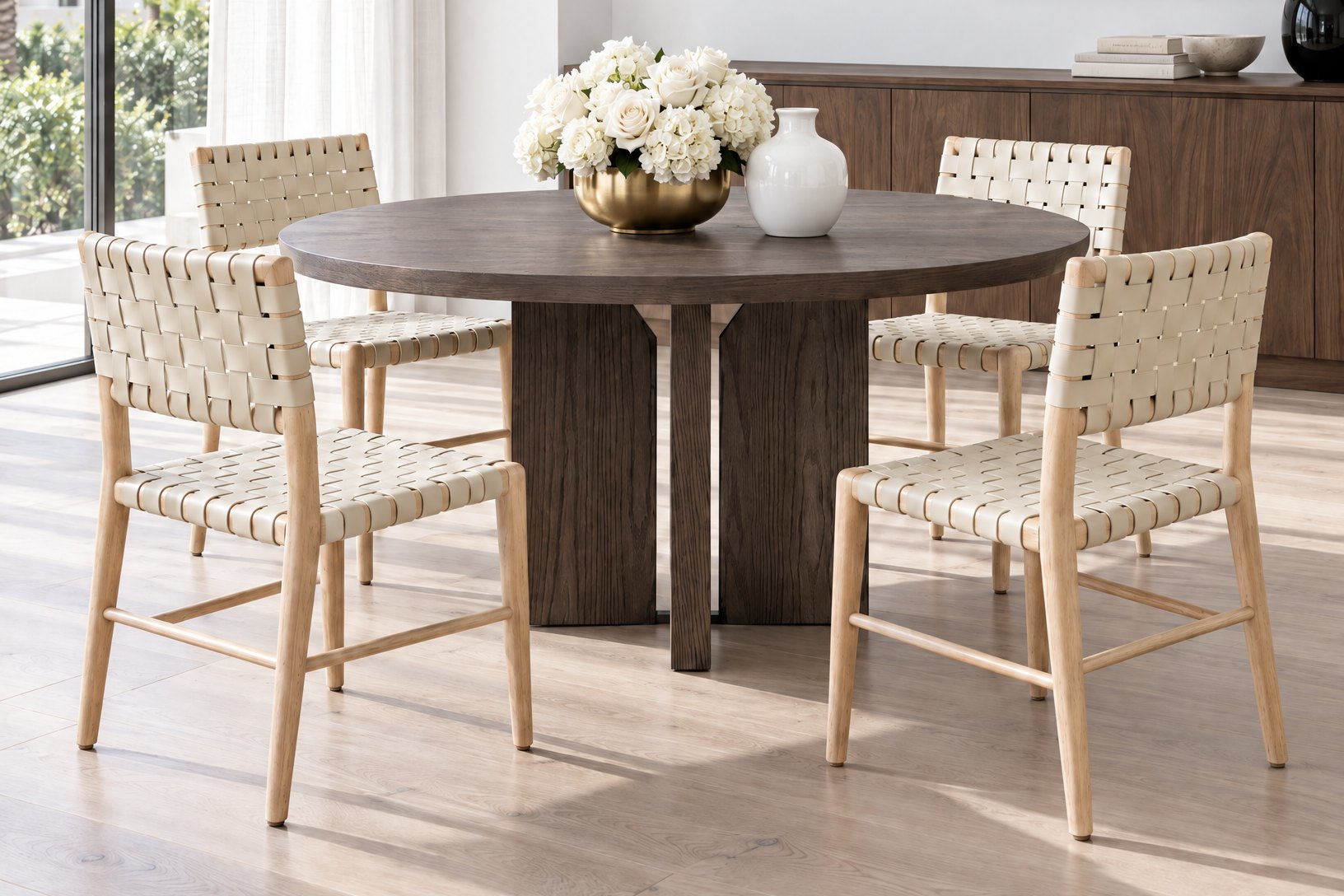
The mixes that look accidental are almost always the ones where two woods are close but not quite the same, like two mid browns where one is a little redder than the other. Contrast works when the eye can read it as a decision. In the dining room in these images the floor is a pale oak, the chair a honey oak and the table a dark smoked oak, three clear steps from light to dark.
Repeat every tone at least twice
A wood that appears only once can look like it wandered in from another room. When I bring in a new tone, I make sure it shows up again somewhere else, in a picture frame, a side table, a stool or a shelf. Any piece will do, large or small, as long as the tone has a partner.
Give the eye somewhere to rest
When a room starts to feel busy, a black, white or stone piece breaks up the grain and lets the woods around it breathe. A marble side table, a white lacquered cabinet or a glossy black lamp all do the job well.
A quick test for your own room
Take a photo of the room in daylight and look at it in black and white. If the woods sit at clearly different levels of light and dark, your contrast is working. If several of them blur into the same grey, that's where a change or a repeat will make the biggest difference.
The images in this article are design visualisations by Studio Sakaia.