
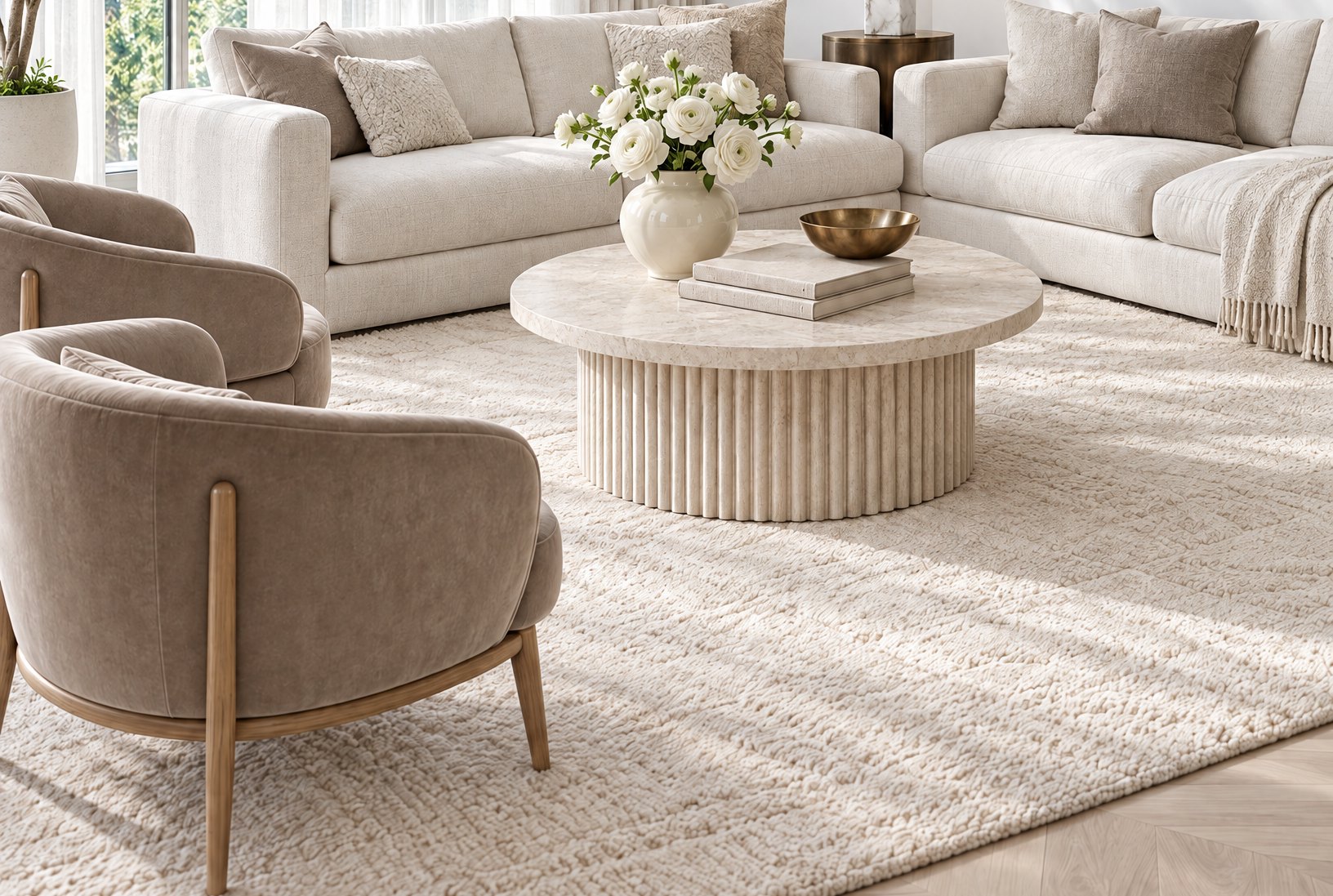
Of all the pieces in a living room, the coffee table is the one every seat shares. It holds the cup, the book and the flowers. It is also what you walk around twenty times a day. When it's the wrong size or sits in the wrong place, the whole room feels slightly awkward, even if every other piece is beautiful. Getting it right comes down to a few simple measurements and one decision about material.
Start with the seating around it
I always choose the coffee table last, once I know the sofa and the chairs, because its job is to serve them. As a starting point, I look for a table that is about two thirds the length of the main sofa. It feels generous without crowding the room, and it lets everyone on the sofa reach it.
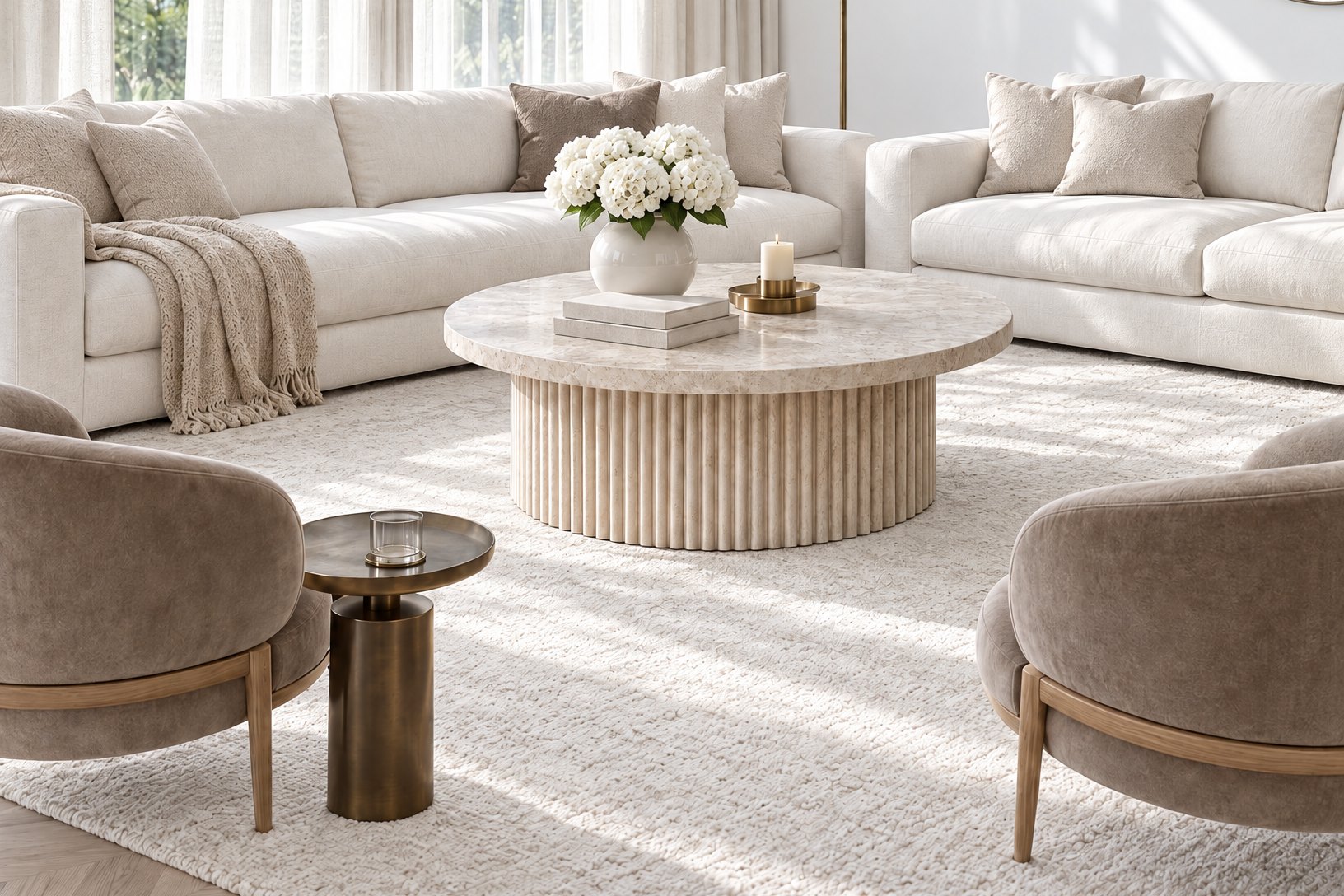
In the living room in these images there is a main sofa, a loveseat set at an angle to it, and a pair of lounge chairs facing them, so four groups of people share one table. That is where a round table earns its place, because it reaches every seat equally and nobody ends up at the far corner of a rectangle.
Leave room to move
Between the edge of the sofa and the table I leave about 40 to 45 centimetres. That gives you enough space to walk through and stretch your legs, while the table stays close enough to put a glass down without getting up. Around the rest of the table I like a little more, closer to 60 centimetres, so the room has an easy path through it.
Match the height to the seat
The top of the table should sit level with the sofa seat, or a few centimetres lower. Anything taller starts to feel like a dining table that has wandered into the living room, and anything much lower makes every reach a stretch. A low, solid table also keeps the sightline across the room open, which matters in a living room that opens onto a garden or a view.
Round or rectangular
A rectangle follows a long single sofa well, and it is the natural choice when the seating lines up in one direction. A round or oval table softens a room full of straight sofa lines, it is easier to move around, and it has no corners to catch a shin or a small child. When the seating forms an L or faces itself, I almost always go round.
Stone or wood
This is where the table changes the mood of the room. A pale stone like travertine brings light into the middle of the space and sits quietly with ivory linen and white walls, so the room reads calm and bright. The same fluted shape in walnut gives that pale room weight and warmth, and it becomes the darker anchor the eye lands on first.
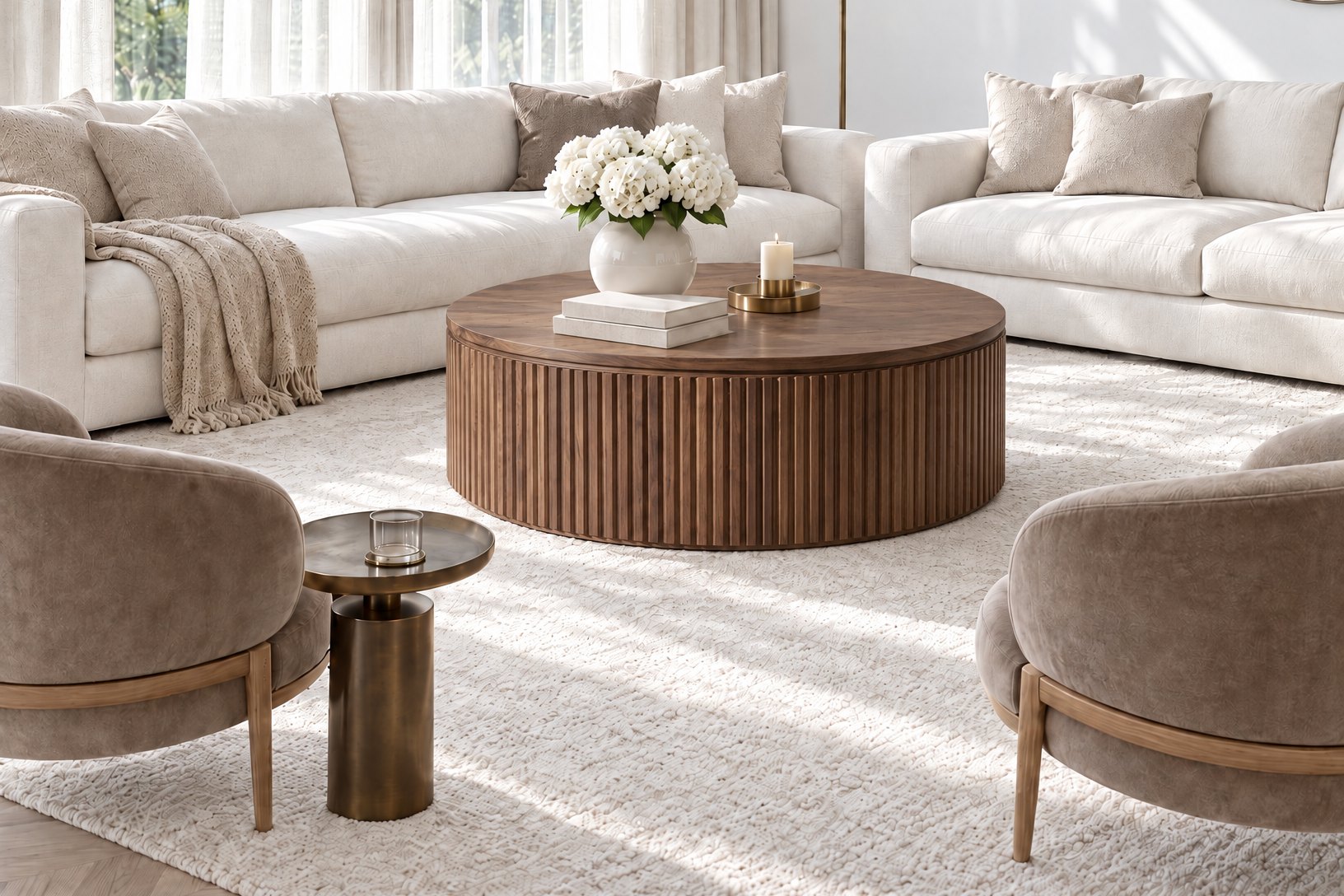
Neither is the safer choice. I decide by looking at what else is in the room: if the floor and the upholstery are already pale, walnut gives the eye somewhere to rest, and if there is already a lot of wood around, stone keeps the room light.
Style it in threes
On top, I keep it simple: something tall, like a vase of fresh white flowers, something flat, like two books, and something small that catches the light, like a brass bowl or candle holder. Then I leave at least half the surface empty, so the table still works as a table.
The images in this article are design visualisations by Studio Sakaia.