
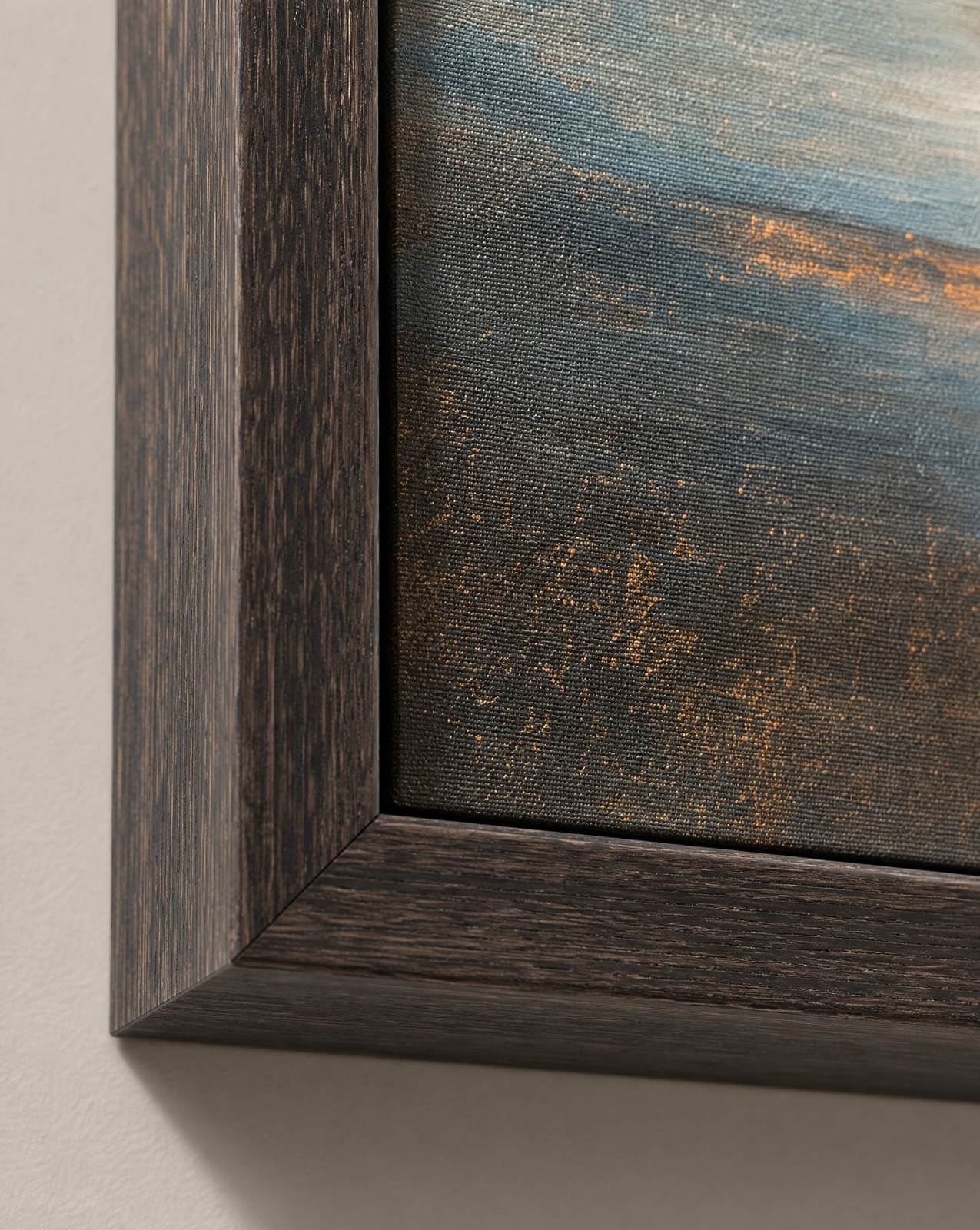

The frame's job
A frame does three things at once: it protects the piece, it separates the image from the wall so the eye knows where one ends and the other begins, and it sets a tone, formal or relaxed, warm or cool, heavy or light. Get the first job right and the piece survives. Get the other two right and the piece works in the room.
The common mistake is choosing a frame based on how it looks in isolation, on a screen or in a shop, rather than how it will read thirty centimetres from a sofa arm or a headboard. A frame is always seen with the wall, the furniture, and the light around it, so judge it there.
Float frames versus mat and glass
A float frame holds the canvas so it appears to float slightly within the frame, with a small gap of visible edge around it. It is a clean, modern treatment, and it works best with canvas that already has some depth to its stretcher, since that depth creates the shadow gap that makes the float effect read properly.
Mat and glass is the traditional pairing for paper. The mat sits between the print and the glazing, physically keeping the paper off the glass and visually giving the eye a resting border before the wall takes over. This combination suits detailed or delicate work, and it is close to essential for anything on paper that needs UV and moisture protection.
A float frame suits a loose, painterly canvas in a contemporary room. Mat and glass suits a detailed paper print in a room that wants a slightly more formal read. Let the piece decide.
Mat width and why it matters
If you are using a mat, its width changes the entire feel of the piece. A narrow mat, a few centimetres, feels tight and current. A generous mat, wide enough to leave real breathing room around the image, feels considered and closer to a gallery presentation. A too-narrow mat on a large, quiet piece can feel cramped, and a too-wide mat on a small, busy piece can feel lost.
As a general habit, give a busy piece more breathing room. Quiet work can tolerate a tighter mat because it has little competing for attention within the frame itself.
When no frame is the right call
Gallery-wrapped canvas, where the image continues around the edges of a deep stretcher, can hang with no frame at all. The unframed edge is a deliberate modern choice, suited to rooms with strong architectural lines that already carry enough visual weight. Our Amber Dusk Seascape is built for this treatment: the warm tonal gradient reads as continuous when it wraps the edge.
The decision to skip a frame should follow the room's character. A bare canvas edge in a room with heavy, ornate furniture can look unfinished rather than intentional, so weigh the surrounding pieces first.
Glazing and glare
Any piece behind glass has to deal with reflection, and the glazing choice determines how much. Standard glass is the simplest option and shows the most reflection, a real problem opposite a bright window or a strong lamp. Anti-reflective glazing cuts the glare substantially and earns its cost in any room where the art faces a light source directly. In a room with soft, indirect light, standard glazing is a fair place to economise. This choice carries more weight in Dubai than it would in a room with modest windows: floor-to-ceiling glazing is common here, and a framed piece hung opposite it spends most of the day facing direct sun.
Matching frame wood to the room's wood
A frame's wood tone should relate to the dominant wood already in the room. A room built around light oak floors and furniture generally wants a frame in the same warm, pale family; a heavy, dark wood frame in that room can look like it arrived from somewhere else. A room with darker, richer wood tones, walnut or a dark stain, can carry a deeper frame comfortably, and often needs that weight to avoid looking thin against the furniture around it. In the many Dubai interiors built around pale oak and travertine, this usually means reaching for a light, warm frame rather than the darker gallery frame that instinct suggests.
The safest rule when a room's wood tones are mixed: match the frame to the wood closest to the piece itself, whatever furniture sits nearest the wall it hangs on.
The short version
Choose float or mat-and-glass based on the medium. Give the mat enough width to let the piece breathe, especially if the piece is already quiet. Skip the frame only when the canvas and the room both support that choice. Pick glazing based on the light hitting the wall. Let the frame's wood tone talk to the room.
Browse framed and unframed options across the collection at studiosakaia.com/artwork, or enquire with a photo of your wall and we will tell you what treatment suits it.