
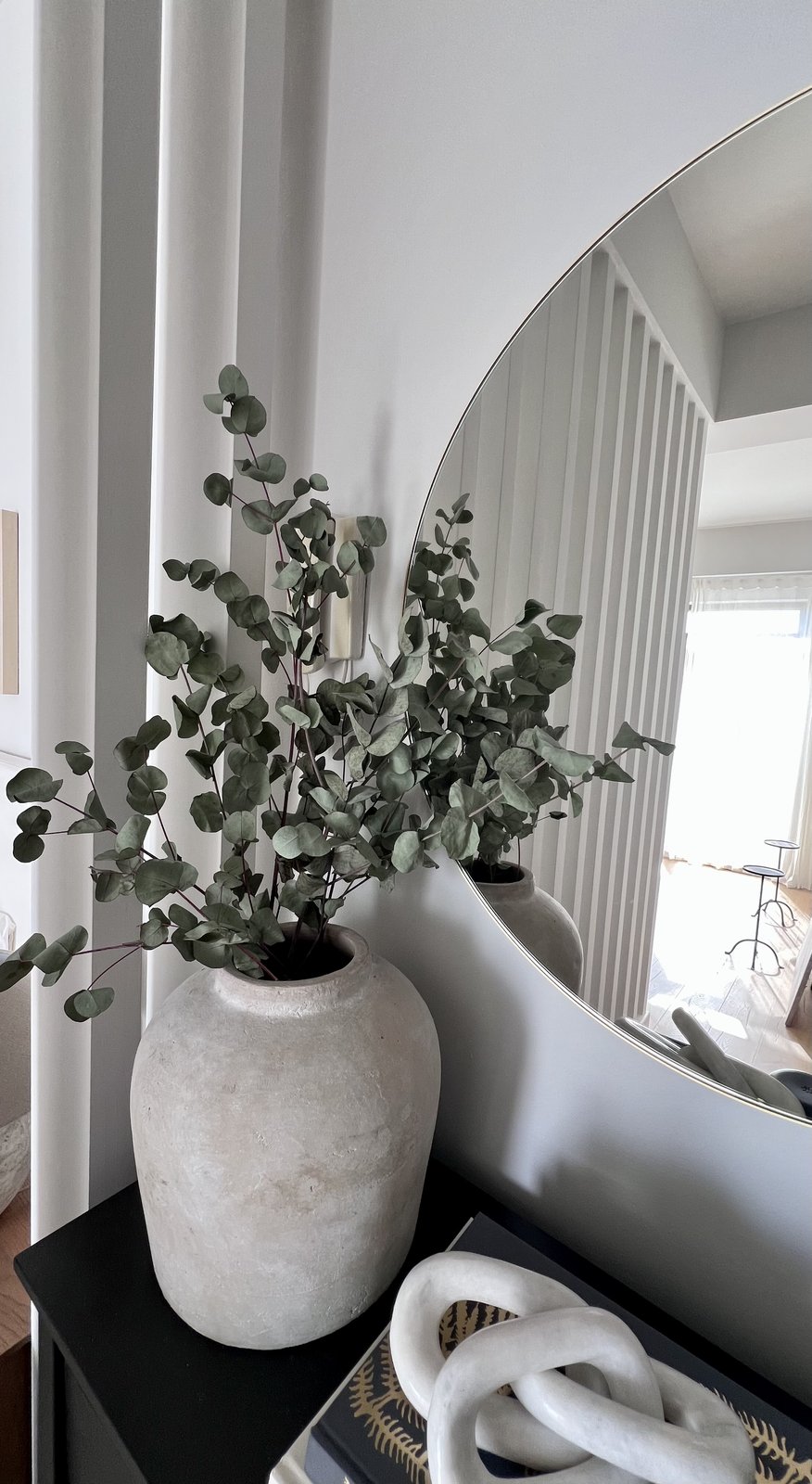
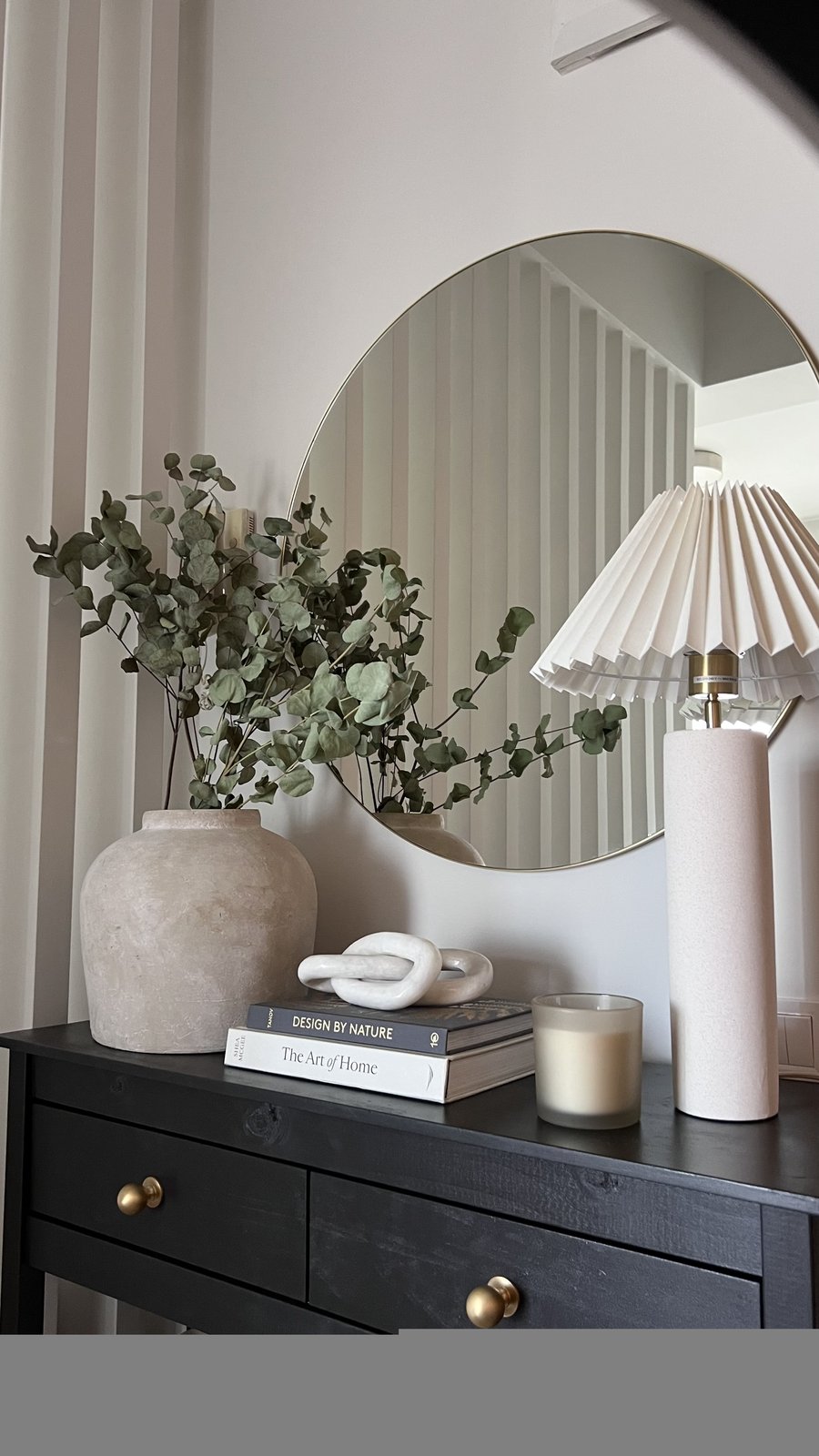
A finished corner of a home looks like a single decision, and it is actually a hundred small ones made in a particular order. The entry console in these photographs, a round brass mirror, eucalyptus in a stone vase, a short stack of design books, a candle, took a renovation year to earn and about a week to style, and the photographs of that week survive: two pinboards dense with fabric swatches and tearsheets, a pendant light tested from two angles, objects auditioned on other surfaces before they found this one. This is the process most people never see, laid out honestly, because the gap between a pinboard and a room is exactly where design happens.
The word for the middle of that gap is testing, and testing is the whole method. Nothing on the finished console arrived there directly from a shop. The books appear in earlier photographs styled on a nightstand across the house; the objects were tried in other rooms first; the mirror's position was rehearsed before it was hung. In our fifteen-step project process the styling stage sits deliberately last, after every trade has finished, and it runs on this audition principle: place, look, move, look again. A styled room is not decorated. It is edited into place.
The pinboard as a decision tool
The two pinboards in the July photographs carry fabric swatches, paper samples, tearsheets, and room references, pinned close and overlapping. A board like this looks like inspiration, and its real job is elimination. Materials that seemed right in isolation fail next to each other on a board within a day: a timber too red against the chosen stone, a fabric whose undertone argues with the wall colour. The board is where those arguments happen cheaply, before anything is ordered.
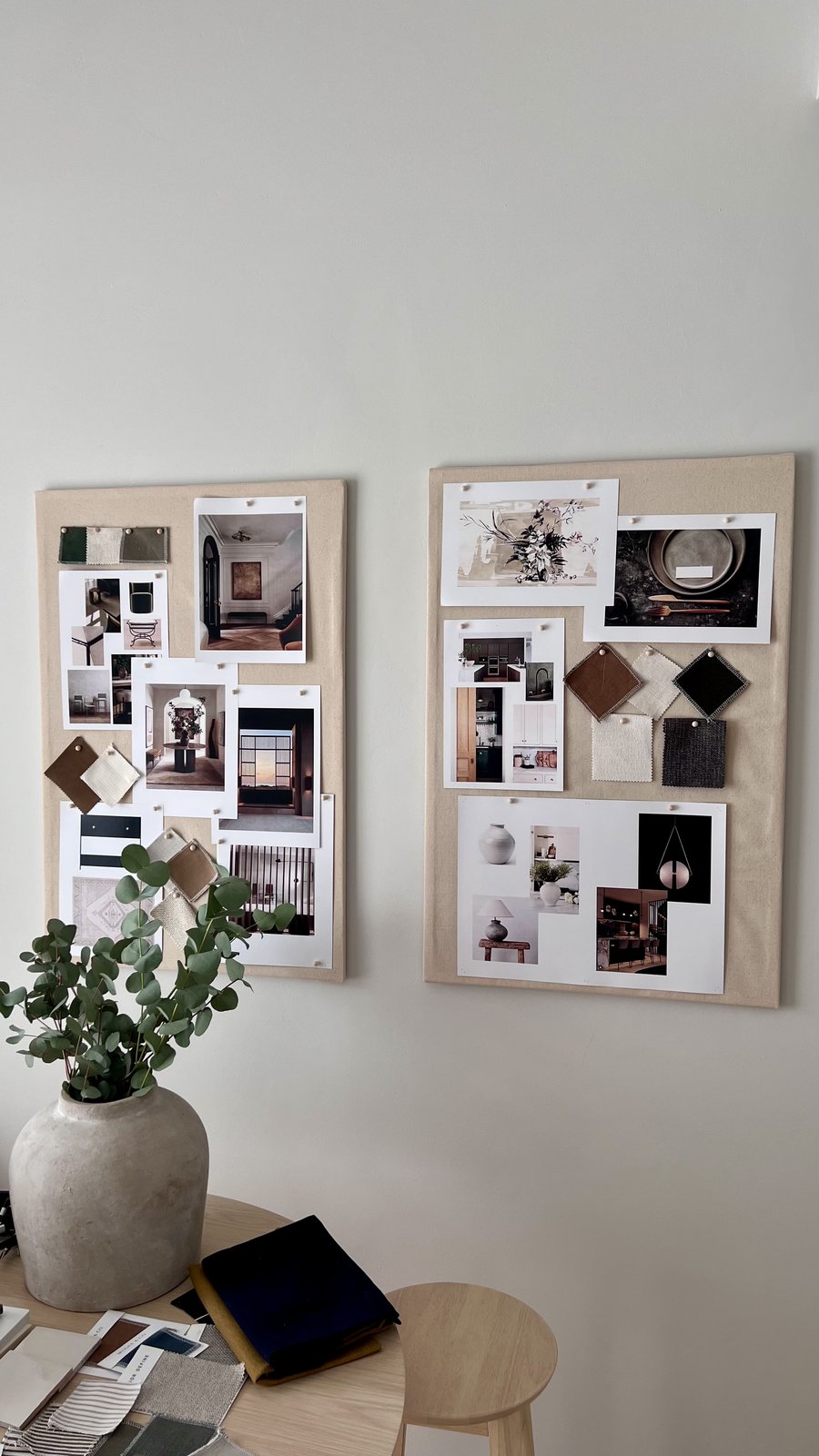
The discipline that makes a board useful is physical honesty. Real swatches, real paper, pinned where the daylight of the actual home crosses them, because a screen calibrates colour and a wall does not. In Dubai this matters doubly: the daylight is strong and warm, interiors are often lit cool on handover, and a palette assembled on a laptop routinely falls apart in the real light of the room it was meant for. Our boards lived in the house they were designing, an advantage a studio project replicates by sampling on site.
Auditioning the objects
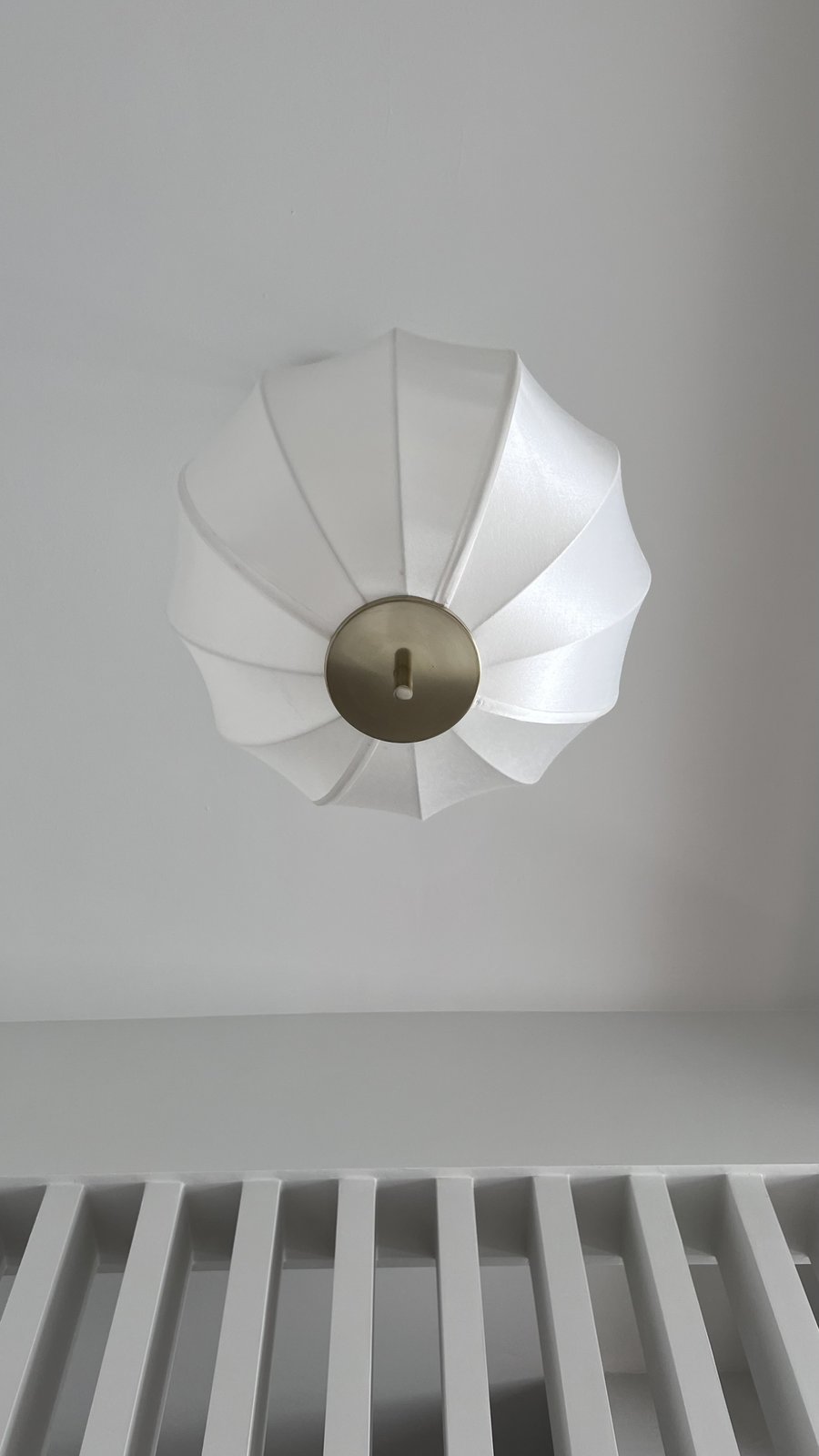
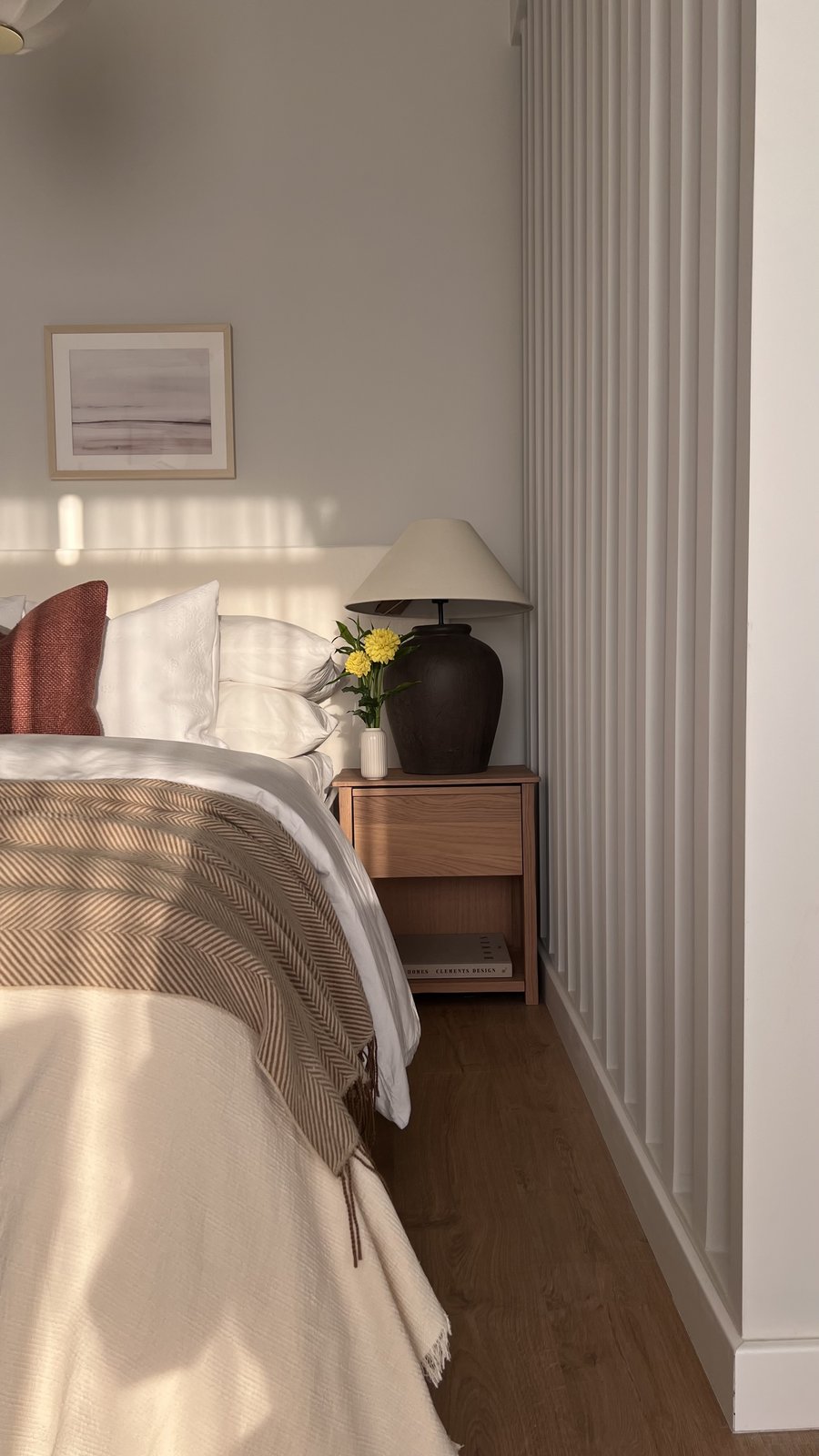
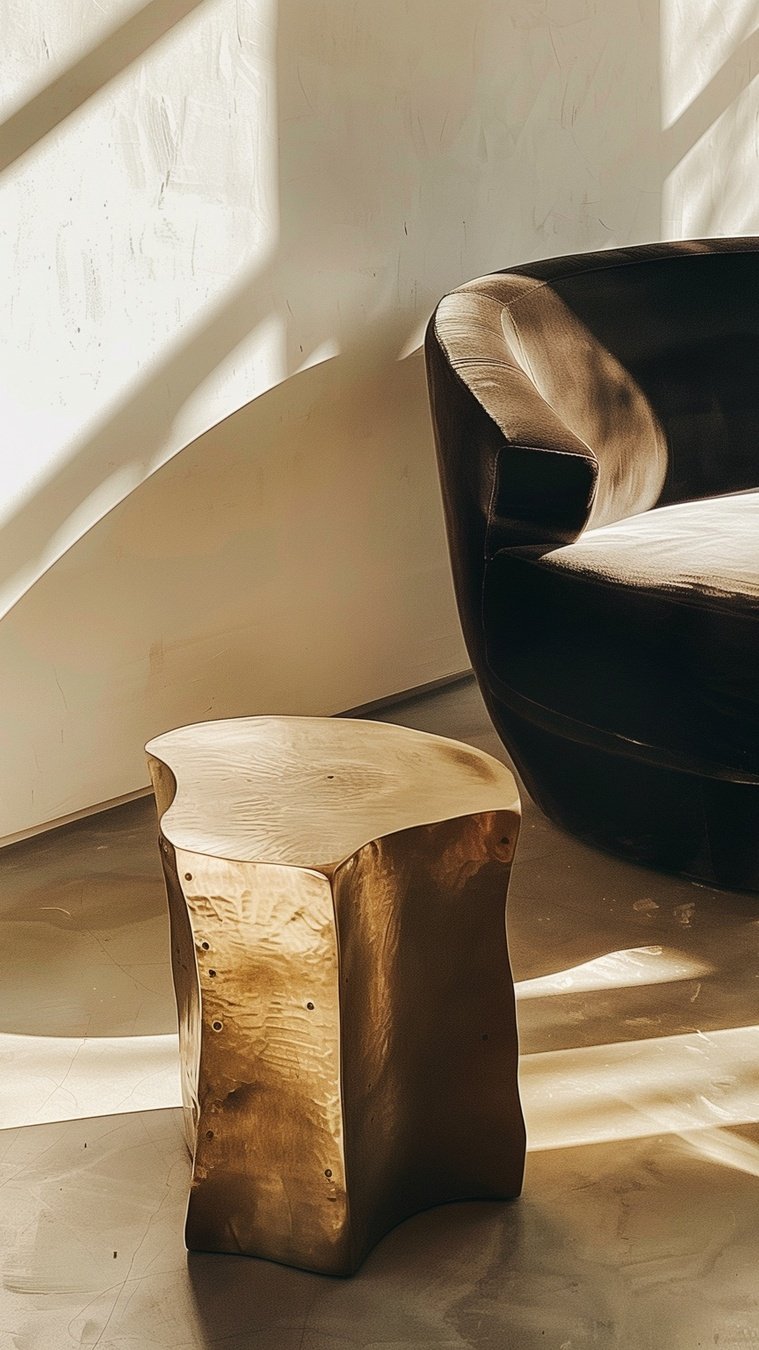
The photographs between the boards and the console show the middle work. A pendant light held and photographed from two angles before committing. A brass side table and a leather chair caught in raking evening sun, a test of how the materials take the specific light of the room. The same books that end on the console styled first on a bedroom nightstand, which is not indecision but rehearsal: an object that works in two places is an object with the right register for the house, and an object that only works in one staging is usually working too hard.
The rule beneath the auditions is that styling objects earn their place by material, not by theme. Stone, brass, linen, paper, a live stem: the console's final cast is a miniature of the whole home's palette, which is why it reads as inevitable rather than arranged. The candle picks up the brass, the vase picks up the stone, the books are chosen as much for the tone of their spines as their contents. Nothing on the surface introduces a material the house has not already committed to.
The console, and the mirror's small reward
The finished photographs show the composition resolved: mirror centred, the vase giving height on one side, the books giving weight on the other, two thirds of the surface left clear so the few objects register as chosen. And there is a detail in the mirror that makes this corner the right ending for the renovation's story: reflected in the glass is the slatted room divider from the other end of the project, the piece that began as a row of studs a year earlier. One photograph, both bookends of the renovation. The mirror above the console reflects the slatted room divider from the bedroom beyond it, one finished piece catching another.
That reflection is the honest summary of process. The console took a week; the week only worked because the year before it had settled every material, colour, and line the console now quotes. Styling is the fastest stage of a project and the most dependent on everything beneath it, which is why it comes last, and why a pinboard photographed in July can become a finished corner by August without a single decision made in a hurry.