

A listing that photographs well and moves fast is rarely a matter of spending more. It comes down to a small set of decisions, made correctly and repeated room after room, well before a photographer or a first viewer ever walks in. Homeowners preparing a property and the brokers advising them are working from the same list, whether or not anyone has written it down before. None of these decisions require construction. Each is a choice about something already in the room, made deliberately instead of left to default. Here are five of the decisions that carry the most weight.
1. Art sized to the furniture
A piece of art hung above a sofa should span roughly two-thirds of the sofa's width. That measurement is what matters, rather than the width of the wall it happens to hang on. Undersized art is the most common fault in a room that otherwise reads well: a frame too small for its sofa looks stranded above the seating instead of anchored to it, and a viewer's eye lands on that gap before it lands on anything else in the room. Height follows the same logic. The reference point is the person moving through the room during a viewing, and the center of the piece should meet that standing viewer roughly at eye level, a different point from the geometric middle of the wall. Undersized art reads as unfinished because, functionally, it is: a room mid-decoration rather than a room shown at its best. A buyer registers that gap before they register anything the seller actually wants them to notice.
2. A decided transition
Wherever one material meets another, oak flooring against a marble threshold, tile against stone, a seam is a decision. A brass inlay set into the line where oak chevron flooring meets marble is a small, specific choice, and it reads as one: it tells a viewer the transition was planned rather than simply left where two trades happened to stop. Buyers rarely register a detail like this consciously, but they read it as a proxy for everything a viewing never shows them: the wiring behind the walls, the plumbing under the floor, the quality of work no walkthrough will ever reveal directly. A property that gets its visible seams right earns trust on the invisible ones. This is a small, contained decision, one inlay, one line, and it carries weight out of proportion to its cost.
3. One composed entry surface
The first few meters of a listing set the expectation for every room that follows. A console, a shelf, or a table just inside the door, styled once and left alone, does more work than most sellers assume: it tells a buyer, before they have seen the kitchen or a single bedroom, what kind of attention this property has received. An entry left bare, or carrying the household's actual daily use of keys, shoes, and mail, sends a different signal before any other room is seen, and a viewer carries that first impression into every room after it. One composed surface, chosen and then left alone, is enough to set that expectation. It does not need to change again for the length of a viewing season.
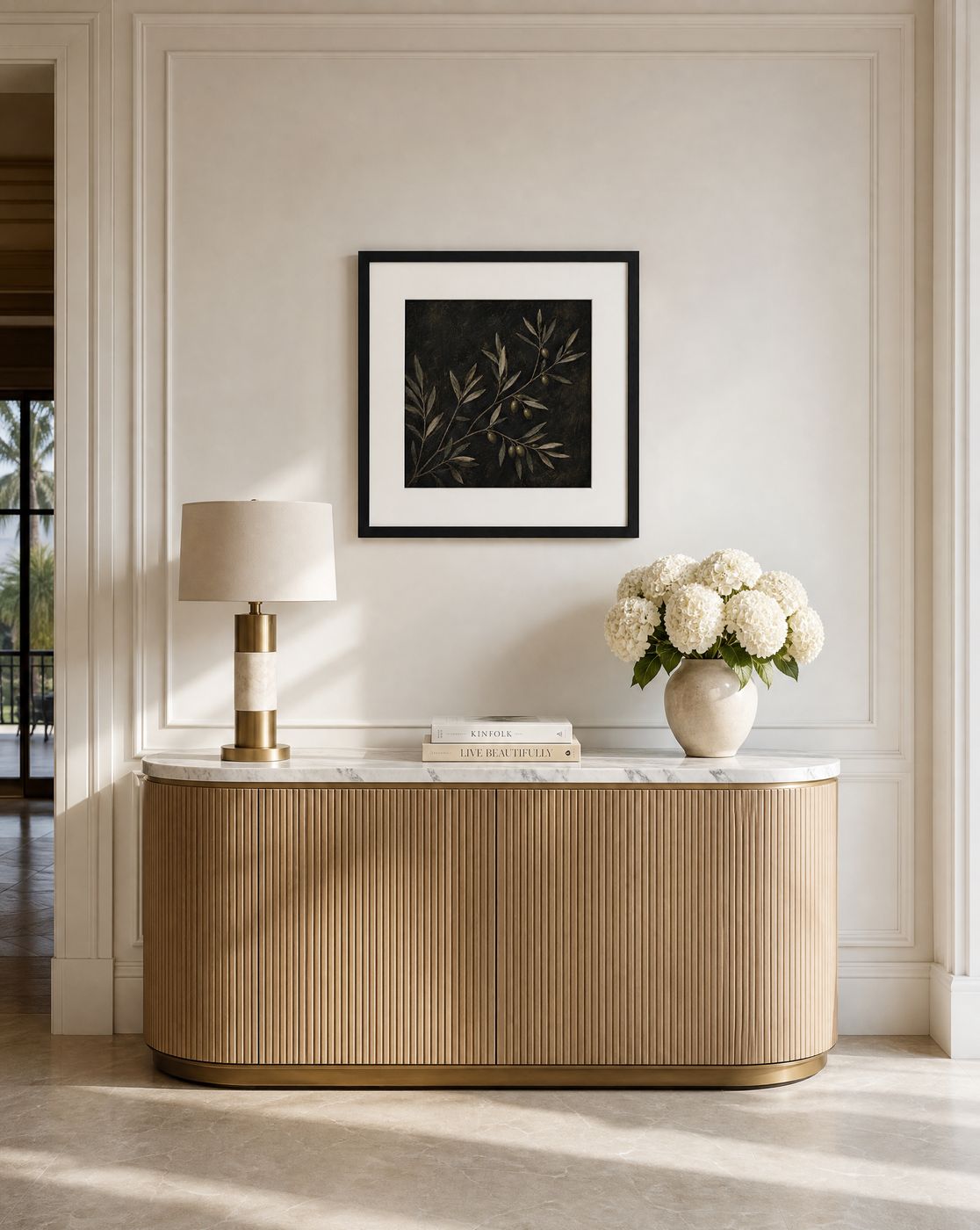

The images through this article are design studies, shown to illustrate the standard rather than a specific delivered project.
4. Layered light over a single ceiling fixture
A room lit only from above reads flatter than the same room lit by lamps positioned at eye level, in a viewing and in a photograph both. Overhead light throws shadow downward and reads cold on camera. A lamp at eye level fills that shadow and warms the color the camera actually captures. This is fundamentally a lighting decision, even though it shows up as styling: it changes what a photograph records as much as what a person standing in the room feels. Listings photographed with layered light consistently outperform the same rooms shot under ceiling light alone, and the difference shows up clearest in the listing photographs a buyer sees before they ever book a viewing.
5. The one room a buyer shortlists by
Every property has one room a buyer remembers when narrowing a shortlist, and it changes with who is looking. A family buyer often carries the kitchen forward in memory, since it is where the household's daily life is imagined happening. A downsizing couple more often carries the primary bedroom, or whichever room holds the view, since that is the room they picture living in day to day. Identifying which room will carry that weight for a specific listing, matched to the buyer profile the property is actually targeting, is a decision made before any styling starts. The other rooms still need to be right. This one needs to be the room a buyer describes to someone else afterward, the room that decides whether the listing stays on the shortlist or drops off it.
Where to start
None of these five decisions require a renovation. They are choices about furniture already in the room, art, material transitions, and light, made in the days before a listing goes to market rather than during construction. If a property is heading to viewings and these decisions have not yet been made, our staging team can walk through them room by room.