
The case in one paragraph: solid oak moves with humidity, swelling and shrinking across the width of every board, and it was developed for climates that change gently. Dubai does not change gently; it swings between months of dry air-conditioned interiors and stretches of heavy outdoor humidity, and a solid board answers that swing by cupping, gapping, or lifting. An engineered board's plywood core is built from layers laid across each other, so the forces cancel and the board stays flat. You see oak, you walk on oak, you sand and refinish oak, and underneath it a more stable structure does the work the climate demands.
What the wear layer actually buys
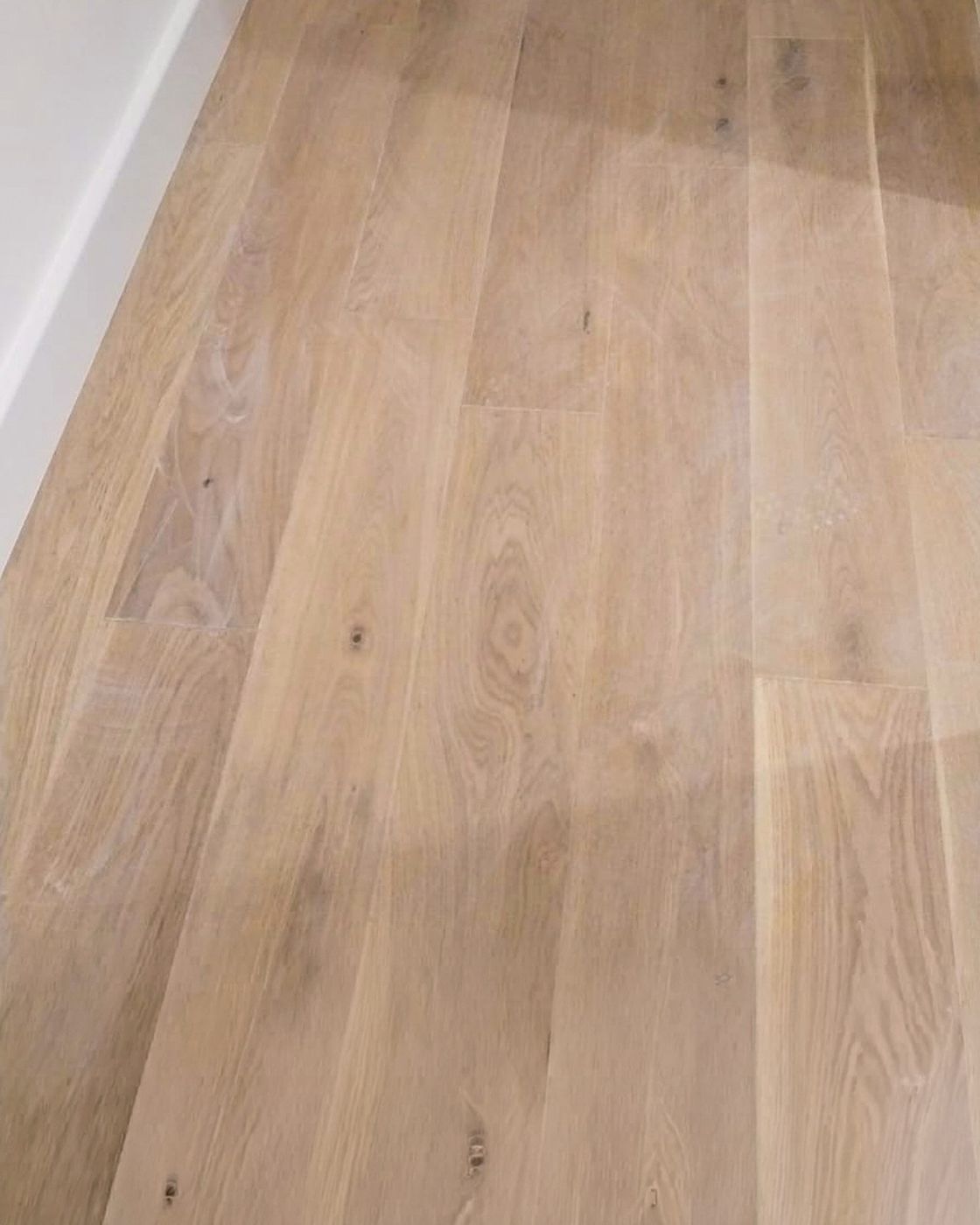
The number worth asking about in any engineered board is the thickness of the top layer of real oak, because it decides both how the floor looks and how long it lasts. A generous wear layer, several millimetres of solid oak, takes the same character as a solid floor, the grain, the knots you choose to allow or exclude, the way wide planks carry light down a room, and it can be sanded and refinished in the future just as a solid floor can. A thin veneer cannot, and it is the difference between a floor for decades and a floor for a tenancy.
Board width and length matter almost as much as species. Wide, long planks calm a room, fewer joints, longer lines, and they suit the generous proportions of Dubai apartments and villas, where a narrow board can read busy across a large floor. Ours run wide, in a warm natural oak rather than a grey or smoked stain, because the floor is the largest single surface in the home and it sets the temperature of everything above it. A warm floor lets the rest of the palette stay quiet.
The install, and the stage after it
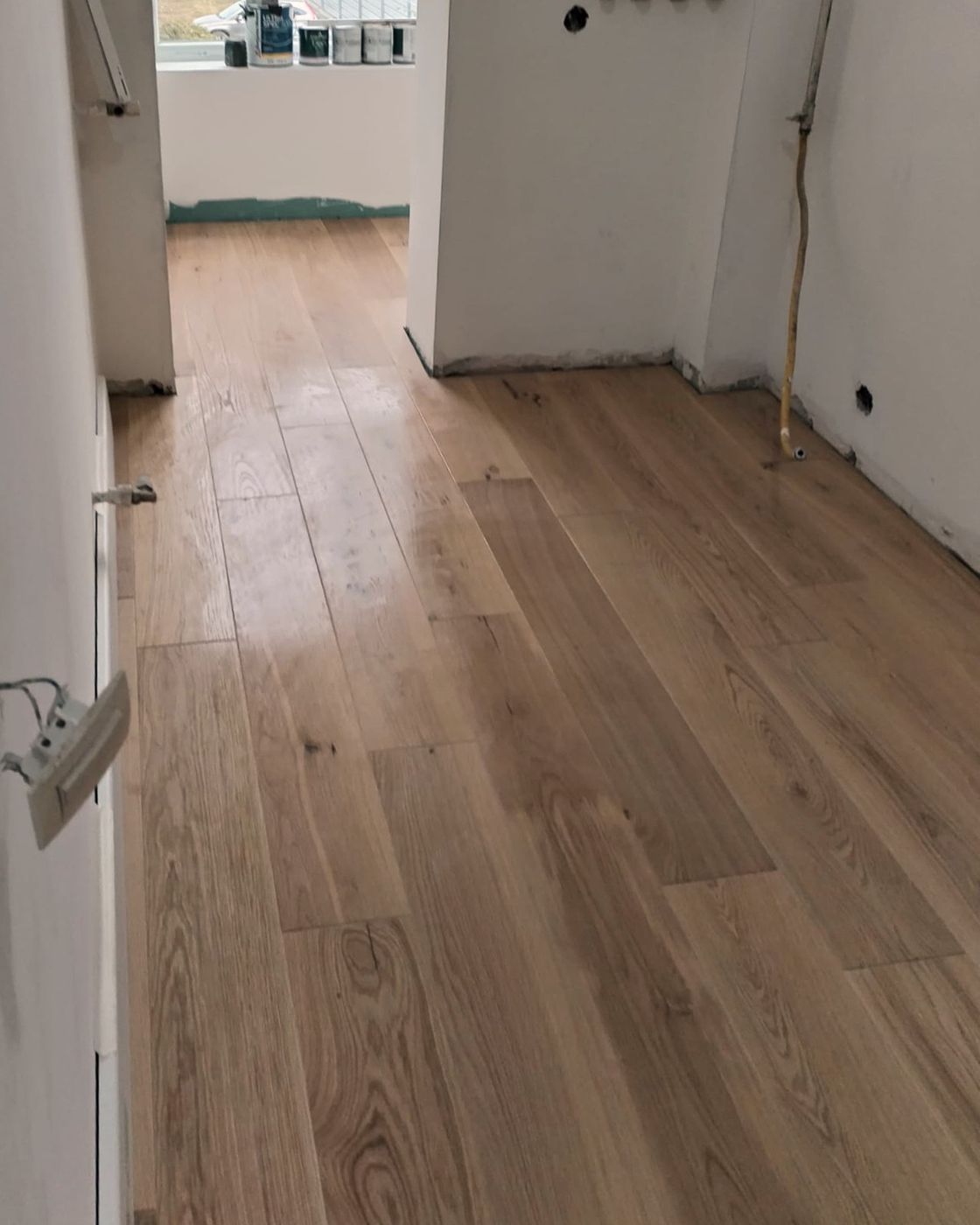
The October photographs show the install: boards going down over their underlay, rows clicked and tapped tight, the expansion gap held at every wall. That gap disappears under the skirting and is the least visible, most important part of the floor. Even an engineered board moves a little as a whole floor, and the perimeter gap is where that movement goes; close it and the floor has nowhere to breathe.
The photograph from February is the honest one: the floor fully laid, and the room above it still a site, cables hanging, dust everywhere, trades ongoing. This is the reality of sequencing in a real renovation. Ideally a floor goes in late, after the dusty trades; in practice, the programme sometimes needs the floor down earlier, and then the floor's survival depends entirely on protection. Ours spent those months under a sacrificial covering, taped at the seams, and the discipline of keeping that protection intact, replaced when it tore, respected by every trade that walked over it, is a small daily project management task that decides whether the finished floor is finished once or twice. In our fifteen-step process, floor protection is written into the programme as a standing item rather than assumed, precisely because a single unprotected week can cost a room of boards.
The finished floor, and the point of it
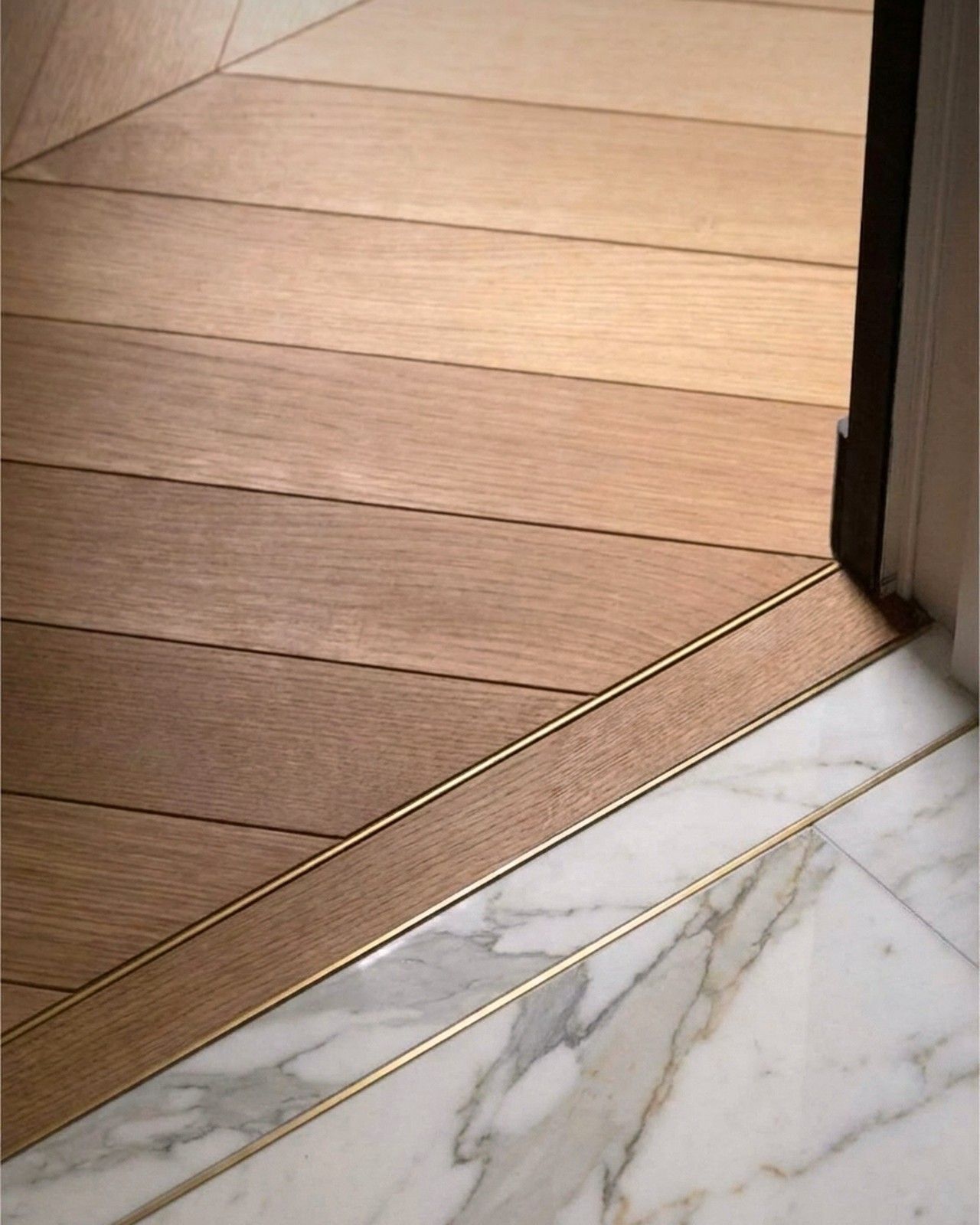
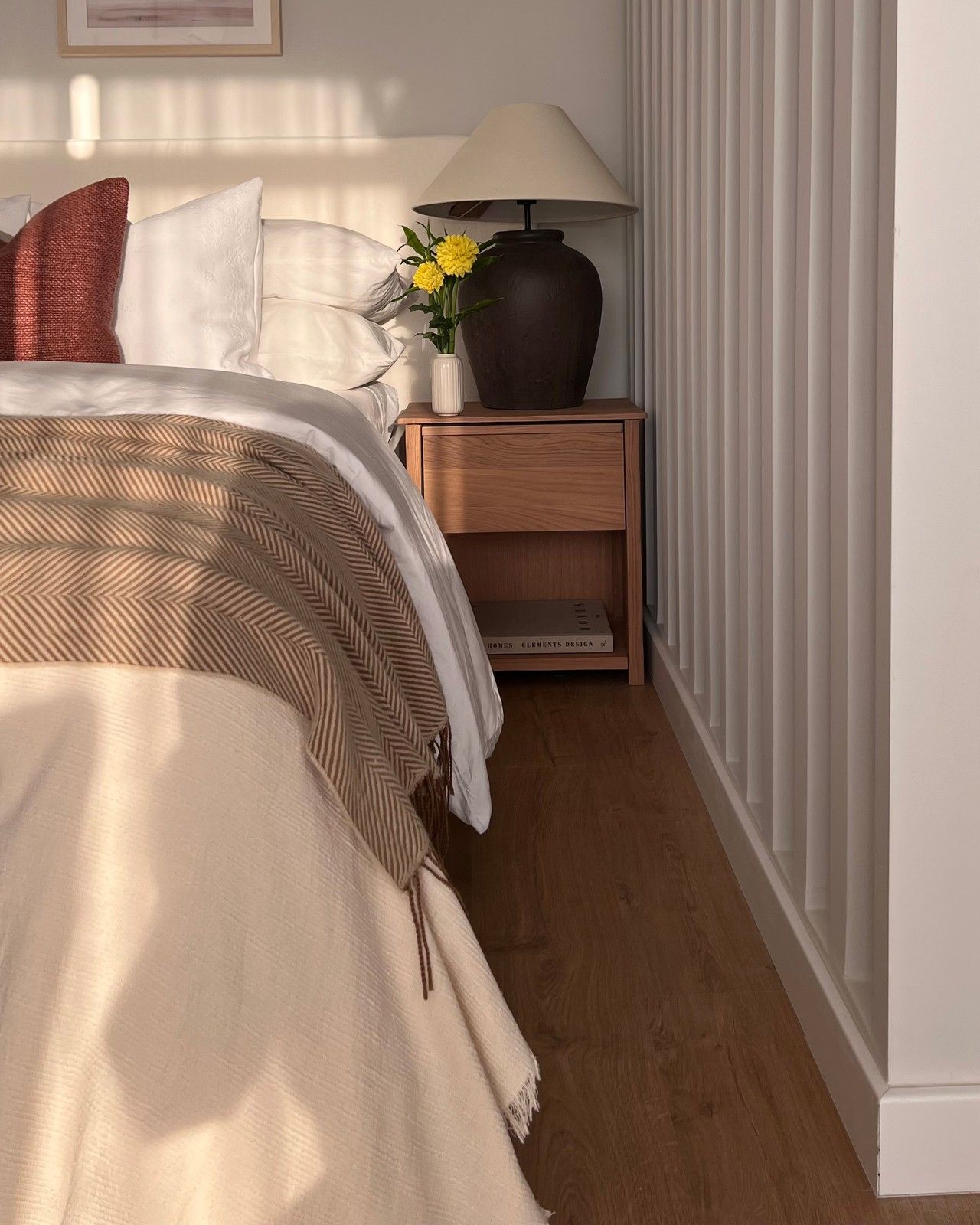
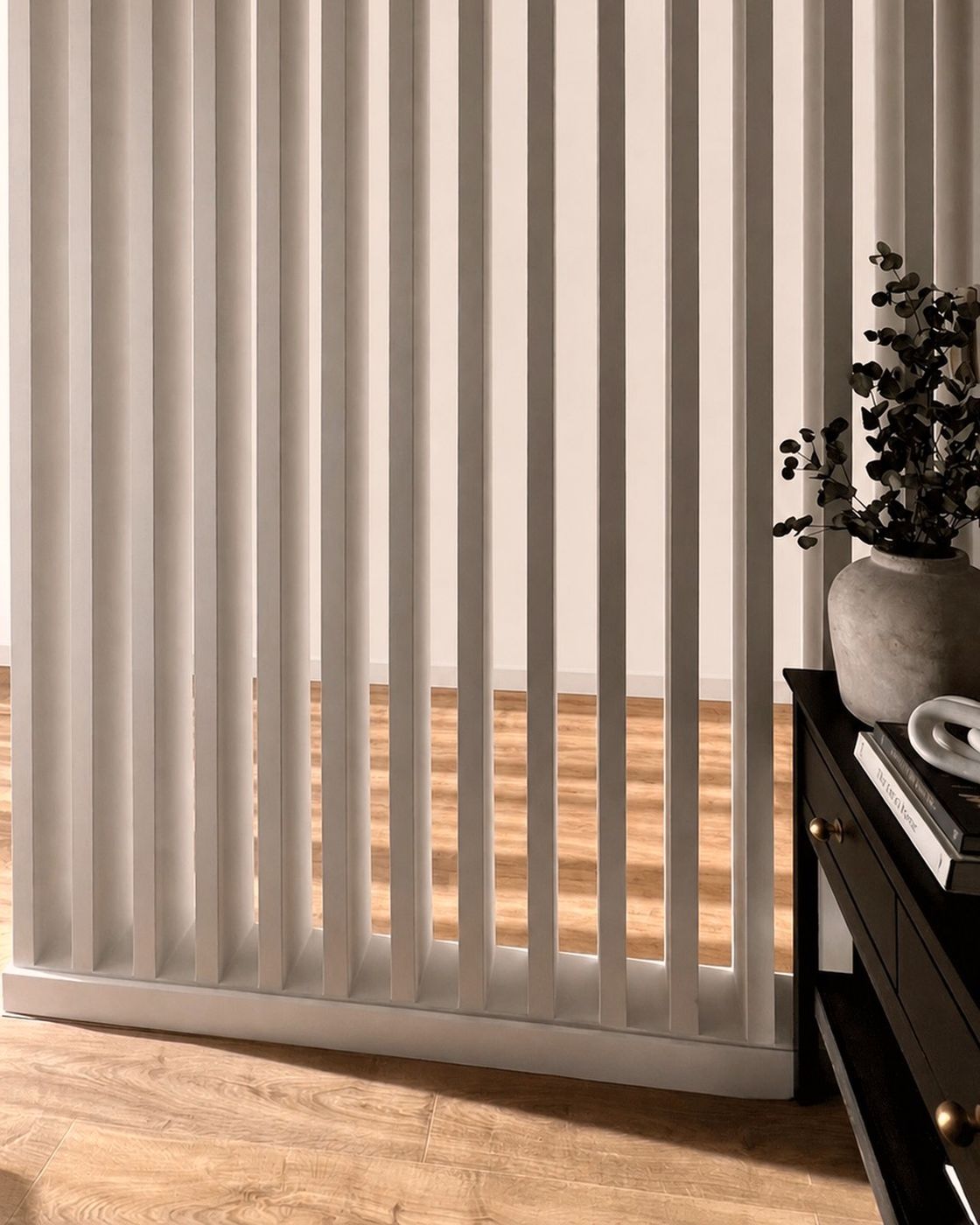
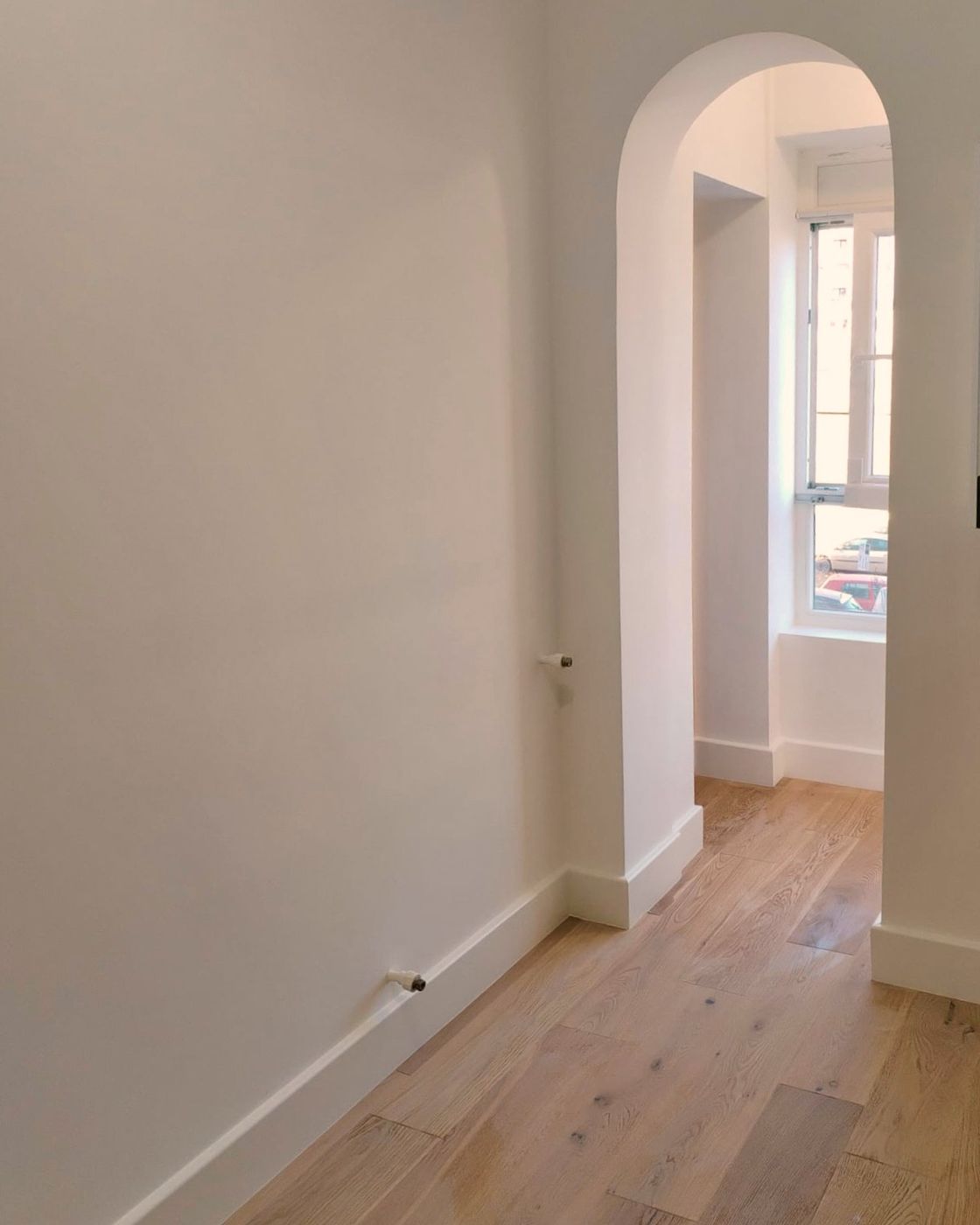
The finished photographs, the same rooms in the new year, show what the floor does once the room around it is done: the planks carry the daylight from the window down the length of the room, the warm oak grounds the pale walls, and the herringbone in the doorway meets its brass threshold where the marble begins. A floor is the one surface that touches every other decision in a home, the walls sit on it, the furniture stands on it, every material change happens at its edges, and that is why it is worth deciding early and protecting fiercely. Where this floor meets marble at a bathroom doorway, we solved the junction with a brass bar; the detail is worth its own read in the brass line between oak and marble.
Engineered oak earned its place in our own home the way it earns it in projects: real oak where the eye and the foot meet it, engineering where the climate tests it, and a construction that will still be flat when the boards have gone silver-brown with a decade of sun. In Dubai, that is not the alternative to a proper wood floor. It is what a proper wood floor here is.