

Before it became a studio, it was a practice. Years spent studying and teaching yoga taught Madalina Aris, founder of Studio Sakaia, to notice what a room does to the person standing in it before she noticed what the room looked like. A low ceiling changes the breath. A hard chair changes how long someone stays at a table. A cold corner in an otherwise warm house changes where a family actually gathers, whatever the floor plan says. Training at the Interior Design Institute gave that noticing a vocabulary. It did not create it.
Studio Sakaia, founded in Dubai in 2025 and working across the UAE and Europe since, starts from the same premise the yoga room did. Light, proportion, and material register in the body long before anyone consciously decides what they think of a space, and a client can usually tell within a minute of walking in whether a room has been designed with that order in mind or against it. Three mechanisms carry most of that weight, and each has a plain, physical way of getting it wrong.
Light
A room can be well lit by day and still feel wrong the moment the sun goes down, because daylight and evening light are different problems that a single ceiling fixture cannot solve on its own. The answer is layers: a lamp at seated height, a warmer source set low, several small sources doing the work one bright one used to do alone. In a primary bedroom, that discipline matters most in the last hour before sleep, when the light should sit closer to a candle than to an office, dim and warm rather than even and bright. Get that hour right and the room reads as restful before anyone can say why. Leave it to a single overhead fixture, and the same furniture and the same paint still feel like a waiting room at ten at night.
Proportion
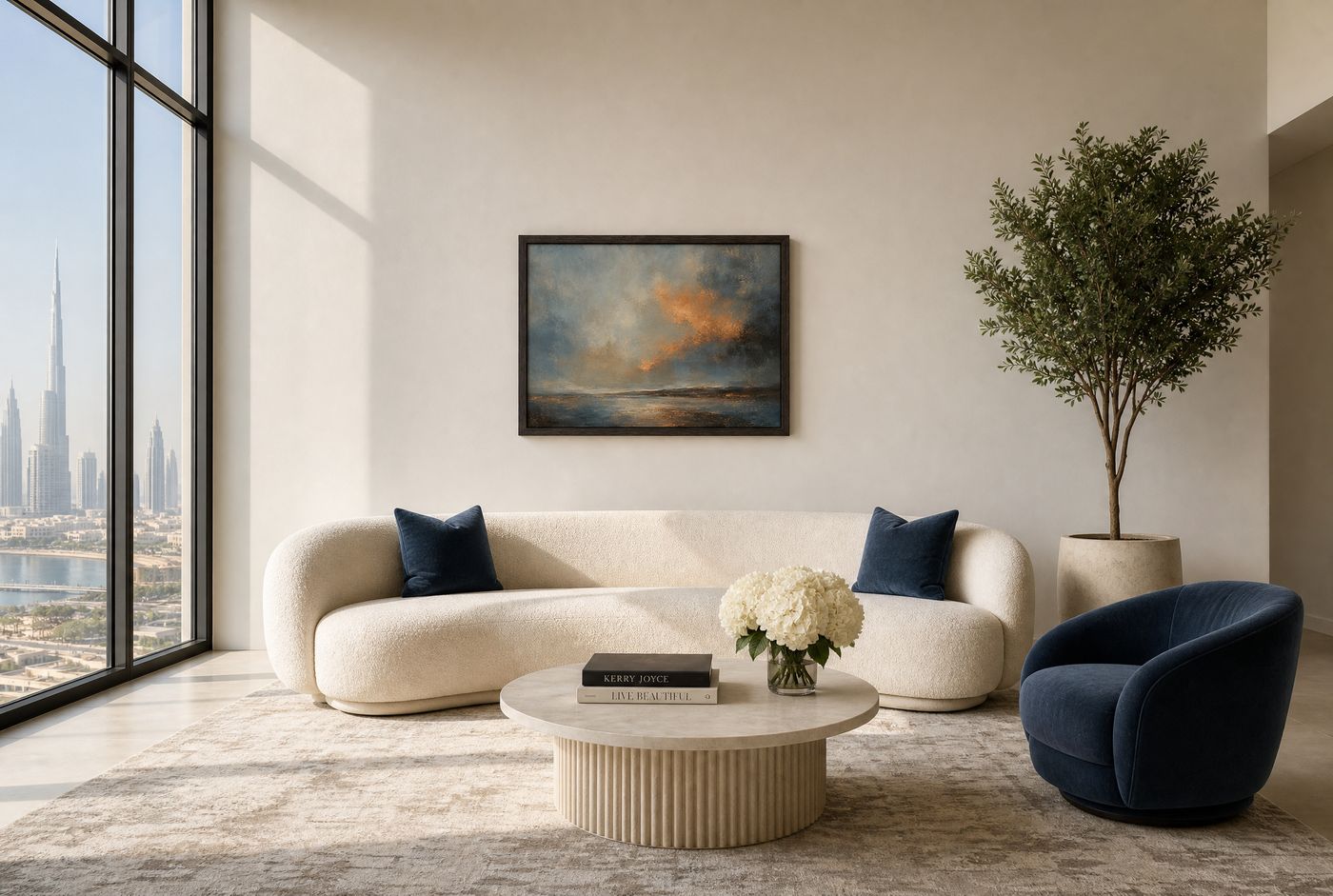
The most common mistake in a furnished room is rarely the wrong piece. It is the right piece at the wrong scale. A painting hung to fill an empty patch of wall reads as an afterthought even when the painting itself is good, because its size was decided by the gap rather than by the wall. A sofa bought to look right in a showroom often leaves a stripe of bare floor on either side once it reaches the room it was actually meant for, a gap no rug can close. Proportion gets decided by measuring the wall and the room before choosing anything to put in them, then sizing the piece to that measurement. A headboard, a console under a mirror, a table set for a room built to hold six: each has one correct scale, set by the architecture around it, and a piece a size too small reads as an apology for the whole room.
Material
Some judgments happen in the hand before the eye is consulted. Warm plaster and a cold poured surface can look almost identical in a photograph and feel entirely different under a palm. Pale oak takes daylight differently than a dark stained floor, and a room reads lighter or heavier depending on which one is underfoot. Aged brass, handled daily on a door pull or a tap, develops a patina that a plated finish will never earn, a difference felt at the hand well before it registers with the eye. A handle, a stair rail, a countertop edge: these get touched thousands of times a year, and choosing them for how they feel under that much contact is a body-first decision applied at the smallest scale in a house.
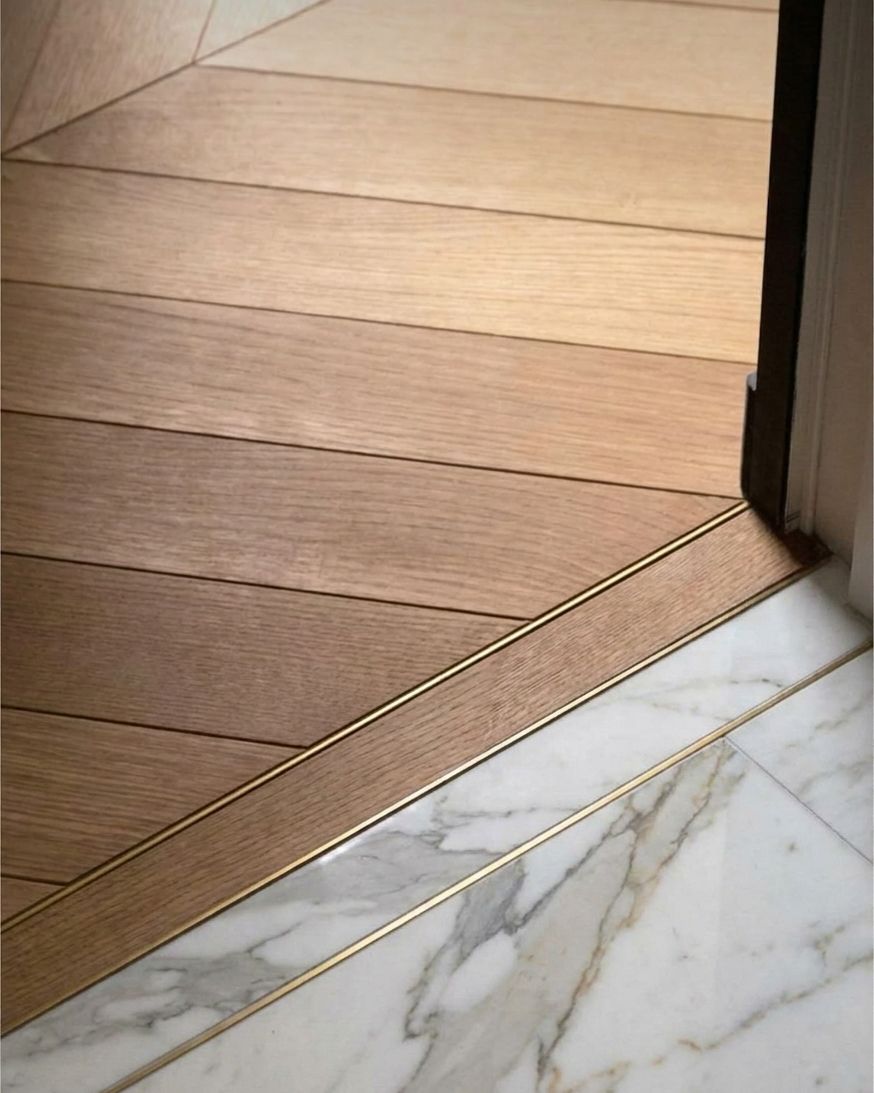
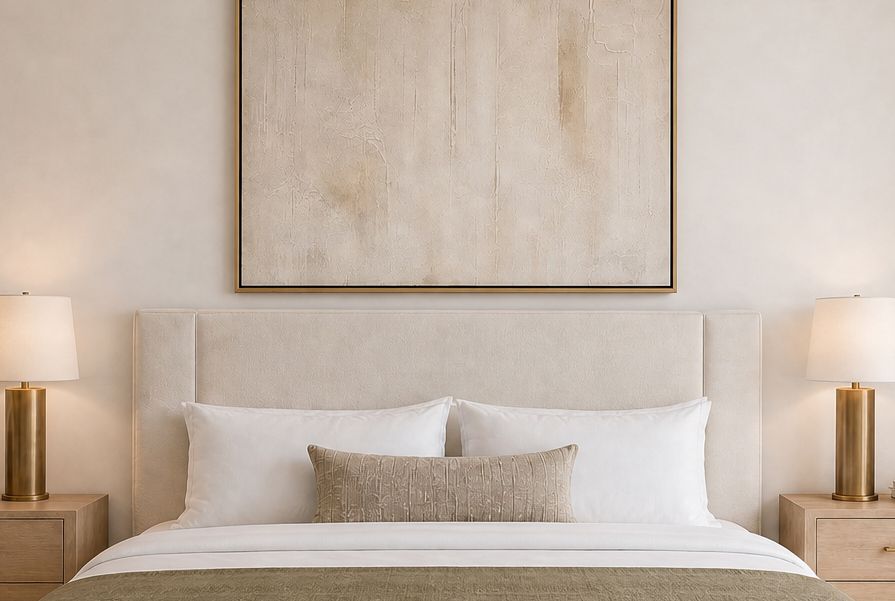
The images through this article are design studies, shown to illustrate the standard rather than a specific delivered project.
Made to the room
That same order, body first and eye second, shapes how the studio makes the Sakaia Collection, its line of digital artwork produced as archival pigment print editions. A piece is sized to the exact wall it will hang on. Nothing is printed until a room asks for it, and because the editions are produced here in Dubai, a piece cut to a specific wall can be ready in days. The measurement that governs a hung artwork is the same one that governs a sofa or a headboard: read the room, then make the piece answer it.
None of this needs a client to notice consciously for it to work. A well-lit evening, a painting at the right scale, a handle that feels right under the hand: these register as ease, and ease is usually the whole point of a room. It is the same attention a yoga teacher pays to a body on a mat, moved into a house instead of a studio. The studio designs toward that feeling on purpose. The body was always going to notice first.