
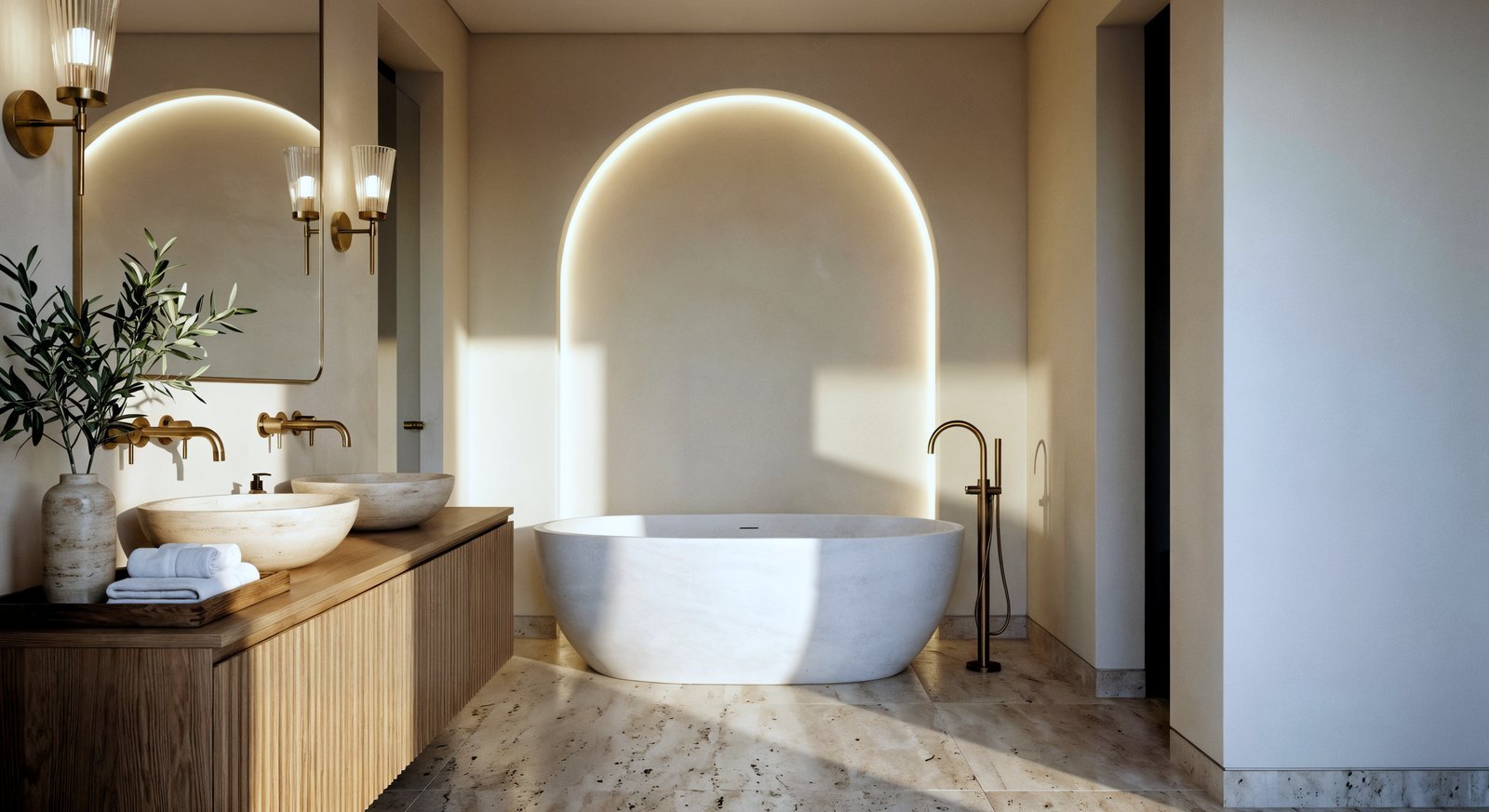
The short version, for anyone deciding whether to introduce one: an arch works because it is the one soft shape in a hard environment. Floors, walls, ceilings, doors, windows, cabinetry, almost everything in a home meets at ninety degrees, and the accumulated hardness of all those right angles is part of why a new-build interior can feel tense before anyone can say why. A curve releases that tension. Place it well and a room exhales.
The timeless shape
Arches are old, and that is the point. They belong to Roman aqueducts and Moorish courtyards, to the riads of Marrakech and the arcades of Bologna, to Gulf architecture's own long memory of the pointed and rounded opening. A shape that has been in continuous use for two thousand years is not going to date, which is exactly what you want from a permanent architectural gesture. Trends in colour, material, and furniture come and go on a five-year cycle; an arch cut into a wall will look as considered in twenty years as it does today, because it was never fashionable to begin with. It was always just right.
That timelessness is why we treat the arch as architecture rather than decoration. Applied ornament dates because it is added on top of a room. An arch is cut into the structure of the room itself, and structural gestures age differently, they become part of what the home simply is. In Dubai, where so much of the built environment is glossy, angular, and brand new, a soft historical shape is a quiet act of grounding, a way of giving a contemporary apartment a sense of having always been there.
How a curve softens a home
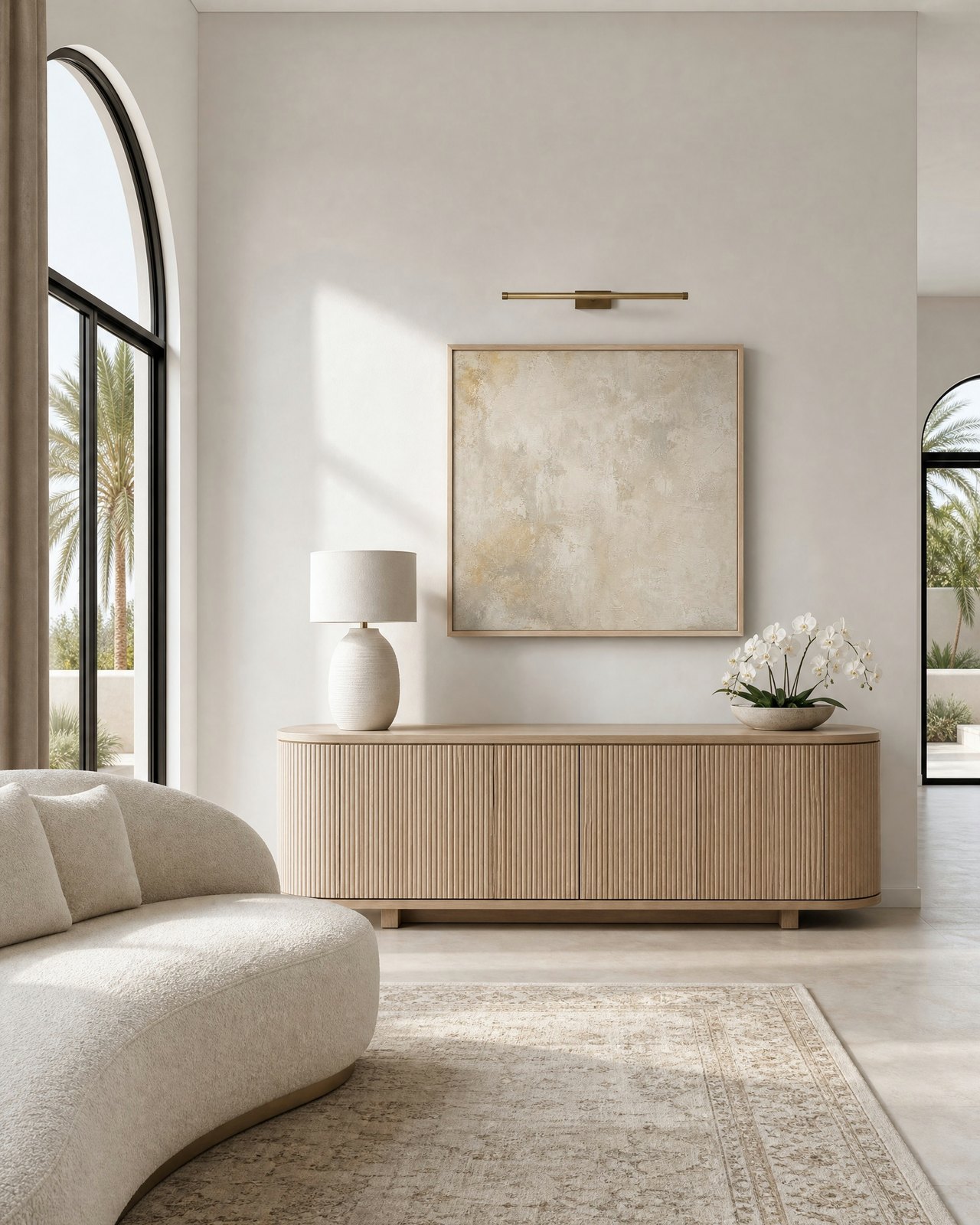
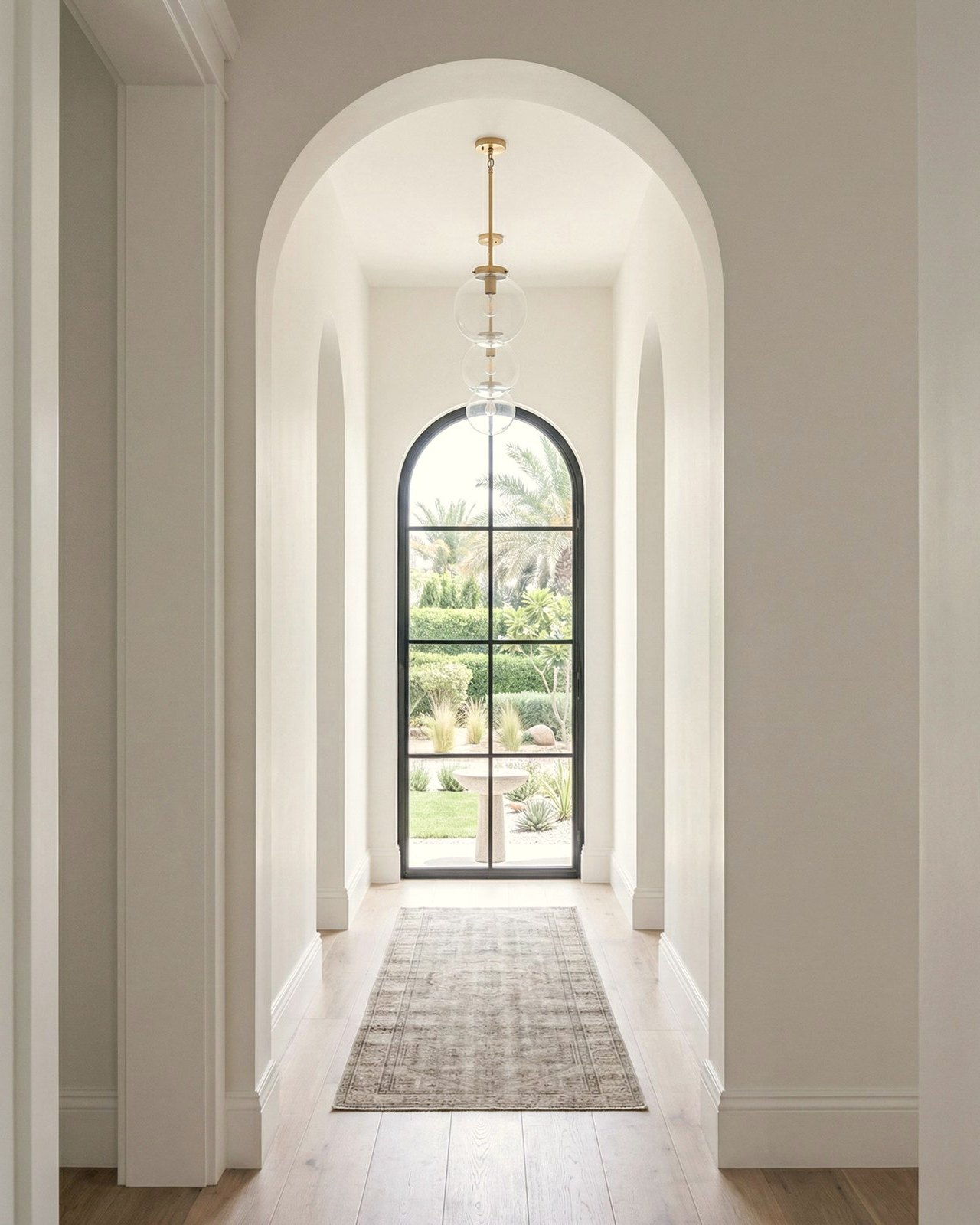
The mechanism is worth understanding, because it explains where an arch will and will not work. A right angle is a hard stop; the eye hits it and turns. A curve is a transition; the eye follows it around. So an arch at a threshold does not just mark the opening, it changes the speed at which you move through the home, slowing the passage from one room to the next into something gentler. A rectangular doorway shows you the next room. An arched one presents it, framing the view beyond like a lens.
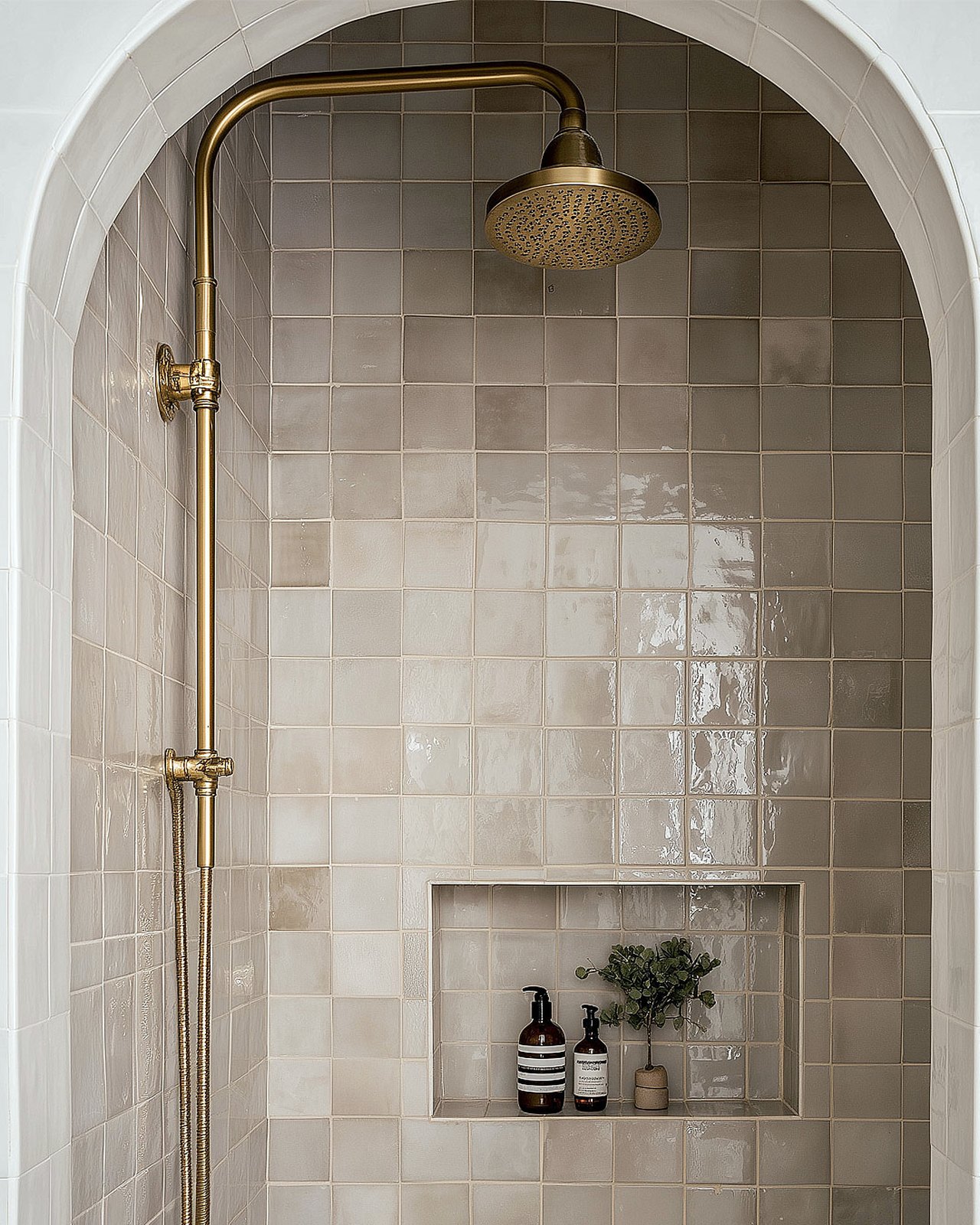
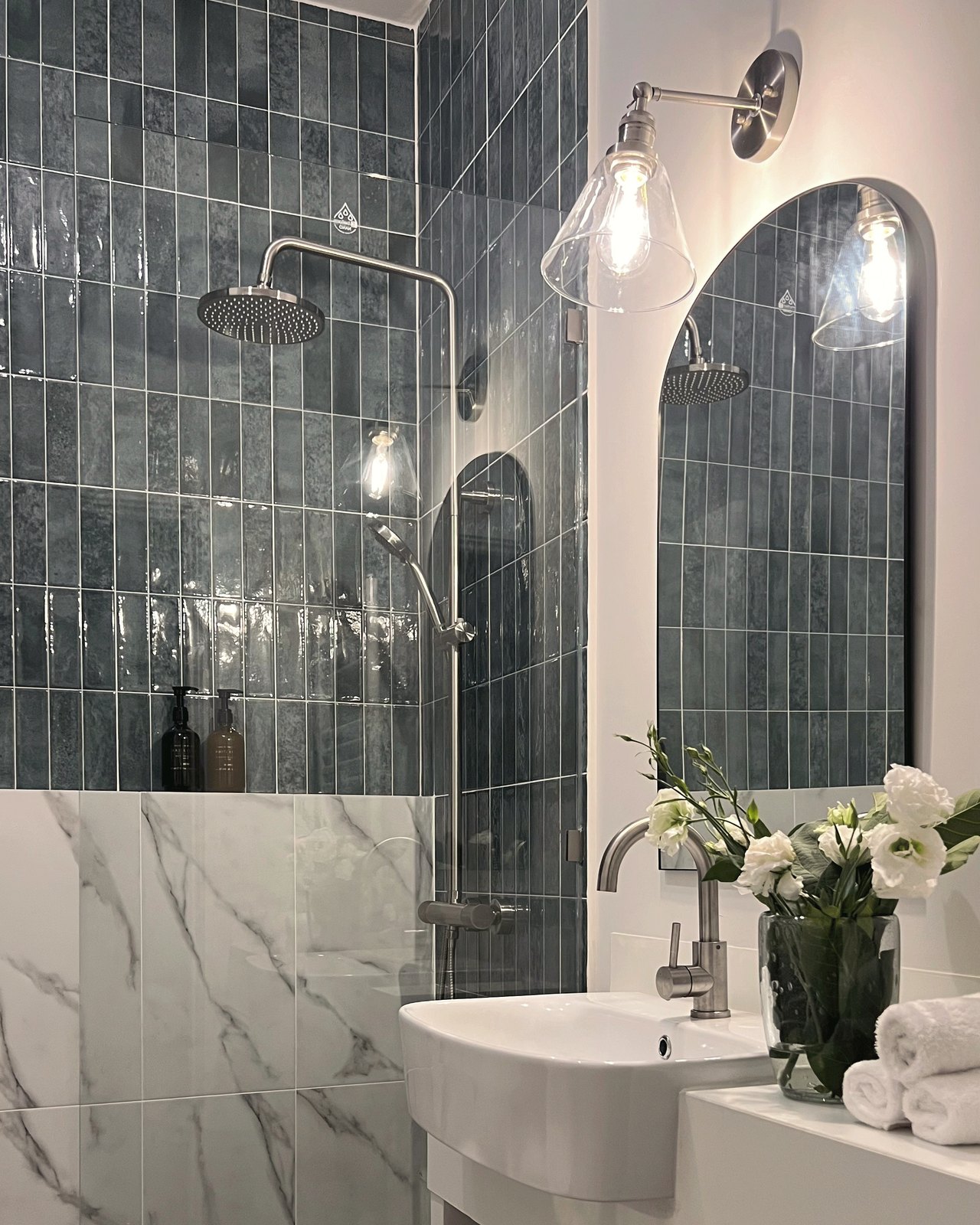
The same softening works at every scale. A large arch as a doorway or a room opening changes the architecture of the whole space. A medium arch, a niche, an arched mirror, a recessed shelf, softens one wall. A small arch, the head of a shower niche or a mirror's curve, resolves a single detail. What they share is that each one introduces the one radius in a field of straight lines, and the eye is drawn to it precisely because it is different. An arch is never the loud element in a room, and it is almost always the one people remember.
Where one arch does the most
The discipline with arches is restraint, and it is the hardest part. Because a single arch works so well, the temptation is to repeat it, arched doorways throughout, arched niches in every room, curves everywhere, until the gesture that was quiet becomes a theme, and themes date exactly as fast as the trends the arch was meant to outlast. One arch is architecture. Ten arches is a decorating scheme. The whole power of the shape depends on it staying the exception in the room.
So we place an arch where it earns its place. At the threshold that deserves to feel like a passage rather than a door. Over the vanity, where a curved mirror softens the hardest, most rectilinear room in the house. At the shower niche, where the one radius lifts a purely functional recess into something considered. In each case it is a single curve in a space otherwise kept honest and straight, and the restraint is what lets it speak. A home with one perfect arch feels designed. A home with arches everywhere feels decorated.
The shape we return to
We love an arch for the same reason we love travertine over polished marble, or a single generous artwork over a wall of small frames: it is the considered choice that does more with less. A curve is harder to build than a corner, it asks more of the plasterer, the tiler, the joiner, and that difficulty is exactly why a well-made arch reads as care. It could have been a right angle. Someone decided it should be soft.
In a city of new, hard, angular interiors, the arch is how we bring warmth and time into a space without a single antique or a note of nostalgia. It is contemporary and ancient at once, structural and gentle, the one soft shape that makes every hard line around it feel intentional rather than default. That is why we keep cutting curves into straight houses, and why, of every gesture in a home, the arch is the one people walk through twice.