
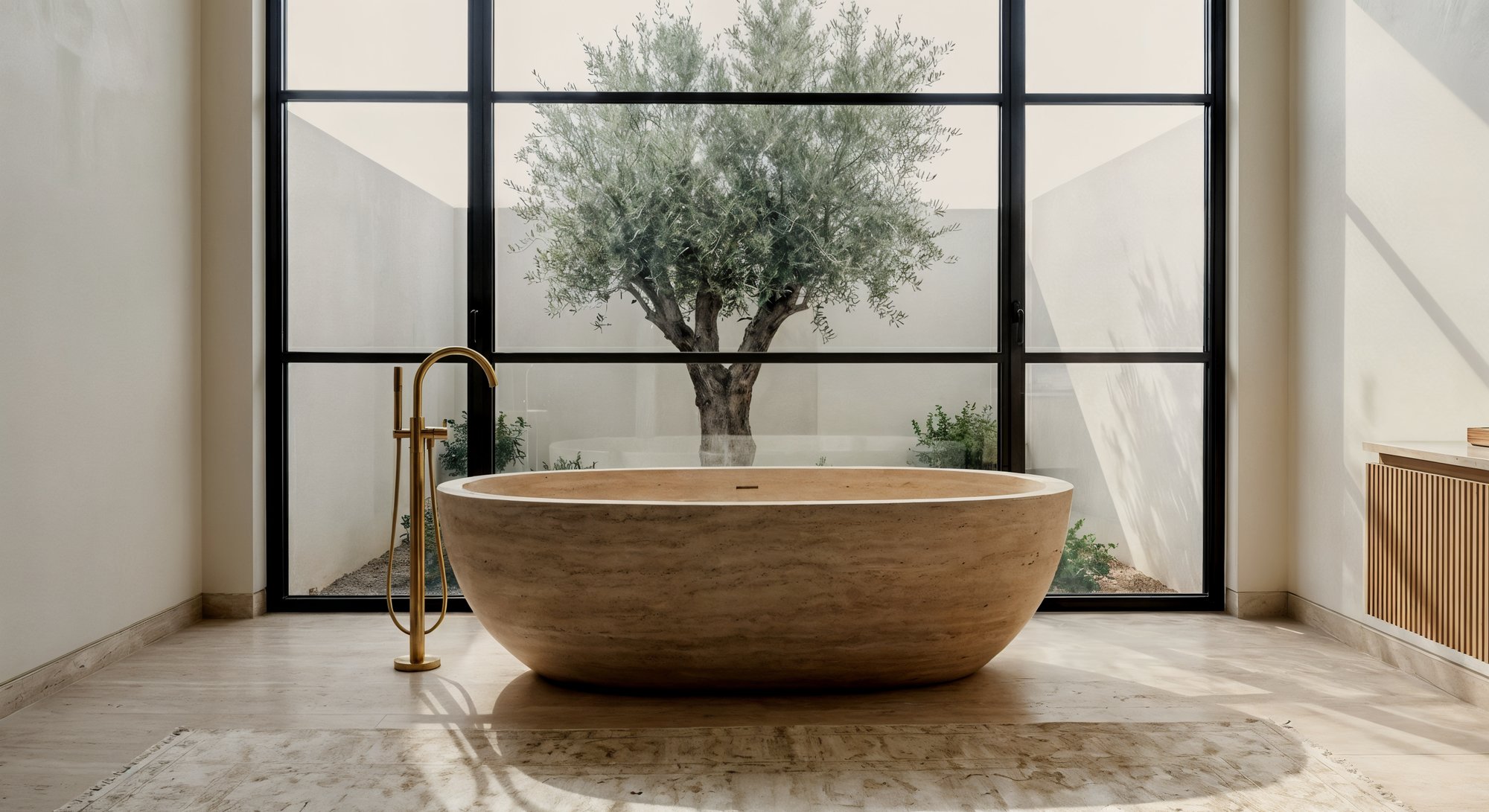
Travertine is a stone that keeps a record. The voids and fossil lines that run through it are the trace of the water and time that formed it, and they are the reason we reach for it again and again. A material that refuses to be uniform gives a room something a manufactured surface never can; the sense that it was here before you and will outlast the moment.
Most of the travertine sold for interiors is filled and polished until it reads almost like a tile. We honed ours instead, lightly filled or left open, so the surface holds light instead of throwing it back, and the grain stays legible underfoot and to the hand.
Why we leave the voids
Filling every void makes the stone easier to sell and a little easier to clean, but it flattens the thing that makes it worth using. A few open voids catch shadow, mark the passage of the afternoon sun, and tie a contemporary room to something much older. The imperfection is not a flaw to be managed; it is the material doing what it is for.
There is a practical case too. Honed travertine wears in rather than out. Small marks and a softening of the surface read as patina, not damage, so the floor or the bath looks more settled with age, not less. For a household that intends to live in a room rather than preserve it, that is the right kind of durability.
We use it most often where water and light meet; a primary bathroom, a stone tub, a threshold that catches the morning. Against warm oak and lime plaster it sets the temperature of the whole space. Choose the stone first, and much of the rest of the room follows. It is also a stone that suits Dubai's climate: honed rather than polished, it stays cool and sure underfoot through the long summer months, in a way a high-gloss tile finish never does.