
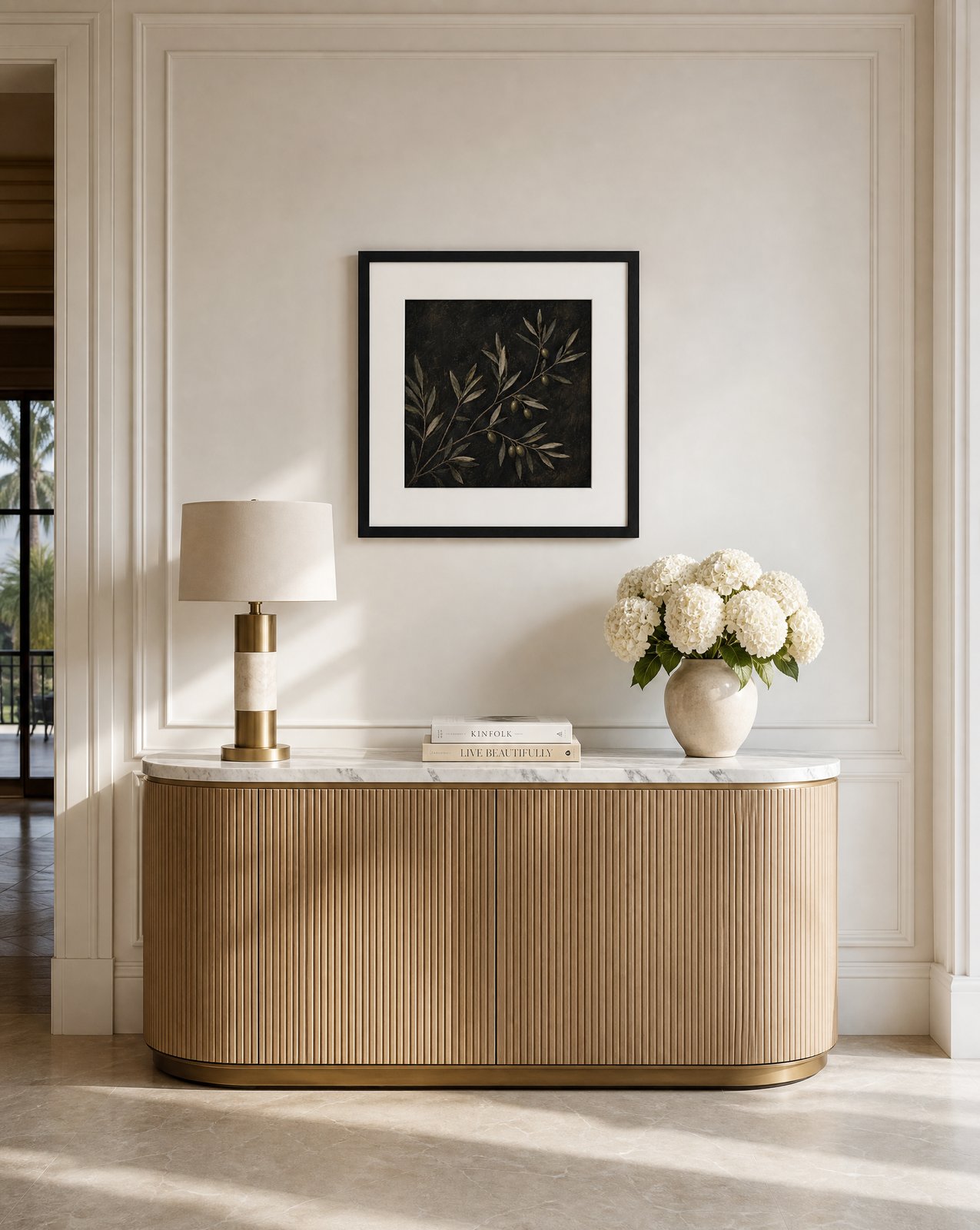
We treat the entry as a project in miniature: one wall, one console, one piece of art, and a decision about light. Here is how we approach it, in the Dubai apartments and villas where most of our entries actually get built.
Start with the console
The console sets the rules for the wall above it. Measure its width first, because everything hung there will be judged against that number.
The art or grouping above a console should span roughly two thirds of the console's width. Narrower than that and the piece looks stranded, floating in too much wall. Wider than that and it competes with the furniture instead of sitting on top of it. Two thirds is the proportion that reads as intentional without measuring like it was.
Height matters too. Leave six to ten inches between the top of the console (or any object sitting on it) and the bottom of the frame. Less than that feels cramped. More than that breaks the visual connection between the two elements, and they start reading as separate decisions rather than one composition.
One confident piece beats a gallery wall
Entries are small, and small spaces punish clutter fastest. A gallery wall of six or eight frames can work in a stairwell or a long corridor with time to breathe, but in a compressed entry it usually reads as noise before a guest has taken off their shoes.
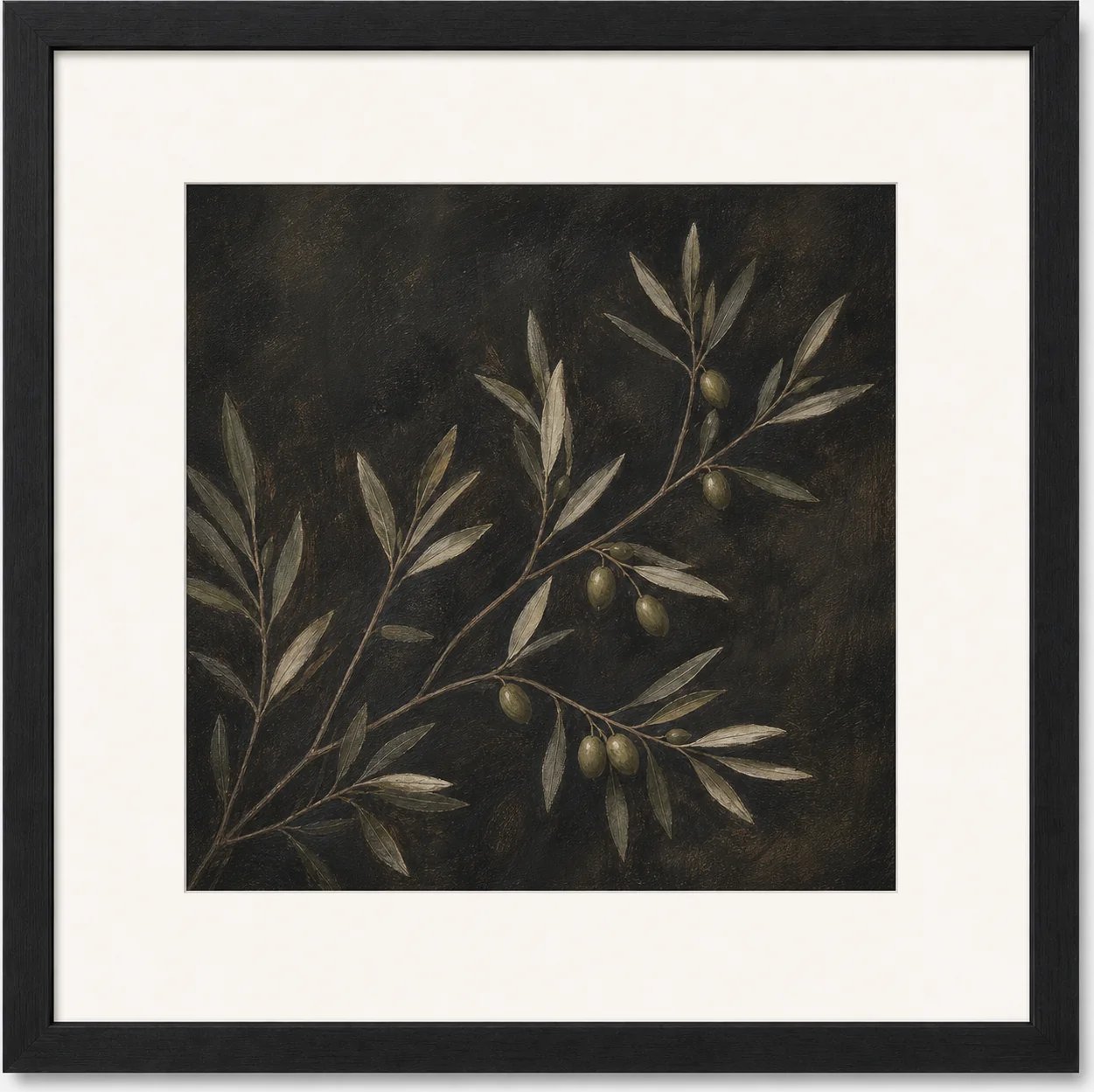
One generous piece, well chosen, does more work. A botanical study, a landscape, or a tonal abstract with some quiet presence gives the eye somewhere to land immediately. Our Olive Branch Study is a piece we return to for exactly this reason: it has enough structure to hold a wall on its own, and enough restraint that it does not shout at anyone walking in the door.
If you already have a gallery wall you love elsewhere in the home, resist bringing that instinct to the entry. This wall gets seen for ten seconds by everyone; it does not need to tell a long story, just a clear one.
Light the entry like you mean it
An entryway with no dedicated lighting on its art is an entryway that is only half finished. Overhead ceiling light flattens everything and throws odd shadows across a frame. A small picture light or a warm-toned lamp on the console changes the whole read of the piece, especially in the evening, when the entry is often the only lit space a guest sees before stepping further into the home. Most Dubai apartments hand over with a single cool-white downlight doing this job; swapping it for a warm picture light is one of the cheapest changes an entry can make.
If you are working with a console lamp, keep the bulb warm rather than cool. Cool light makes botanical and tonal work look clinical. Warm light makes the same piece look considered, like it belongs to the room rather than sitting in front of it.
A console lamp also solves a practical problem: most entries have no natural light in the evening, which is when most guests actually arrive.
Runners do quiet, necessary work
A runner underneath the console anchors the whole vignette and adds the one texture note that a console-and-art pairing often lacks on its own. Keep it simple: a low pile, a tone that picks up something already in the frame above it, and a width slightly narrower than the console so it does not sprawl into the walking path.
Skip the runner if the entry floor is already a strong material worth showing, like a patterned stone or a rich wood. In that case, let the floor carry the texture and keep the runner out of the equation entirely.
Bringing it together
The formula is simple even when the decisions feel small: measure the console, choose one piece at two thirds its width, light it on purpose, and let a runner do the grounding work if the floor needs it. None of this requires a big budget. It requires picking one thing and doing it properly rather than filling the wall with several things done halfway.
If you want to see how a single piece reads above a console before committing, browse the full collection at studiosakaia.com/artwork, or enquire and send us a photo of your entry. We look at walls like this every day and can tell you quickly what size and subject will hold it.